Different Types of Intent Signals for Developer (DevTools) Marketing
Developers don’t download whitepapers - but they’re still signalling intent. Learn which signals you need to track.



Key Takeaways
- Developer intent signals live outside traditional B2B channels. GitHub, Stack Overflow, Reddit, and Discord hold more buying intent than any B2B publisher network. If your intent provider isn't monitoring them, you're building your pipeline on blind spots.
- Hands-on behavior beats passive consumption. Trial signups, repo forks, and documentation deep-dives are (much) stronger indicators than whitepaper downloads or webinar attendance.
- Learning signals ≠ buying signals. One developer reading your docs is curiosity. Three people from the same company testing your product and visiting your pricing page is a buying committee forming.
- Developer buying journeys include a "pre-funnel" stage where developers explore and experiment with no purchase intent at all. Treating this activity as a buying signal leads to premature outreach and damaged trust.
- No single signal tells you much, but the patterns across an account does. A GitHub star by itself tells you nothing, but community activity + trial usage + pricing page visits from the same account tell a story.
Selling developer tools means selling to people who don't want to be sold to. Developers evaluate on their own terms by forking repos, spinning up free tiers, or asking questions in Discord long before they talk to a sales rep. For GTM teams, this creates a conundrum: there’s more buyer activity than ever, but most of it happens in places traditional intent tools can't see.
If you get it wrong, you’ll burn outbound sequences on accounts whose "intent surge" was just a blog post going viral on Hacker News. But if you get it right, you’ll reach buyers weeks before your competitors know they exist.
Why Developer Intent Signals Are Different
Traditional B2B intent data monitors publisher websites and website visitors’ IP adddresses. Bombora, for instance, tracks content consumption across thousands of B2B media sites to flag accounts "surging" on a topic. That works when buyers are marketing leaders downloading whitepapers or procurement teams attending vendor webinars. However, developers don't do any of that.
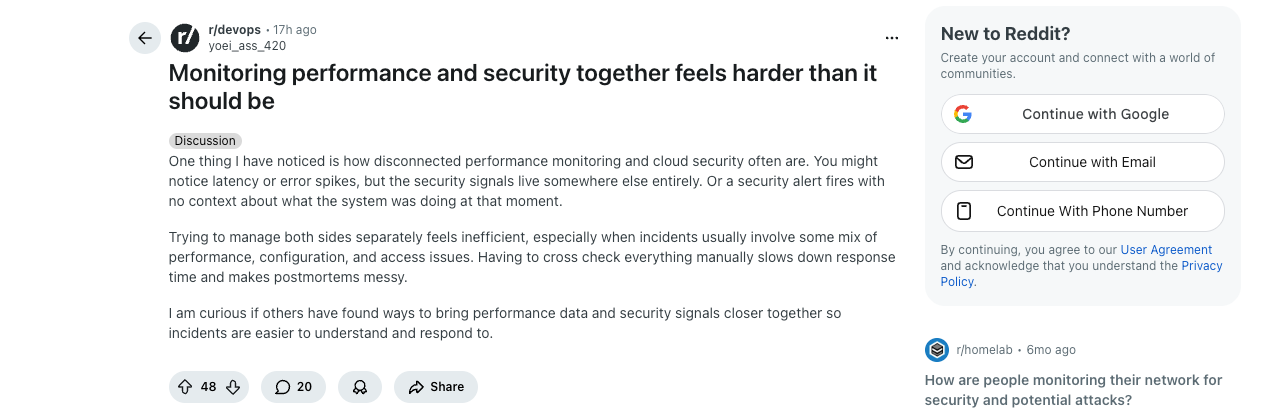
Developers research where traditional tools don't look. The evaluation phase for infrastructure tooling plays out on Reddit, GitHub, Stack Overflow, Discord, and niche Slack communities -- where engineers compare options, ask for recommendations, and pressure-test alternatives with peers. Platforms built for a buying process that starts with a whitepaper download will always miss this.
The technical champion isn't the economic buyer. The person evaluating your tool is often a senior engineer whose job title reveals nothing about their role in the purchase. They might be one of dozens of "senior software engineers" -- but they're the one leading the initiative. That’s why job-title-based targeting misses them.
Account-level intent scores flatten the signal. A Fortune 500 account flagged as "high intent" could mean a few employees read a blog post. It could also mean a completely different business unit is running an evaluation you'll never hear about. In short, "someone from Capital One looked at your pricing page" doesn't narrow it down. Developer intent signals need to be specific -- tied to individuals, activities, and contexts -- or they're just noise with a confidence score attached.
For GTM teams, this means the playbook that works for selling marketing automation or HR software will fail with developer tools. The signals exist, but capturing them means looking in different places and solving an identity problem that traditional providers weren't built for.
Types of Intent Signals in Developer Marketing
Not all intent signals carry the same weight. Some indicate genuine buying interest while others are just developers doing what developers do: tinkering.
- Trial and product usage is one of the strongest first-party signals. That being said, keep in mind that a single developer signing up with a personal email and poking around is likely just exploring.
On the other hand, if multiple people from the same company domain are actively using your product, they’re likely part of an organized evaluation. When trial users start exploring enterprise features (SSO, compliance, advanced integrations), the evaluation is advancing toward purchase. And if multiple users from one account go quiet after heavy activity, they may have moved into internal decision-making. More on this later.
- Open-source adoption is a unique developer intent signal. GitHub stars, forks, pull requests, and issues tell you which technologies a company is actively working with. Contributions (PRs, issues) indicate deeper engagement than casual interest, and because OSS activity is often tied to organizational GitHub accounts, you can attribute it to a company without identity resolution.
- Repo forks deserve a separate mention. Starring is bookmarking; forking means someone is actively working with the code. Multiple forks from the same organization suggest team-level evaluation.
- Job postings reveal organizational priorities. A company hiring for "Platform Engineer, Kubernetes experience required" is telling you about their tech stack.
A caveat: job postings alone are unreliable. For instance, hiring for Azure doesn't confirm a large-scale Azure deployment. Job signals are strongest when correlated with other data points.
- Community activity on Reddit, Stack Overflow, Discord, and Slack is the most distinctive type of intent data in developer marketing. Community signals come with something other signal types lack, context. You can see the question being asked, the alternatives being considered, and the technical constraints the poster is dealing with. However, most of it is anonymous or pseudonymous, so you need identity resolution to make it actionable.
- Content consumption also looks different in developer marketing, where documentation engagement (time on docs, search queries, paths through technical content) matters far more than whitepaper downloads. Pricing page visits, especially repeated visits or from multiple people at the same company, are among the highest-confidence signals available.
- Website visits carry lower confidence on their own. IP-based intent data has well-known limitations: "Someone from Capital One looked at your pricing page" doesn't narrow it down much. But website visits become valuable when they confirm patterns you're already seeing in other channels.
Mapping Intent Signals to the Buying Journey
A GitHub star and a pricing page visit are both signals, but they sit at completely different points in the buying journey. Responding to them the same way will either waste your team's time or alienate potential buyers.

Discovery
Developer buying journeys include a stage that doesn't exist in traditional B2B: pure exploration. Developers browse docs, star repos, and spin up free tiers out of curiosity or professional development. Thus, a single developer from an account doing these things is not a buying signal.
From exploration to evaluation
Yet eventually, exploratory activity becomes purposeful. Instead of browsing, a developer starts testing by forking a repo, signing up for a trial, reading integration docs, or asking specific questions in community forums. Instead of "what is this tool?" the questions become "how does this integrate with our Terraform setup?"
When the organization gets involved
When multiple people from the same account start showing up, one developer testing the product, another visiting the pricing page, a VP of Engineering reading case studies, a buying committee is forming. This accumulation of people within the same account separates a curious developer from an active opportunity.
The internal selling phase
Eventually, the developer champion needs to convince decision-makers. This surfaces as visits to case study pages, ROI calculators, and enterprise quote requests, all signaling that the conversation has moved beyond technical evaluation into procurement.
If you build a picture of account-level activity and act when the pattern shifts from individual exploration to organizational evaluation, you can leverage intent data without burning bridges with the developers who may become your champions.
How To Actually Use Developer Intent Signals
Knowing which signals matter is one thing, but turning them into prioritized outreach is the tricky part.
The manual reality
For most GTM teams, developer intent signals are a research project, not a workflow. BDRs spend hours on LinkedIn, GitHub, and community forums trying to piece together which accounts are active. Manually, account research happens one prospect at a time, and s. Signals get captured in spreadsheets or mentioned in Slack, with no way to prioritize or act on them.
As a result, reps spend the majority of their time on research instead of outreach.
Automating signal collection and identity resolution
The alternative is automating signal collection across platforms and solving the identity resolution problem that makes community and OSS signals actionable.
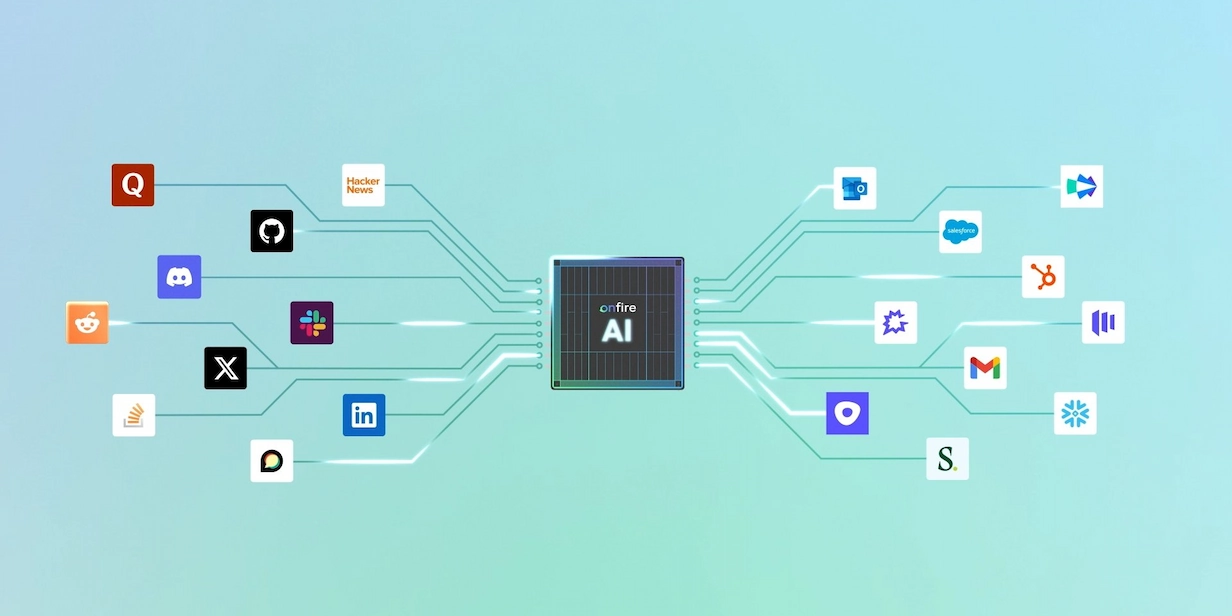
Onfire tracks developer communities (Stack Overflow, Reddit, Discord, Slack), open-source activity (GitHub PRs), and tech conferences, then connects anonymous and pseudonymous activity to identifiable people within accounts. Rather than delivering raw data for BDRs to interpret, it pushes prioritized prospects and context directly into Salesforce, HubSpot, and Sales Navigator.
Port, a developer platform company, is a good example. Port's SDR team uses Onfire to monitor community signals from Discord and Slack, combined with technology adoption data, to build targeted account lists. Their reps reference actual prospect activity from developer communities to drive roughly 3x higher response rates and 20% pipeline growth quarter over quarter.
As Kevin Tarbell, Port's Head of Sales Development, put it: "Onfire delivers the right data at the right time" by surfacing signals "from public but hard-to-find spaces."
FAQ
Which developer signals are most likely to translate into pipeline?
Multiple signal types from the same account always matter more than any single signal. Multiple trial users from the same account, community questions about enterprise features, and pricing page visits combined with active product usage are the strongest predictors.
How do teams separate learning behavior from buying behavior?
By differentiating between individual and organizational activity. One developer exploring is learning; multiple people from the same company evaluating is buying. Other markers include visits to pricing and enterprise pages, questions about deployment requirements, and trial usage that extends beyond basic features into compliance and SSO.
When should developer intent signals trigger sales outreach?
Not at the first signal. Developers prefer self-service evaluation and distrust unsolicited outreach. Trigger when signals accumulate and indicate organizational interest. This can include trials by multiple people from the same account, evaluation progressing past exploration, or a developer champion building an internal case.
How do intent signals differ between open-source and commercial products?
For open-source products, adoption signals (stars, forks, PRs) are top-of-funnel indicators. The transition to commercial interest shows up as questions about enterprise features, self-hosted versus managed deployment, and multiple organizational users. For commercial products, trial usage and documentation engagement are the primary first-party signals, with community activity and job postings as supporting indicators.
What risks come with over-relying on developer intent data?
The biggest risk is false positives, which occur when sales reps mistake learning behavior for buying intent and trigger outreach too early. Over-indexing on a single signal type (treating every GitHub star as a lead) compounds this. Keep in mind that developers are sensitive to feeling tracked, and outreach that clumsily reveals surveillance can damage brand perception permanently.
.webp)









%20(1).webp)
















































.webp)