Choosing the Best Account-Based Marketing Technology in 2026
ABM is non-negotiable when you’re selling to specific verticals and departments. Learn how to choose the right solution.



If you’re selling to specialized verticals or departments, account-based marketing (ABM) is essential. But if you’re reading this, you’ve likely discovered that there are dozens of different ABM tools to choose from, each with plenty of impressive, “AI-powered” features. But do those advanced capabilities translate into revenue? Not necessarily.
In this article, we’ll give you the information you need so you can choose the right tech for your team.
Key takeaways
- Legacy ABM tooling often has poor-quality data, lengthy setup times, and significant costs.
- The best ABM tools provide relevant data, agentic AI, and a simple user interface for their primary users, BDRs.
- Before settling on ABM tooling, verify that it has the data you need, delivers reasonable time-to-value, and offers flexible contracting.
- If you’re targeting technical buyers, you need an ABM tool that goes beyond firmographics to deliver prospect-level insights.
- Onfire is the most powerful ABM tool for companies that sell to technical buyers, as it is capable of delivering accurate intent signals and technographics.
How ABM Technology Has Evolved in Recent Years
Account-based marketing exploded in popularity around the end of the last decade. ABM tools promised to replace ‘spray and pray’ approaches by helping you find niche audiences and prioritize them by intent — with mixed results.
In many cases, vendors promised more they could deliver, and organizations were overly optimistic about the tools solving deeper challenges around strategy, market understanding, and sales execution.
As a result, ABM tools have earned a bad reputation among some sales and marketing teams, especially those selling to privacy-oriented technical teams that are less keen to share information online. A cursory perusal of Reddit reveals many complaints about:
- Poor-quality data: IP matching has become unreliable due to organizational changes like work-from home policies, as well as the rise in VPN use. Another issue is that the data provided rarely goes beyond the firm level to provide insight into what individual buyers are doing, leaving sales & marketing teams to guess.
- Administrative work: Most legacy ABM tools are too complex and unwieldy for sales reps to use day-to-day, so much so that many teams spend more time managing software than managing customer relationships.
- Spiralling costs: Platforms come with significant costs, lending weight to worries that they don’t deliver substantial value.
With AI, a new generation of ABM tools is emerging — one that promises to resolve many of the challenges of legacy tech. These tools build on the capabilities of modern AI technologies to sift through massive volumes of data, as well as to reduce operational complexity into a natural language conversation.
These are the principles that guided us in building Onfire as a GTM tool for teams selling to technical buyers:
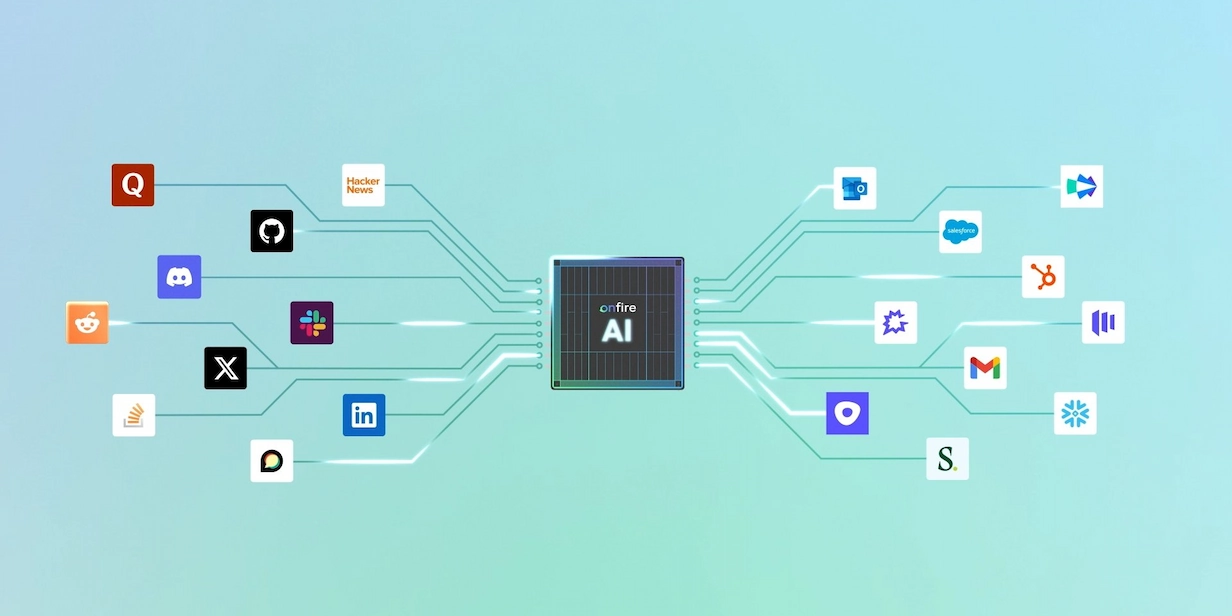
- Good data is the core of ABM. When you sell to technical buyers, you need data sourced from the places where they talk — Reddit not LinkedIn, Discord not landing pages.
- LLMs are powerful — when they have context. By giving them access to accurate, granular data, you can have a conversation with your pipeline.
- Hybrid motions are essential. ABM tools need to unify GTM data so companies can use a combination of channels and tactics to reach the right buyers.
Core ABM Capabilities to Look For
ABM is a big field. Just running LinkedIn ads to a list of prioritized accounts can be considered ABM, but the full picture includes account research, personalized outreach, and integration with your broader marketing stack. That means the “best” tool will differ for different GTM motions. That being said, here are the core capabilities any tool should have:
Accurate technographics
If you’re selling to technical buyers, you can’t afford to guess technographics based on job descriptions and questionable IP data. Instead, you need insight into what OSS technical buyers are adopting and what they’re forking on GitHub.
Prospect-level intent data
Technical buyers may be hesitant to talk to sales, but they’re always talking to one another on Slack, Discord, Reddit, and other engineering-centric channels. By tracking their conversations, you can contact the the right buyers at the right time.
Agentic AI
AI can't replace BDRs, but it can make their lives easier by turning your data into actual useable output: account research, prospect lists, and personalization. The best agentic AI tools automate the repetitive research tasks that eat up hours of a BDR's day - synthesizing information from CRM records, public sources, and community signals into a single view. They can draft personalized outreach based on real prospect activity, and push enriched contacts directly into your workflows without manual data entry.
Self-service for BDRs and sales reps
BDRs are the primary users of ABM tech, and if they don’t use your platform, it will drain your budget for nothing. ABM tooling needs to be simple and intuitive for non-technical sales teams to use every day.
First-party data
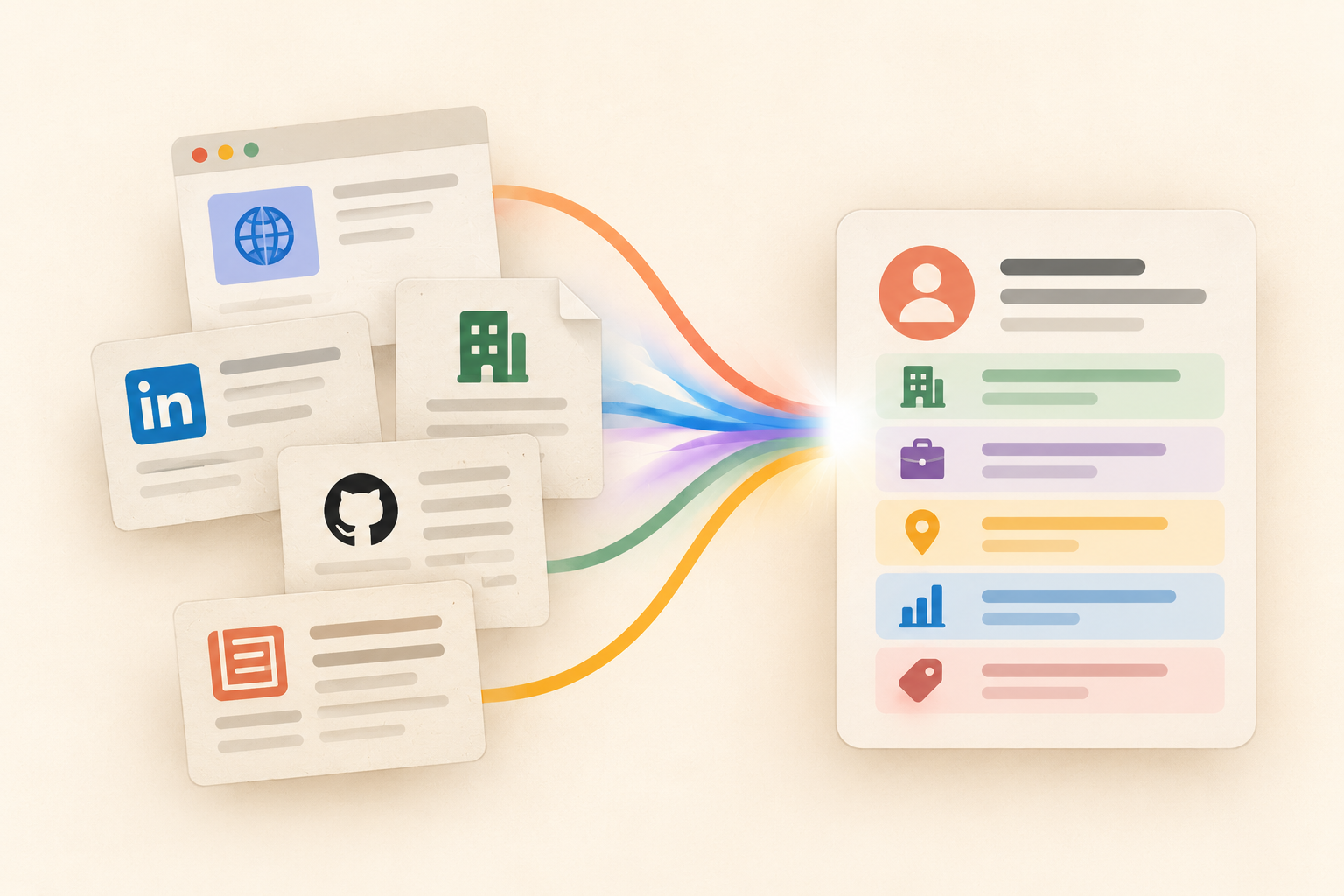
In addition to providing data from ICP-relevant public sources, your ABM tool needs to integrate your first-party CRM data. The data you already have is a significant competitive advantage, especially if it can be combined with third party signals (for example, highlighting companies that are both hiring for relevant roles and using your community edition).
Additional features
Beyond those need-to-haves, there are a few nice-to-have features, particularly for marketing teams, including:
- Marketing integrations: ABM tools that integrate with popular marketing platforms give your BDRs the ability to run integrated campaigns directly from the platform, without exporting data.
- Attribution: Attribution is often elusive in the world of B2B sales, so if your ABM tech can help you show attribution, that will in turn make it easier for you to justify the program ROI.
Top ABM providers for 2026
With so many ABM tools out there, it helps to categorize. To our knowledge, there's only one ABM solution built specifically for technical buyers:
Onfire
Onfire is a revenue intelligence platform designed for go-to-market teams selling to technical buyers. Unlike traditional ABM tools that rely on firmographics and IP-based intent, Onfire monitors over 25,000 developer communities across Reddit, GitHub, Discord, Slack, and other platforms where engineers actually discuss tools and share buying signals. The platform uses AI to connect this activity to specific prospects and accounts, delivering intent data at the individual level rather than just the company level.
Onfire's Account Intelligence Graph tracks 50M engineers and 5M daily events to surface real buying signals. Instead of knowing that "an account is researching CDN solutions," you can see that a specific engineer posted about being unhappy with their current provider. Agentic workflows automate research and prospecting, pushing enriched contacts directly into your CRM so BDRs spend less time on manual data entry and more time on outreach.
Legacy ABM
These platforms have been around for over a decade and offer broad feature sets, though they can be difficult to implement and rely heavily on IP-based identification.
Demandbase is an enterprise ABM platform that covers account identification, advertising, and sales alignment. It relies primarily on IP databases for intent signals and has a reputation for lengthy implementation cycles. It's aimed at mid-to-large organizations with dedicated operations teams.
6sense uses AI and IP-based intent data to identify in-market accounts. The platform captures signals through its "Signalverse" and offers predictive analytics. Like Demandbase, it requires significant configuration and is geared toward enterprise organizations with complex sales cycles.
Point solutions
These tools focus on specific parts of the ABM workflow rather than offering end-to-end platforms.
ZoomInfo provides a B2B contact database with 320M+ professional contacts and 100M company profiles. Entry-level pricing starts at $15,000/year.
Apollo offers a contact database (275M+ contacts) with built-in outreach automation. It has a free tier and lower price points than ZoomInfo.
Metadata.io automates B2B paid advertising campaigns across LinkedIn, Meta, and Google. It uses AI agents to handle campaign execution.
Influ2 targets specific decision-makers with ads rather than targeting at the account level. It reports engagement by individual name rather than by account.
How to evaluate solutions
Found a few ABM tools that seem promising? Here’s how to choose between them:
Focus on the data. Don’t take vendor claims on trust. Instead, check known leads in your database against the vendor’s data. If you can’t verify accuracy and coverage, move on to the next solution.
During demos, ask: "What's your match rate for companies in my ICP?" and "How often is your intent data refreshed?" For most B2B use cases, you want to see at least 70% coverage of your target accounts and match rates above 50% at the prospect level.
Check time to value. Some solutions take months, or even years, to deliver value. You should be see a working solution during the vendor-led POC, without requiring additional customization from your team or consultants.It should take you a few days, not months, to move from managing tools to talking to leads.
Involve sales. Sales teams need to get involved early and often. Although “marketing” is in the name, ABM tooling is actually most often used by sales pros. If your BDRs are unfamiliar with the software — or if it’s clunky and requires technical expertise to put into practice — then your investment will be wasted. Have a BDR sit in on demos and ask them afterward: "Would you actually use this daily?"
Find flexible contracting. Some ABM tech requires enterprise lock-in. While this might make sense for some businesses, most teams would benefit from a flexible contracting model as you get started. Credit-based models, in which you only pay for your actual usage, are a safe choice.
FAQ
What is the difference between ABM software and traditional marketing automation?
Traditional marketing automation (like HubSpot or Marketo) focuses on capturing and nurturing individual leads through the funnel, scoring them based on personal engagement. ABM software flips this by targeting entire accounts as units, coordinating outreach across multiple stakeholders within a company. The emphasis shifts from lead volume to deep engagement with specific high-value organizations.
How important is AI in account-based marketing today?
AI is extremely important in account-based marketing. For instance, Onfire uses AI to track conversations on platforms like Reddit, Discord, and Slack, then de-anonymize posts to qualify prospects. Then, it combines public data with CRM information to prioritize leads and suggest plays.
Can ABM tools replace outbound sales efforts?
No, ABM tools cannot replace outbound sales efforts. In the best case, they can take the manual effort out of the hands of BDRs so sales teams can work on the right accounts with the right timing. However, they cannot build a pipeline on their own.
How long does it take to see ROI from ABM technology?
Time-to-ROI will vary widely from tool to tool and business to business. ABM tech that takes a few days to setup will have shorter time-to-value than tools that must be configured for several months, but it’s impossible to say how long it will take for the average ABM user to see a return on their investment.
.webp)










%20(1).webp)















































.webp)