Port × Onfire: 3x reply rates and 20% pipeline growth
How Port’s SDR org tripled reply rates with signal-driven prospecting that compounds.



Port, the Agentic Engineering Platform, was trying to figure out what tools developers use- and where they’re actually located- so it could maximize outreach relevance and route its inbound leads to the right reps. Port’s SDR team started working with Onfire to eliminate manual research and make routing clean and fast. Their partnership has grown the pipeline by 20% QoQ and boosted response rates 3x- all while freeing up time for SDRs.
Snapshot
Customer: Port
Revenue leader: Kevin Tarbell, Head of Sales Development
Industry: Dev tools
Use cases: Inbound qualification, lead routing by developer distribution & time zone, targeted account building, event follow-up
The line that matters: "Onfire delivers the right data at the right time, and that’s made them more than a vendor; they’re a true partner.”
The backstory
Redesigning the relationship between devs and platforms
Port is rethinking static developer portals to help organizations move from manual to agentic engineering. Its autonomous workflows and dynamic modelling enable developers to represent the living structure of their software.
Kevin Tarbell leads the SDR organization, which was looking to grow the pipeline while improving the buyer experience. However, Port’s SDRs were stuck with a manual research and guesswork process that created friction for its prospects and inbound leads.
GTM challenge
Routing and enriching developer leads with opaque job titles
Port’s SDR team was tackling three hard things at once:
- Qualifying prospects with trusted data
- Routing leads by where developers are actually located
- Eliminating manual research across LinkedIn and disparate sources
Before Onfire, reps were counting developers by hand and guessing locations, which created reassignment churn and inefficiency. “My reps spent hours researching their target accounts,” says Tarbell. “We were struggling to find the right leads to engage with.”
Onfire solution
Lifting the response rate 3x by surfacing custom signals
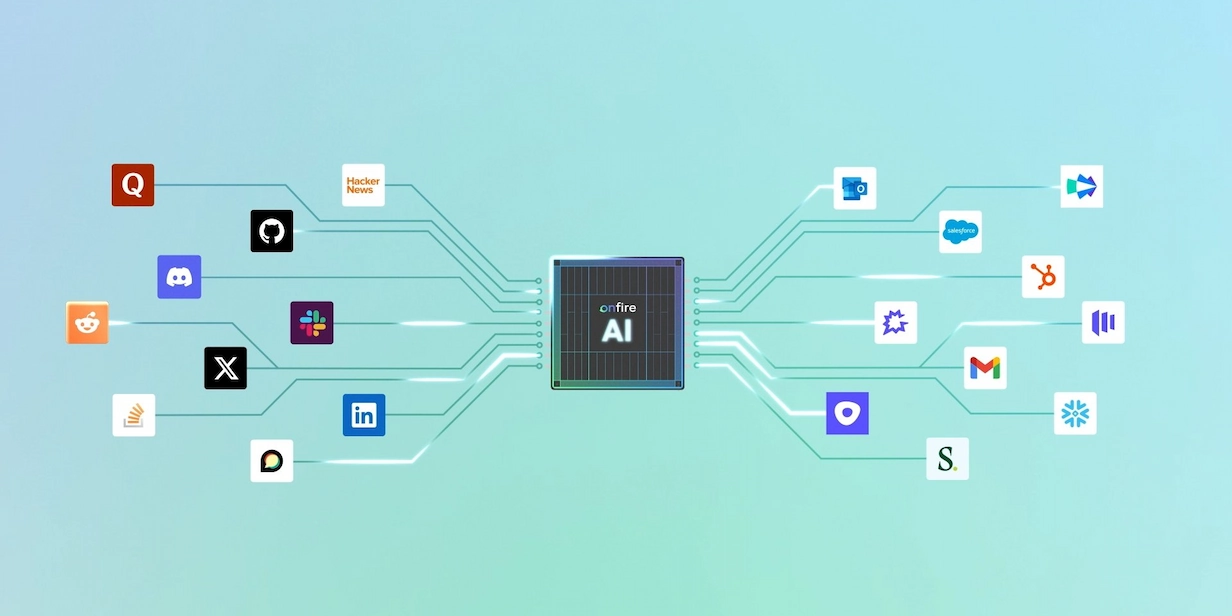
Port chose to work with Onfire so it could use custom signals to enrich accounts and autonomously route leads to the right rep. “What stood out about Onfire is the ability to surface signals from public but hard-to-find spaces like Discord and Slack communities,” says Tarbell. Port used these capabilities to build an autonomous prospecting workflow:
1) Precision account lists in LinkedIn Sales Navigator
Port uses Onfire to identify developers using technologies like Kubernetes or Terraform, then builds high-precision account lists.
2) Instant, accurate inbound routing in HubSpot
Onfire populates developer count and location information into custom fields so inbound leads flow to the right rep immediately, aligned to where devs sit and work.
3) Relevance at scale
Referencing what prospects actually say in communities lifts response rates ~3×- because messages connect to real, recent signals.
With the new system in place, Port and Onfire are continuing to evolve together. “I can Slack someone, and within a day or two, there’s a new feature live,” says Tarbell. “It feels like they’re an extension of our team.”
Impact
Signal-powered pipeline growth
By using Onfire, Port has achieved:
- 10-20% QoQ pipeline growth
- ~3× higher response rates when referencing community signals
- X hours of manual triage saved per month
Moreover, by removing friction from the prospecting process, Port can offer both its SDRs and buyers a better experience. As Tarbell says, “Onfire’s focus on enabling sellers — not automating them — is what sets them apart. They deliver the right data at the right time, and that’s made them more than a vendor; they’re a true partner.”
Bottom Line
Port started with a tedious, error-prone process and ended up with signal coverage from dev communities, LinkedIn Sales Navigator integration, and HubSpot enrichment. Perhaps more importantly, it has a partner that delivers feature updates in days, not quarters.
“If you value trusted, source-level data and want to shape the future of signal-based prospecting, Onfire’s the fit. This isn’t dark-funnel scoring—it’s first-party signals from where your audience actually communicates.”
You don’t need to guess where developers actually sit. Onfire knows.
.webp)













%20(1).webp)

















































.webp)