The Onfire Data Advantage, Explained
Learn how we use AI to find technical buyers everywhere, and why Onfire can surface insights that no one else can.


The revenue intelligence landscape can be confusing. Every data provider claims they can tell you the finest details about your target market and your potential customers. However, it’s no secret that many of these claims don’t stand up to scrutiny. Disappointment with GTM data tools is rife, especially for companies that operate in technical verticals.
In this article, we’ll try to go a bit deeper than simply proclaiming “we have the best data”. Instead, we’ll explain how we collect and process buyer data, how it’s different from what other companies are doing, and why it produces more accurate results for companies that sell to technical buyers.
How most GTM data providers collect their data
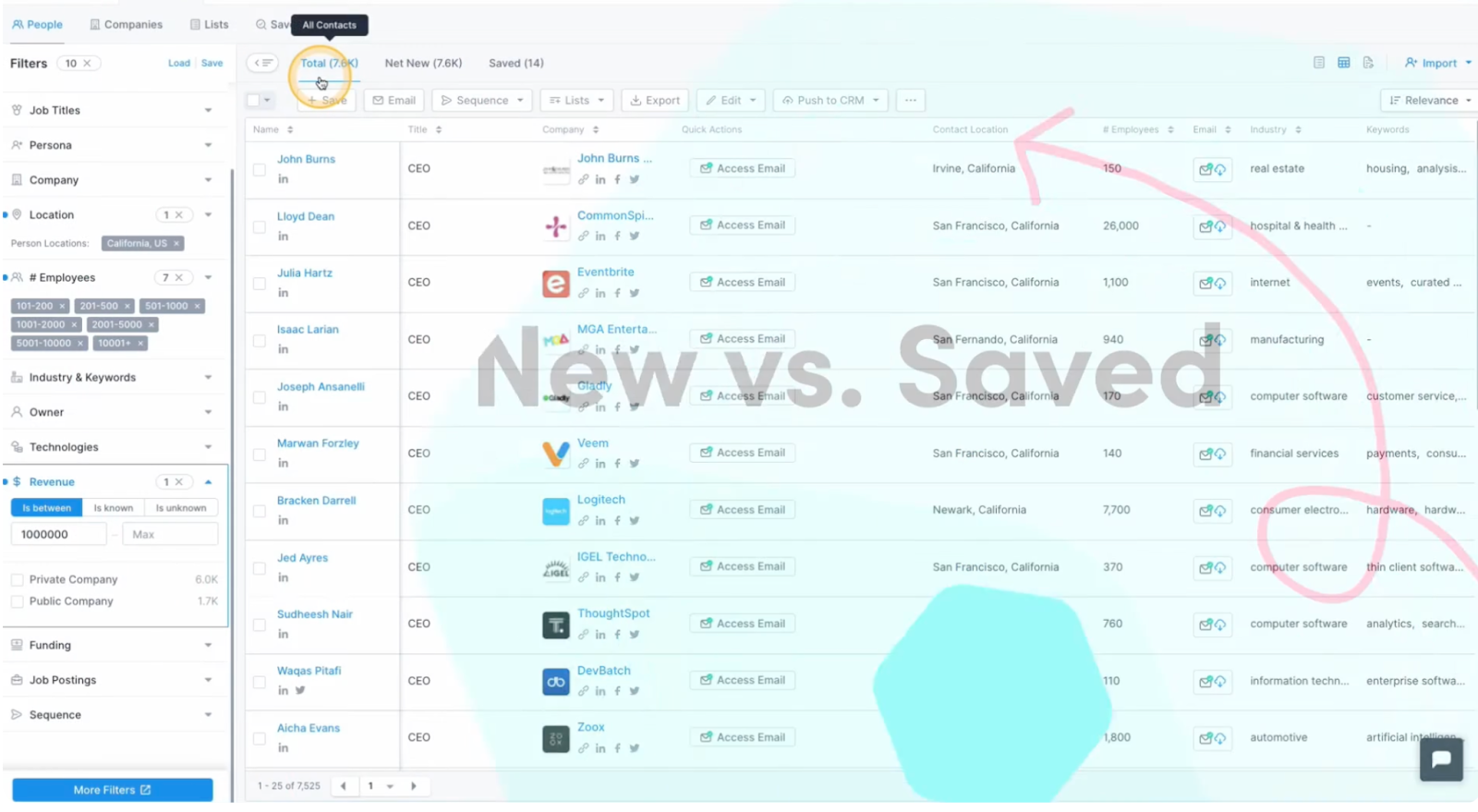
Let’s say you’re selling a cloud cost monitoring solution. Your ICP is traditional enterprises (such as banks and financial services) who are using Azure at a very high scale. If you check a tool like ZoomInfo, Apollo, or Seamless, you will end up with a list of thousands of companies, and often dozens or hundreds of prospects within each company.
How is this list generated? There will be differences in the specific implementation details, but the basics are the same:
- Company data such as size and industry would be sourced from the public web. You would apply the relevant filters, and get a very large list.
- To find out which companies are using Azure, you’d use Technographic filters. These would also be sourced from public sources, most commonly job posts. After applying these filters, you will have a slightly smaller - but still very large - list.
- To find relevant prospects for your niche use case, you could filter based on job titles, such as “senior cloud engineer” or “cloud engineering manager”. Since you are targeting enterprises, you will end up with dozens of contacts from each account.
What’s wrong with this approach?
- Lack of accuracy on the account level - the fact that a company is hiring for Azure doesn’t mean they currently have a large-scale Azure implementation (rather than a vague plan to migrate from AWS or increase usage)
- Lack of specificity on the prospect level - most companies don’t have a “head of cloud costs engineering” role. The right person can be a cloud engineer, a software engineer, or an infrastructure specialist; they can be “senior”, “manager’, or “director”; and so on. The job title often doesn’t tell you much!
- Time and resource waste - because these tools can only provide a guesstimate of which accounts and prospects are relevant, you’ll end up dealing with a lot of noise and false positives. This means your BDRs are going to spend a lot of time on additional manual research - or even more time attempting to reach the wrong people.
How Onfire collects data
Going back to the same example of selling cloud costs optimization to large enterprises using Azure: Onfire would provide a narrow list of relevant accounts, prioritized by buying intent; BDRs would see the specific people responsible for cloud costs in their CRM view, and could immediately start their outreach efforts.
How come we can do this while other tools can’t? Because Onfire is uniquely focused on specific verticals and uses methodology and technology that’s designed to find a specific type of buyer (namely, R&D / product / security folks who buy software infrastructure products).
Onfire’s approach to data is built around 4 key pillars, which we’ll detail below:
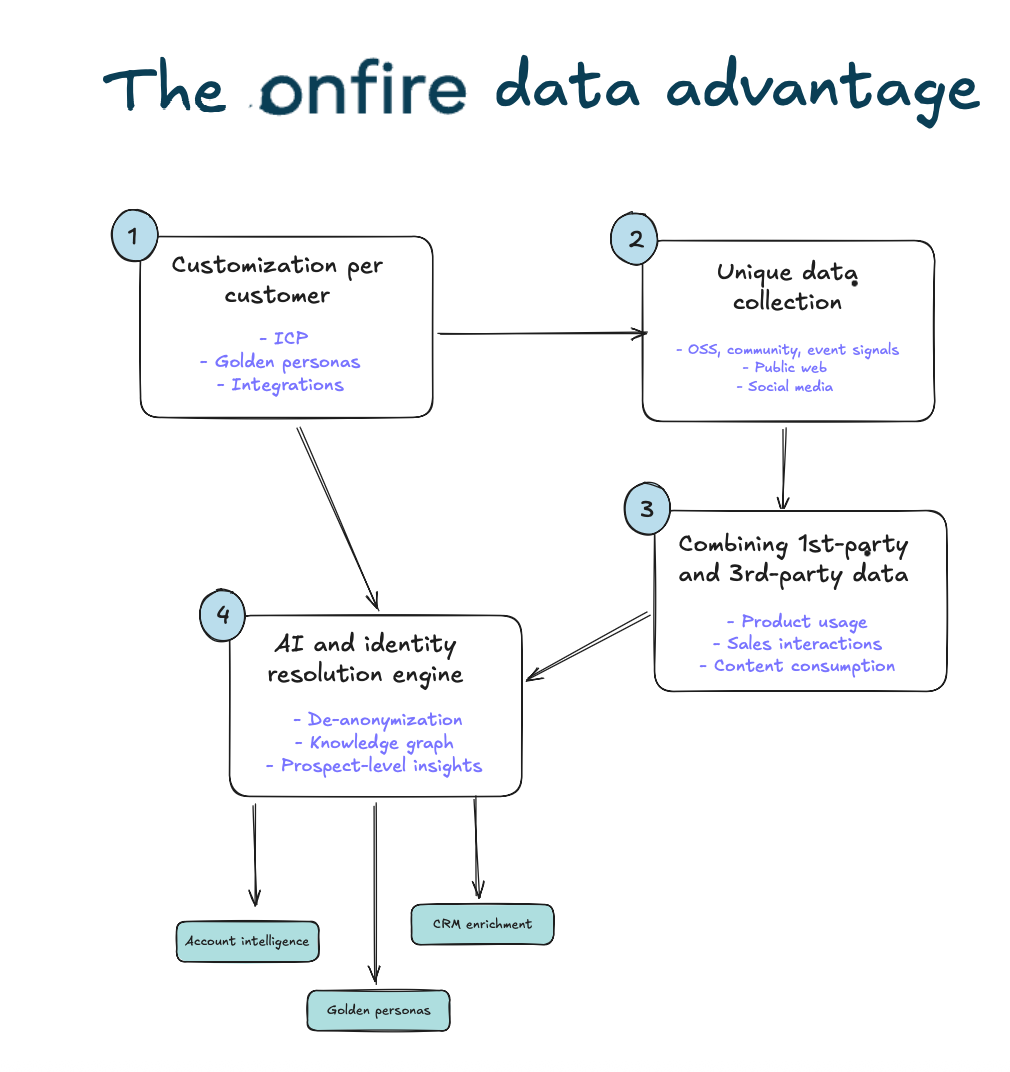
1. A solution tailored to each customer’s GTM
Rather than relying on generic data and targeting, Onfire’s specialists work with each new customer to create a bespoke data strategy. This includes:
- Aligning on ICP-fit accounts and ‘golden personas’ that can drive a deal forward, based on their actual role in the organization rather than their job title. An example of a persona might be “the engineering lead responsible for CI/CD”.
- Tuning Onfire’s AI and data collection so that it can identify the right prospects, at scale, and prioritize accounts which are showing buying intent right now. (More on the data collected in the next section.)
- Integrating Onfire into the workflows and tools that your sales team is already using - so that rather than fiddle with filters, your BDRs get a fresh list of prospects to target at the start of the day, and your AEs get all the intel they need before a sales call.
Because of the flexibility of Onfire’s AI architecture, this entire process is typically completed in a matter of days, and does not require costly and lengthy professional services contracts.
2. Data sources that no one else tracks + first-party data
In addition to the ‘standard’ sources that other data providers will collect - such as job changes and company firmographics - Onfire tracks another category of signals that are highly relevant for technical audiences:
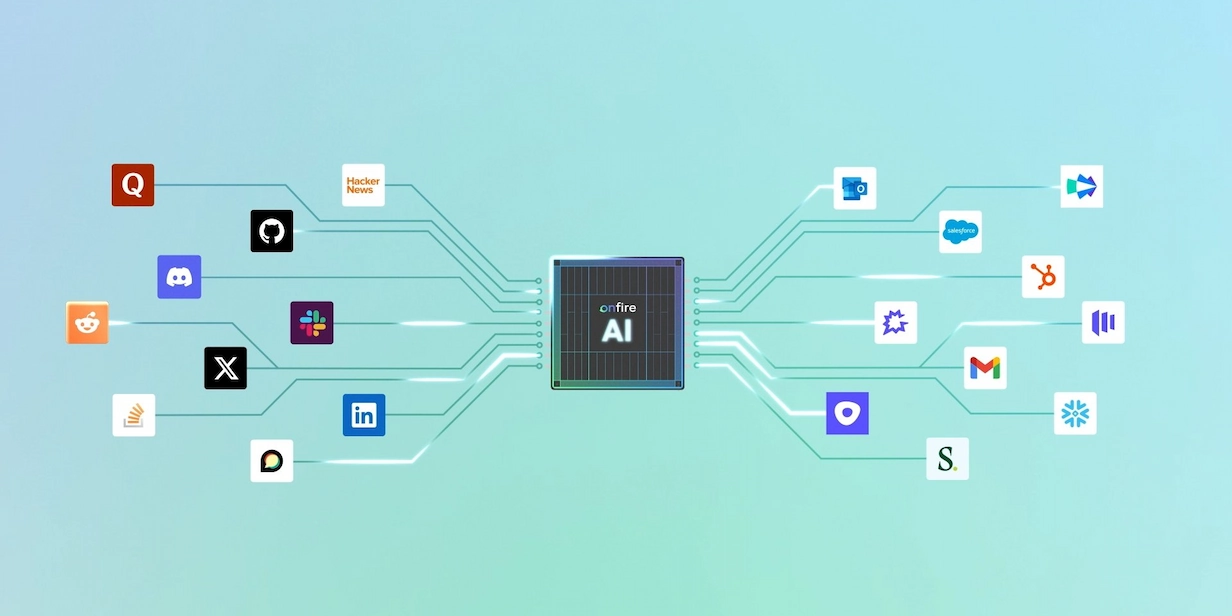
- Communities: Platforms like Stack Overflow, Slack communities, Discord, X, and Reddit. These are the places where technical buyers express their needs, ask for advice, and look for insight before exploring new tooling such as yours.
- Open source activity: OSS tells you which technologies are being used and which problems are being solved. Onfire tracks OSS contributions (via GitHub pull requests) and other adoption signals on the account and prospect level.
- Tech conferences: Offline matters too. Event data from Luma, Meetup, and other social platforms can provide important context. If a prospect is attending re:Invent sessions on database refactoring, that’s a pretty strong intent signal - and Onfire will collect that.
3. Bringing first-party data into the fold
An oft-ignored source of insight is the data that you have already collected in your CRM, marketing automation, and web analytics tools. This can provide valuable signals such as accounts that are showing high activity on trial / freemium editions, approval chains mentioned on previous sales calls, or prospects who have interacted with certain categories of content.
Onfire enables you to combine this first-party data with the third party data we collect in order to create a richer, more detailed picture of the account. This can work in both directions: Onfire’s AI uses your data as another signal to surface new potential buyers, while Onfire’s data enriches your CRM and marketing automation workflows (such as PQL / MQL scoring or automated outreach).
Needless to say, this is all done on a per-account basis, and your first-party data is never used as a signal for other customers.
4. Homegrown AI and identity resolution technology
All the data in the world won’t help you close a single deal if you can’t tie it back to a specific action that a BDR or AE needs to take right now. This is especially important for the type of messy, semi-anonymous signals we’re dealing with here.
You need a way to correlate a semi-anonymous Reddit question, a list of competitors mentioned on a sales call, and a recent hire. And you need to translate it into a single actionable step: John Smith is asking about competitors; share comparison materials.
This is where Onfire’s proprietary technology comes into play. Using techniques developed and battle-tested in mission critical organizations and at massive scale – and which have been tailored to each organization’s unique GTM motion – Onfire will:
- Create a living knowledge graph of your target account: This goes beyond ‘keywords in job title’. Onfire builds a detailed topography of the technologies used in each account, layering domain knowledge onto the raw data (for example, an account using “EKS” will be associated with Amazon Web Services); and it maps technologies to specific teams, persons, and org charts within larger accounts.
- Connect anonymous signals to actual buyers: Technical audiences will often use channels such as Reddit or Stack Overflow anonymously, or pseudonymously. Onfire builds a comprehensive profile of anonymous user activity, and uses AI to automate the ‘detective work’ of connecting these profiles to identifiable and contact-able people within an account - essentially de-anonymizing web activity and transforming sources such as Reddit and Stack Overflow into lead generation opportunities.
- Find the golden personas in each account: Based on the personas you decided you’re after, Onfire will find the specific people in the account you should target. Again, this will not be “engineers who have Kubernetes listed as a LinkedIn skill”; it will be an evidence-based insight into the specific person responsible for a managed Kubernetes implementation in a specific cloud provider. You are able to see the actual evidence, with links to the specific data sources that indicate technology choices and buying intent.
At the end of this process, BDRs and AEs get just the bottom line:
- who should they be targeting today?
- which accounts are at risk?
- who is going to an upcoming event?
- what technologies is this organization already using?
… and they have all this information in the tools they’re already using - CRM, outbound messaging tools, marketing automation, or Sales Navigator.
Benefits of the Onfire approach
- Buyer data that’s actually accurate: The vertical approach and unique data that Onfire enables us to deliver data that’s actually reliable and relevant, which is why our customers see results such as 3x higher reply rates.
- Specific buyers rather than endless lists: With other data providers, you end up with lists of dozens or hundreds of prospects to reach out to. Most of them will be irrelevant, wasting your credits and (more importantly) your time. Onfire gives you the specific people who will champion your technology and help you land an account.
- More time spent selling: Sifting through lists, double-checking data, building additional automations in Clay - all of this isn’t sales, and it distracts your BDRs and AEs from what they’re actually hired to do. Onfire automates everything that isn’t actually selling - so your reps spend a small fraction of the time on tasks like account research, and more time on directly growing their pipeline.
See the difference for yourself!
We are very confident in claiming that no other data provider can compete with Onfire if you’re selling to technical buyers. This article has been our attempt to substantiate this claim with details: what we do differently, why we’ve made certain choices, and how this impacts your experience when using Onfire.
However, we don’t expect you to take these claims at face value.
That’s why we’re inviting you to challenge us – tell us what you’re looking to achieve, see the data we provide, and compare it to any tool you’re currently using or evaluating. Get in touch to get started.
Want to learn more about how Onfire compares to specific tools? Read our head-to-head comparisons of Onfire vs. ZoomInfo or Onfire vs. 6sense.
.webp)













%20(1).webp)















































.webp)