B2B Intent Signals: What They Are and How GTM Teams Actually Use Them
Use buyer intent to ditch the “spray and pray” and reach software buyers with surgical precision.



Key Takeaways
- Intent signals help you prioritize which ICP-fit accounts are ready for outreach today, but not all signals carry equal weight.
- The source of your intent data matters: black-box account scores are less actionable than signals with verifiable evidence.
- Combining first-party data (CRM, product usage) with third-party signals gives you the full picture of buying intent.
- Intent signals vary by industry.Technical buyers leave intent signals in different places than general B2B buyers - community forums, OSS activity, and technical events rather than blog visits.
- Manual research doesn't scale, so the teams seeing the best results automate signal collection and analysis.
"Spray and pray" doesn't work... but you already know this. Intent signals are what's supposed to help you move beyond the numbers game - focusing on the warmest leads with messaging that actually resonates.However, most GTM teams struggle to turn intent data into results - instead ending up with vague account-level scores that don't translate into actionable outreach. In this article, we'll explain what makes intent signals useful, and how to avoid the common traps that often render them useless.
What Are B2B Intent Signals
Intent signals are behaviors that reveal a potential customer’s interest in your product. They help you decide which of the accounts that meet your ICP in the abstract are ready for outreach today.
However, you’ll only know how to track B2B buyer intent signals if you define them in a way that actually matches what your customers are doing. By now most GTM teams are using intent signals, but many don’t see a substantial reward for their efforts. They might know that people from a certain company are looking at their website, but they still have to guess who they should talk to - and what they should say.
After all, different intent signals will tell you different things. A successful funding round may tell you that a company now has cash to spend, but it won’t tell you who you should contact to get the conversation started.

Contrast that publicly available funding information - data that your competitors are certainly seeing - with a Discord post made by a software developer asking fellow engineers about their experience with a competitor’s product. Not only do you know exactly who has a problem that you can solve, but you’re likely one of a handful of people in a position to act on that information.
Intent signals are only as useful as their specificity. Before you invest in collecting them, you need to understand where your target buyers actually signal their intent. A developer evaluating infrastructure tools won't fill out a lead form - they'll ask questions on Stack Overflow or compare options in a Slack community. A procurement lead, on the other hand, might download a pricing sheet. The signals that matter depend entirely on who you're selling to.
Types of B2B Intent Signals
B2B intent signals come in many different forms. Among the most common are:
First-party vs. third-party signals
First-party signals come from your own properties: website visits, content downloads, product trials, and email engagement. These can be high-confidence indicators - though a single developer signing up for your free tier might just be playing around. The signal gets stronger when you see multiple engineers from the same organization creating accounts, or when trial usage spikes across a team. However, first-party signals are limited in reach because they only capture people who've already found you.
Third-party signals come from external sources: web searches, social media activity, job postings, and community discussions. These expand your view beyond your own ecosystem, letting you identify buyers before they visit your site. That being said, third-party signals are typically less reliable, and can vary wildly in quality depending on how they're collected and verified.
The best GTM teams combine both. For example, an account that's hiring for a "Platform Engineering Lead" while three of their developers are actively using the free tier of your developer platform is a stronger signal than either data point alone. First-party data tells you who's already engaged; third-party signals add context about organizational priorities, competitive evaluations, and timing.
Search Signals
When someone searches for "best CNAPP solutions 2025" or "Datadog alternatives," they're signaling active evaluation. Search intent is valuable because it's explicit; the buyer is telling you what they want.
Many platforms for intent-based B2B lead signals capture search signals through partnerships with content networks or B2B publishers.However, this makes it difficult to attribute search queries to a specific individual. Most search intent data is gathered through office IP address matching - when someone visits a B2B publisher site, their corporate IP is matched to a company.
You're left with an account-level signal ("someone at Acme Corp searched for dynamite") without knowing who (Wile E. Coyote, perhaps) is doing the searching. And with remote work fragmenting office IP addresses, even the account-level attribution is becoming less reliable.
Engagement Signals
Engagement signals track how prospects interact with content. Typically, they come in the form of time on page, number of articles read, webinar attendance, or ad clicks. Engagement signals are vital if you want to gauge the depth of a prospect’s interest in your solution. Someone who read three comparison articles is further along than someone who bounced after ten seconds.
Yet as with every other type of signal, engagement has its limits. Reading a blog post doesn't always translate into buying intent - sometimes people are just curious, or researching for a different purpose entirely. There's also a coverage problem: 95% or more of the people interacting with your site will never fill out a form. If you can only track engagement from identified visitors, you're missing almost everyone. That's why de-anonymizing website traffic - connecting anonymous sessions to actual people and accounts - has often become a focus of ABM programs.
Community Signals
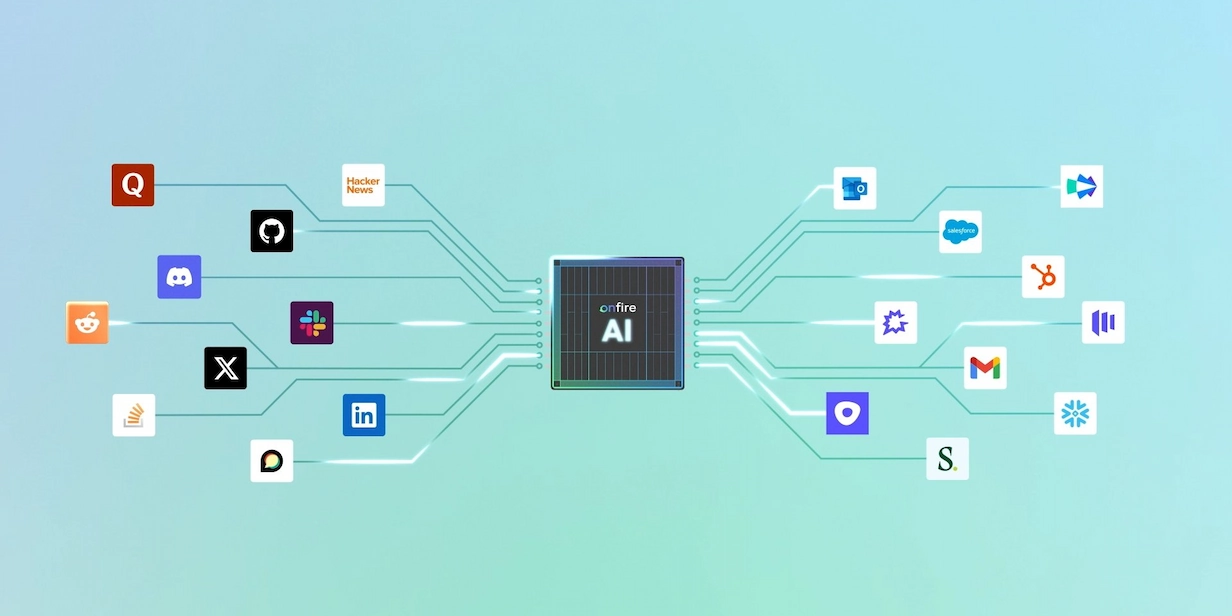
Intent signals vary by industry, and for technical buyers, community signals are crucial. Engineers, developers, and security professionals often discuss tools and solutions in community spaces including Reddit, Discord, Slack communities, GitHub, Stack Overflow, and Hacker News.
A post asking "has anyone migrated from Terraform to Pulumi?" is a clear signal of evaluation. Unlike search or engagement signals, community signals often come with context - you can see what specific problems the buyer is trying to solve.
Community signals are harder to capture at scale, which is why most traditional intent providers don't offer them. But for companies selling to technical buyers, they're often the most valuable signals available.
How B2B Buying Intent Signals Drive Sales
Without intent signals, outbound becomes a pure numbers game. You have a list of accounts that fit your ICP on paper, so you blast them all with the same messaging and hope something sticks. This approach is wasteful, damages your brand, and annoys the relevant prospects you do reach because you're not personalizing the message or timing it to match their actual interests.
Intent signals help GTM teams avoid a “spray and pray” approach. Consider a practical example: you're selling a cybersecurity solution. Instead of cold-emailing every CISO in your territory, you identify people actively discussing CNAPP governance challenges on Reddit or asking about compliance frameworks in a security-focused Slack community.
The message lands differently when you can say "I noticed you were asking about X" rather than "I'm reaching out because you might be interested in Y."
Yet to collect and analyze intent signals, BDRs end up spending long hours on manual research, scrolling through LinkedIn, checking company news, and hunting for any sign that an account might be worth pursuing. Based on our conversations with 289 revenue leaders, up to 80% of a BDR's time can go to research instead of outreach, eroding both growth and morale.
Intent Data Dos and Dont’s
Don’t assume intent looks the same across all buyers
“Intent” isn’t the same across all buyer categories. For instance, a developer downloading a whitepaper is not the same as a procurement lead downloading a pricing sheet. Sometimes, they’re just self-educating or evaluating whether to build vs. buy.
Do instead
Define intent signals based on how your specific buyers actually research and evaluate. For technical audiences, this often means community activity, OSS adoption, and hands-on product trials rather than marketing content consumption.
Don’t blindly trust your intent provider's scores
Many intent tools operate as black boxes. They give you an "intent score" without explaining where it came from. Often, these scores rely heavily on IP matching with website traffic - which is increasingly unreliable as remote work fragments office IP addresses.
Do instead
Validate signals by examining the underlying evidence. Your provider should show you where the intent signal originated. If someone posted in a community, you should see the post. If hiring activity triggered the signal, you should see the job listing.
Don’t ignore your first-party data
Third-party intent is valuable, but it shouldn't replace what you already know about your prospects. Your CRM contains conversation history, past objections, and relationship context. Your product data shows trial usage, feature adoption, and engagement patterns. Ignoring this in favor of external signals means missing the full picture.
Do instead
Combine first-party and third-party data. The best signals often come from correlating different types of signals. For instance, an account showing external research activity while their trial usage spikes is a stronger indicator than either signal alone.
Don’t rely on manual research to find intent
Logging onto Reddit or Discord to find relevant conversations works, but it doesn't scale. A BDR can manually monitor a handful of communities but they can't possibly cover the (tens of) thousands of places where technical buyers discuss solutions.
Do instead
Work with B2B intent signal vendors that automate signal collection and analysis. The goal is for BDRs to log in and see prioritized accounts with context, not to spend their morning scrolling through forums.
Don’t treat all signals as if they’re equally urgent
Not every intent signal requires immediate action. A company posting a relevant job listing is worth noting, but it's not as time-sensitive as someone asking for product recommendations in a community. Treating all signals identically leads to both alert fatigue and missed opportunities.
Do instead
Tier your signals by urgency and confidence. High-confidence, high-urgency signals (like direct product mentions or competitor comparisons) should trigger immediate outreach. Lower-confidence signals (like hiring patterns or technology adoption) should inform prioritization without demanding same-day action.
Being Intentional About Intent
Intent data isn’t a magic bullet. If your signals are vague account-level scores with no evidence behind them, you’re just paying more to keep guessing. But if you define signals to match your ICP and collect them in the places where your buyers go to find trustworthy information, then they can clarify your outreach.
Onfire monitors 25,000 engineering-centric communities to collect signals at a scale that can’t be achieved manually. If you’re selling to technical buyers, it will help you connect the dots. Contact us to get started.
FAQs
How do you prioritize intent signals when multiple accounts show activity?
Start by layering intent with ICP fit. An account showing strong intent that barely meets your ICP criteria is less valuable than an ideal-fit account with moderate intent. From there, prioritize by signal recency (recent activity beats stale signals), signal strength (explicit product research beats general category interest), and relationship status (accounts with existing contacts or past engagement are warmer).
How do intent signals vary by industry?
The mechanics are similar, but the signal sources differ. In software infrastructure, buyers discuss solutions in developer communities, GitHub, and events like KubeCon. In manufacturing, trade publications, industry association forums, and equipment-specific conferences carry more weight. However, in financial services buyers often signal through regulatory compliance discussions, RFP announcements, and analyst briefings. That’s why you need to use your own knowledge to define the intent signals you’re looking for.
How do sales teams use intent signals daily?
The best implementations make intent part of the daily workflow rather than a separate system to check. BDRs start their day with a prioritized list of accounts showing recent activity, complete with context on what triggered the signal. When reaching out, they reference the specific behavior - "I noticed your team is evaluating X" or "saw your question about Y in [community]" - making the outreach relevant rather than generic.
What mistakes do BDRs make when using intent signals?
The most common mistake is acting on signals without context. Seeing that an account has "high intent" isn't enough - you need to know what they're researching, who at the company is involved, and what problem they're trying to solve. Another frequent error is over-automating: blasting everyone who shows any signal with templated outreach defeats the purpose of having intent data in the first place.
How do intent signals change across different deal sizes?
Larger deals typically involve more stakeholders and longer evaluation cycles, which means more signals to track but also more noise. For enterprise deals, you're looking for patterns of intent across multiple contacts at the same account - not just one person researching, but signs of committee-level evaluation. For SMB and mid-market, individual signals carry more weight since buying decisions often rest with one or two people.
.webp)













%20(1).webp)
















































.webp)