Agentic AI for Technical-Buyer GTM: How Modern Teams Find Real Demand


Key Takeaways
- Traditional GTM processes such as lead scoring and account prioritization have been designed as rules-based systems which rely on structured inputs and outputs.
- When selling to technical buyers, data becomes messier and sparser, forcing more creative approaches.
- Agentic AI with reasoning capabilities opens possibilities for deeper automation, signals-driven outreach, and more accurate GTM workflows.
Your BDR is staring at a prospect's LinkedIn profile, trying to figure out if the VP of Engineering at a Series C infrastructure company actually cares about observability, or if they're just reposting vendor content.
There's no signal either way, so they do what BDRs inevitably do: open a few more tabs, skim the company blog, poke around some GitHub repos, and cross-reference a job posting for clues. Thirty minutes later, they still don't know if this account is worth an email.
Multiply that across every rep and every account on your list, and the math - and the morale - gets ugly fast. Salesforce's State of Sales report found that reps spend just 40% of their time actually selling. The rest goes to research, data entry, and context-building: work that feels productive but doesn't generate pipeline.
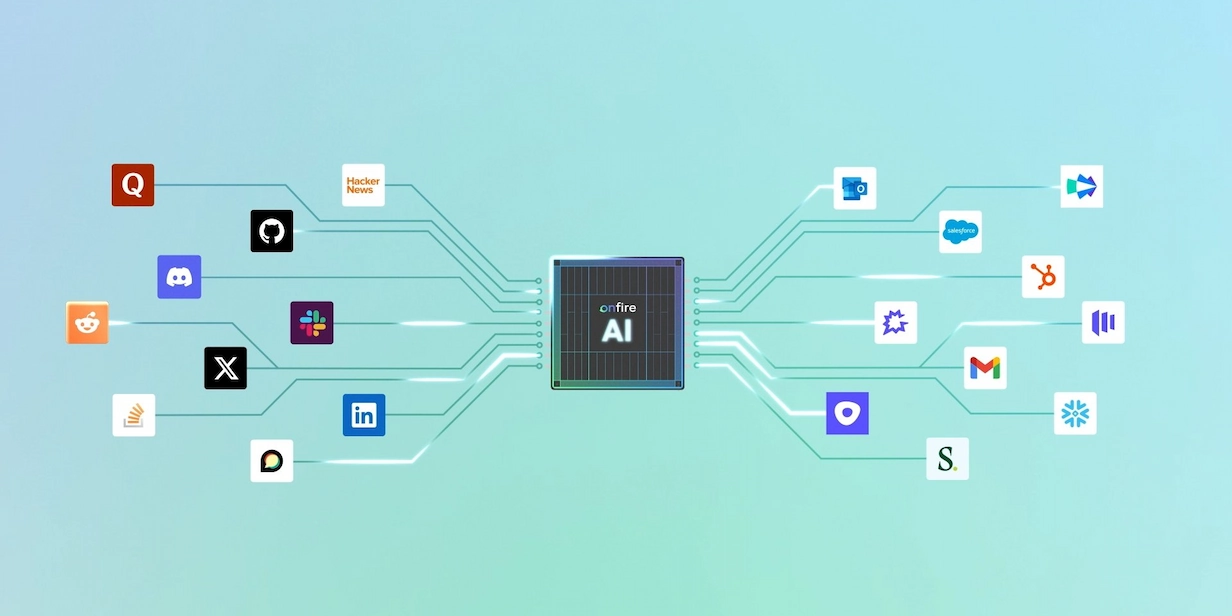
Agentic AI takes over the repetitive, manual parts of that 60%, autonomously researching accounts, interpreting buying signals from channels your team can't realistically monitor, and surfacing the prospects worth pursuing.
For teams selling to technical buyers like engineers, architects, and DevOps leads, this matters even more. The signals that indicate real intent live in communities, open-source projects, and conferences that traditional sales tools don't touch.
Why Traditional GTM Tooling Misses Technical Buyers
Technical buyers don't follow the traditional GTM playbook. They're not downloading whitepapers or filling out demo forms, as we've written about extensively. But even teams that understand this tend to respond by stacking more automation on top of the same structured data rather than rethinking where they look for signals in the first place.
The problem is that the signals worth acting on, a Kubernetes Slack thread about service mesh alternatives, a spike in contributions to a competing OSS project, three engineers from the same company registering for KubeCon, aren’t built into into Salesforce workflow rules. These signals are unstructured, semi-anonymous, and scattered across dozens of channels that traditional account intelligence tools were never designed to monitor.
Rule-based systems need clean, structured inputs such as a lead score crossing a threshold, a form submission, or an IP address matching a target account, but technical buyer intent rarely provides them. When 57% of developers influence purchasing decisions and 64% turn to developer communities to research tools, the buying process is happening in Reddit threads, GitHub repos, and private Slack groups, where there's no structured field to trigger a workflow.
You can write a rule for "lead visited pricing page twice." However, you can't write one for "someone asked about migrating off Datadog in a community where three of our target accounts are active."
To close that gap, you’ll need more than better data piped into the same automation. You’ll need something that can cross-reference a Reddit post with a GitHub contribution and a conference registration, weigh those signals in context, and decide whether an account is actually worth pursuing. That's reasoning, not rules, and it's exactly what AI agents add to the GTM stack.
How Agentic AI is Different
What does this look like in practice? Say you have a target account list of 500 companies and need to figure out which ones are actively evaluating observability tooling right now. While rule-based and co-pilot AIs would have to wait until your accounts trigger a predetermined sequence , or until your BDRs prompt them , an AI agent can get to work immediately.
An agentic AI continuously monitor signals across all 500 accounts , activity in developer communities, commits to open-source repos, hiring patterns on job boards, conference registrations , and surfaces the patterns that indicate real intent. When it finds something worth pursuing, it pushes a scored account with context into your CRM or Slack channel, ready for a BDR to act on immediately.
Importantly, your reps don’t have to know where to look or what to ask for your agent to autonomously find and act on intent. That’s what sets AI agents apart from the AI features bolted onto most sales tools.
From Signals to Pipeline – An Example of an Agentic Workflow
Say a developer posts a question about service mesh alternatives in a Kubernetes Slack community. An agent matches that anonymous handle to a senior platform engineer at a Series B cloud security company on your target list, pulls in their professional profile, and maps them to the right account in your CRM. That identity resolution capability is essential if for the rest of the workflow.
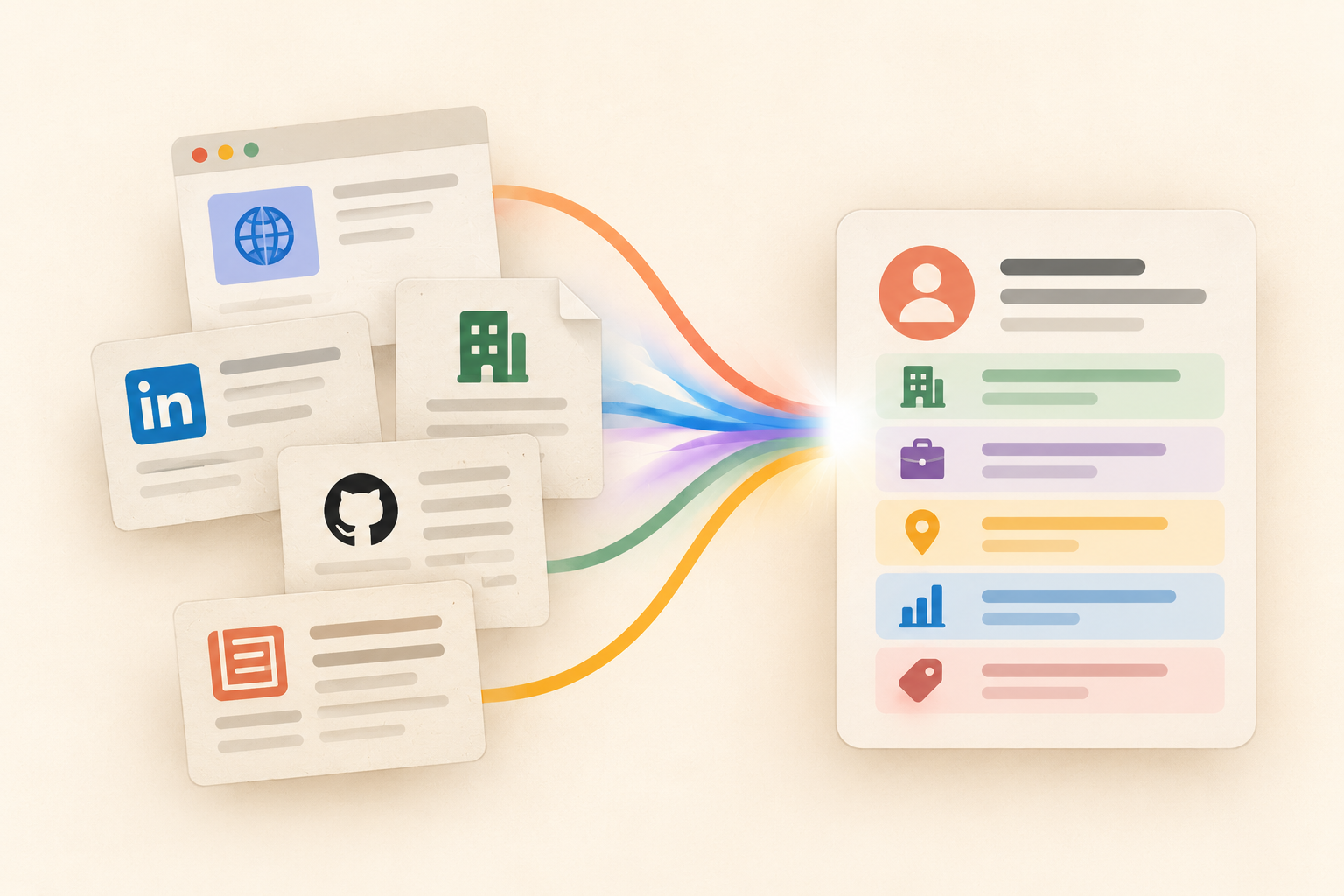
After matching anonymous community activity to a named buyer at a known account, the agent builds context by cross-referencing multiple signals: the engineer's recent GitHub contributions to an open-source observability project, the company's job postings for two new SRE roles, and conference registrations showing three team members at a relevant industry event. While no single signal means much on its own, together they tell you this team is actively investing in infrastructure and evaluating tooling.
Once it has assembled heterogeneous signals into context, the agent updates the account's priority score in your CRM, attaches a summary of the combined signals, and routes it to the right BDR with a suggested angle: "Their platform team is expanding and actively exploring new observability tooling. Reference the Kubernetes community discussion as a conversation starter". The BDR who picks this up has specific information and good timing, not a generic template.
For a non-hypothetical example, see how Onfire helped Spectro Cloud automate account research and generate $1.65M in new pipeline:
Spectro cloud's case study: AI Revenue Intelligence That Turns Buyer Signals into Pipeline
How GTM Teams Can Leverage Agentic AI Today
AI agents for GTM offer a range of benefits, but these are the most significant:
Account prioritization based on real signals, not lead scores:
Instead of working a static list ranked by firmographic fit, your team focuses on accounts showing actual buying behavior, things like community discussions about problems you solve, relevant hiring patterns, or active technology evaluations.
BDRs armed with that context consistently outperform teams running generic sequences, because they're reaching accounts that are already in-market. For instance, Port, a developer platform company, saw 20% pipeline growth quarter-over-quarter and a 3x improvement in response rates after shifting to signal-driven prospecting.
Faster time from signal to qualified opportunity:
When an agent surfaces intent signals as they happen, the gap between spotting an interesting account and booking a meeting shrinks from days to minutes. Spectro Cloud experienced this firsthand after switching to signal-driven outreach: they cut their time to book qualified opportunities by 30% and improved email reply rates by 15%, generating $1.65M in net-new pipeline, all from outreach grounded in what prospects were actually doing.
Turning community intent into booked meetings:
Developer communities are full of buying signals, engineers comparing tools, sharing migration war stories, asking for recommendations, but most of that activity happens well before anyone talks to a vendor, and the window to act on it is short.
Cyera, a cloud security company, used community signal monitoring to connect those conversations to accounts and convert them into pipeline, achieving higher connect rates and sustained SDR adoption across the team. That last metric is especially relevant when you consider that most sales tools see declining usage after the first month.
Event and conference preparation:
Before a major industry event, an agent can scan attendee lists, cross-reference them with community activity and CRM data, and deliver a prioritized list of who your team should meet, along with context on what each person cares about and why the timing is right. That way, your reps work the floor with a plan instead of working it blind.
Technology stack mapping:
Knowing what tools a target account runs is table stakes for infrastructure sales. Agents can map that stack in real time by monitoring OSS contributions, job postings, and community discussions, surfacing migration signals, adoption shifts, and competitive openings that a static vendor database would never catch.
GTM agents work best when they have clean data to build on. If your CRM is outdated, your account lists are stale, or your ICP is poorly defined, the signals they surface will be noisy at best. The technology amplifies your GTM motion ,it doesn't replace having one.
FAQ
How is agentic AI different from traditional GTM automation?
The simplest way to tell them apart is that automation does what you told it to do, while an agent figures out what needs doing. Automation triggers sequences based on rules you set, but an agent notices a pattern across three data sources you weren't monitoring, decides it's worth flagging, and delivers it to the right rep with context. The end result might look similar, an account gets prioritized ,but the path to that decision is entirely different.
What data sources matter most for agentic AI in GTM?
The sources that matter most are wherever your buyers actually spend time. For technical buyers, that means developer communities, open-source repositories, conference circuits, and job postings. But raw data access isn't enough ,the value comes from cross-referencing these sources to build a composite picture of intent.
For instance, a single Reddit post is noise, but that same post combined with matching job postings and GitHub activity becomes a meaningful signal.
How do BDRs and AEs actually use agentic AI day-to-day?
In practice, agents run in the background and push outputs into the tools teams already use, whether that's a CRM, an outbound platform, or Slack. A BDR's morning might start with a prioritized list of accounts that showed new intent signals overnight, each with a summary of what changed and a suggested outreach angle.
AEs get alerts when existing pipeline accounts show risk signals , say a key champion leaving or a spike in competitor activity , or when expansion triggers appear. The result is less time spent researching and more time in actual conversation.
What ROI can GTM teams expect from agentic AI?
Teams with a clear ICP, clean CRM data, and established outbound motions see the fastest returns. But the consistent pattern across early adopters is that they qualify opportunities faster, get higher response rates, and surface net-new pipeline from accounts that would have been missed entirely. Port, for example, saw 20% QoQ pipeline growth.
.webp)











%20(1).webp)















































.webp)