How Technographic Data Helps GTM Teams Prioritize the Right Accounts



You’re selling a database observability tool and your ICP is mid-market companies running PostgreSQL at scale. You pull a technographic filter in your data provider of choice and get back…4,000 accounts.
Now it’s time for your entire BDR team to slog through the list and weed out the companies that just mentioned it in a job post or evaluated it before moving on.
In theory, technographic data is essential. But in practice, it’s often more work than it’s worth. In this article, we’ll walk you through the ins and outs of technographics and share the questions you should ask as you evaluate providers.
Key Takeaways
- Technographic data tells you whether an account is a solution fit, but most providers infer it from job posts and web scrapes, which means the data is often stale or flat-out wrong.
- Technographics are most valuable when layered with intent signals and first-party data. On their own, they narrow the list but don't tell you when to reach out or who to talk to.
- Horizontal platforms prioritize breadth while vertical platforms like Onfire prioritize depth and accuracy for technical buyers.
- The right provider should push prioritized leads into your BDRs' existing workflow, not add another research step to an already manual process.
What GTM Teams Can Do with B2B Technographic Data Today
Without insight into the stack your prospects actually use, you have no way to tell if it’s worth it to reach out. This makes technographic data a must-have for teams selling software infrastructure. Without it, you’re flailing in the dark. But with solid technographics, you can:
- Build well-defined ICPs
- Identify solution-fit in a given account
- Prioritize accounts for outreach
- Tailor campaigns based on tech stack insights
But here’s the catch: technographics have to be accurate, timely, and fine-grained. If you’re selling developer tooling, it’s likely that your prospects’ stacks are changing rather quickly as their needs evolve. For the sort of outreach that gets a response, you’ll need to speak to their current situation in precise terms.
How Technographic Data Providers Collect and Enrich Data
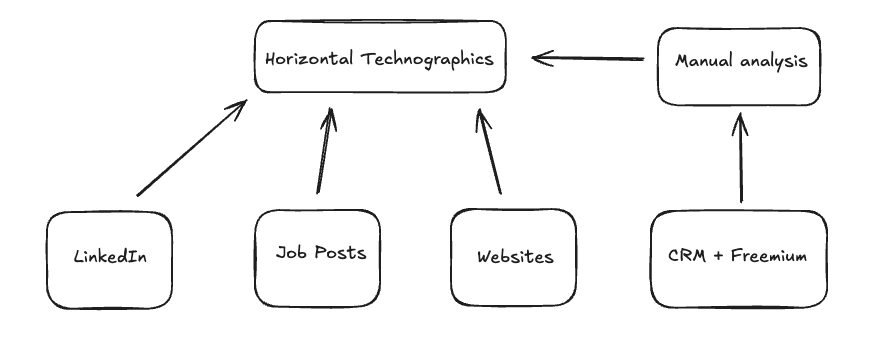
Most technographic tools are horizontal, that is, they’re designed to cover the widest possible range of use cases. That means that they rely on the data sources that have been proven to work for generic B2B sales: LinkedIn, job postings, web visits, ad engagement, and landing pages.
Of course, technical GTM teams don’t just rely on these external sources. They also have unique data in their CRM and web analytics tools, particularly when it comes to free trials. But BDRs are then left with the unenviable task of combining externally sourced technographic data with their in-house data by hand, which is messy and time-consuming.
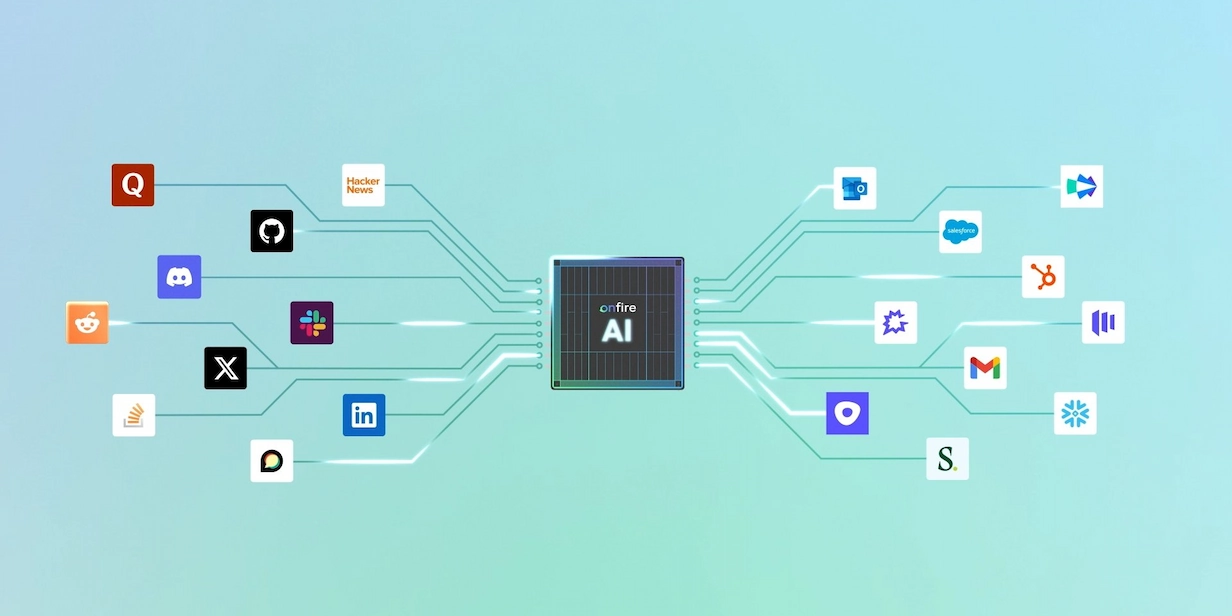
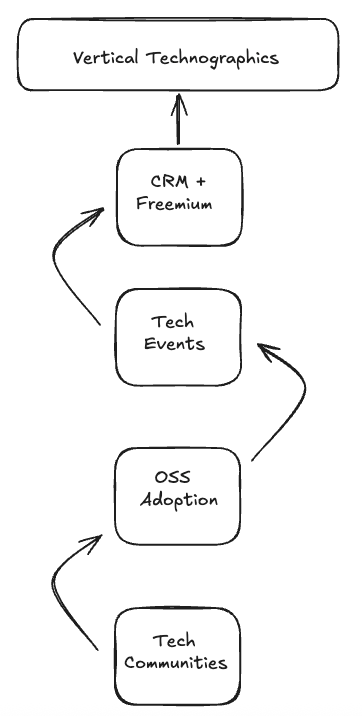
However, not all sales intelligence tools were created to cover a broad range of products. The platform created specifically for software infrastructure sales, Onfire, is a vertical solution that sources technographics from the places technical people actually frequent: Discord, Reddit, Slack, GitHub, and tech events. It then combines that third-party data with CRM insights automatically.
Comparing the Best Technographic Data Providers
Because technographic data providers use a variety of sourcing strategies, you’ll want to choose the one that best fits your GTM motion. Here’s a breakdown of popular tools based on their data collection methodology:
Community and behavioral signals
Onfire stitches together data from sources hand-picked to form a complete picture of the technical buyer. That starts with OSS activity, engineering forums, and events but also includes firmographic data from B2B platforms. The platform then interprets this information with your unique web and freemium data to prioritize accounts within your existing CRM each day.
However, it shouldn’t be confused with a horizontal solution that can give you insight into general business accounts. Onfire is first and foremost a revenue intelligence platform for teams selling software infrastructure.
Web scraping and job posts
Legacy B2B platforms like ZoomInfo and Apollo get their technographic data from public sources like LinkedIn, landing pages, and job posts. This gives you broad coverage if you’re selling to generic business accounts. If you don’t need the deep tech stack to sell, then these solutions will help you cover your bases.
IP and pixel-based tracking
Some intent tools, such as 6sense and Demandbase, detect account-level interest through a mix of web visits and ad engagement. This information can give you some insight into how to time your outreach efforts so they match active customer interest. However, it’s not very useful if you don’t already know what tech stacks your accounts are running.
DIY
Workflow automation tools like Clay and n8n can also be used to put together technographic sourcing sequences. However, they require a bit of expertise and a lot of time to configure. If your team has a dedicated RevOps engineer (or several), this could be feasible, but it’s a significant investment that has to be maintained as sources change and LLMs evolve.
How to Choose the Right Technographic Profile Data Provider for Your GTM Stack
The best provider for your company will depend on what you’re selling, who you’re selling it to, and how you’ve set up your GTM motion. Here are a few of the questions you should ask before drawing up a shortlist for evaluation:
How deep do you need to go?
If all you need to know is if a customer uses AWS or Azure, a horizontal platform will get you there. But if you need to differentiate between Amazon EKS and self-managed Kubernetes, you need a provider that can drill down into the details.
Where are your target accounts located?
Coverage often varies widely by geography. Some platforms focus on the US while others specialize in EMEA or APAC. If your TAM is evenly distributed across geographical regions, test the data quality in each one so you’re not left with a blind spot.
How timely are the technographics?
Technographic providers need to regularly ingest live signals to provide the timely information you need to reach in-market customers. However, some simply re-scrape stale sources once a quarter. While this might work in a general B2B setting in which tooling isn’t being constantly swapped out, it will leave you far behind the pace of software infrastructure companies.
Will your BDRs actually use it?
BDRs are used to manual research & qualification work, but they know their current processes work. If you ask them to start querying a new database, they’ll be hesitant to add yet another research step to an already tedious workflow. However, if providers push prioritized leads directly into their CRM, they’ll be able to move from research to outreach in minutes.
Does it use your existing insights?
While plenty of technographic data is waiting to be found online, your team has also assembled valuable insights in-house. If you’re to benefit from it, providers need to combine third-party information with the CRM, web analytics, and product usage data that you already have. And again, if you want your BDRs to actually use it, you need a tool that can layer in data automatically, not just add another step to a manual research & qualification process.
Is its data sourcing methodology compliant?
If you sell into regulated industries or operate in regions with strict data privacy laws (GDPR, CCPA), ask where the data comes from to verify that you remain compliant.
FAQ
How is technographic data different from firmographic and intent data in a GTM strategy?
Firmographics tell you what a company is (size, industry, revenue). Technographics tell you what they run (languages, platforms, infrastructure). Intent data tells you when they're looking to buy. Each answers a different qualifying question, and the most effective GTM motions layer all three to narrow a broad TAM down to accounts worth pursuing right now.
Which GTM motions benefit most from technographic data: outbound, ABM, or PLG?
All three, but in different ways. Outbound teams use technographics to filter out accounts that aren't a solution fit before reps waste cycles, ABM teams use it to tailor campaigns around specific stack components, and PLG teams use it to understand what a free-tier user is already running.
What are common mistakes teams make when rolling out technographic data in their CRM and workflows?
The biggest one is treating technographic filters like a one-and-done list. Tech stacks change, and a static export decays quickly. Another issue is failing to combine technographic data with intent signals and first-party data. Technographics work best as one layer in a broader prioritization model, not as a standalone filter.
How can smaller B2B teams use technographics effectively without a large data or ops function?
Look for platforms that deliver prioritized outputs rather than raw data. If your team doesn't have dedicated RevOps resources to build and maintain enrichment workflows, a tool that requires heavy configuration will sit unused. Smaller teams get the most value from providers that integrate directly into the CRM and surface actionable leads without manual assembly.
How often should GTM teams refresh technographic data to keep account prioritization accurate?
It depends on how fast your target market moves, but quarterly refreshes are the bare minimum, and for most software infrastructure verticals, that's already too slow. Engineering teams adopt and drop tools constantly. Providers that ingest live signals (community posts, OSS activity, event attendance) will stay current without requiring you to schedule manual refreshes.
.webp)












%20(1).webp)















































.webp)