The 3 Types of Lead Deanonymization and Why They Matter for SaaS Sales



The people who matter most to your pipeline are often the hardest to find. In fact, in technical verticals, they’re often doing everything they can to avoid salespeople, hiding behind pseudonyms on forums and in OSS communities. And that makes lead deanonymization crucial for your GTM motion.
However, the term gets thrown around pretty loosely, so much so that a number of different methods are often referred to as “deanonymization.” Read on to see what’s going on beneath the surface.
Key Takeaways
- Lead deanonymization resolves anonymous activity, whether on your website or across the public web, into identifiable accounts or contacts that sales teams can act on.
- Website-based deanonymization (tools like Leadfeeder and RB2B) helps you reach visitors who didn't convert via forms. But it only works on traffic you've already attracted.
- Community and signal-based deanonymization (Onfire's approach) identifies in-market buyers before they visit your site, based on activity in developer communities, OSS, and events.
- The best deanonymization providers link activity on your website to engagement on third-party sites to build a complete picture of your buyers.
The Three Types of Lead Deanonymization
Lead deanonymization is the process of linking anonymous (and pseudonymous) digital activity to identifiable accounts or individuals. When it works, it allows sales orgs to tie web engagement or community activity back to a name, a company, and a reason to reach out.
There are three distinct types of deanonymization, and they enable two GTM motions.
1. Account-level website deanonymization is the most established category. Tools like Leadfeeder and Clearbit Reveal match website visitors to companies by resolving IP addresses against corporate IP databases. The output is something like "someone from Bank of America visited your pricing page." You don't know who, specifically, but you know the account is showing interest.
2. Contact-level website deanonymization is newer and more granular. Tools like RB2B claim to identify the specific person who visited your site, not just their employer. The accuracy and privacy implications are still being debated, but the appeal is obvious: instead of "someone from Bank of America," you get a name and a LinkedIn profile.
Both of these approaches are limited by a shared constraint: They only work on visitors who have already landed on your website. If you’re selling software infrastructure, that’s a problem. After all, the engineers who are tasked with evaluating your tooling probably aren’t browsing vendor websites. Instead, they’re looking for answers in technical communities that your web analytics don’t touch.
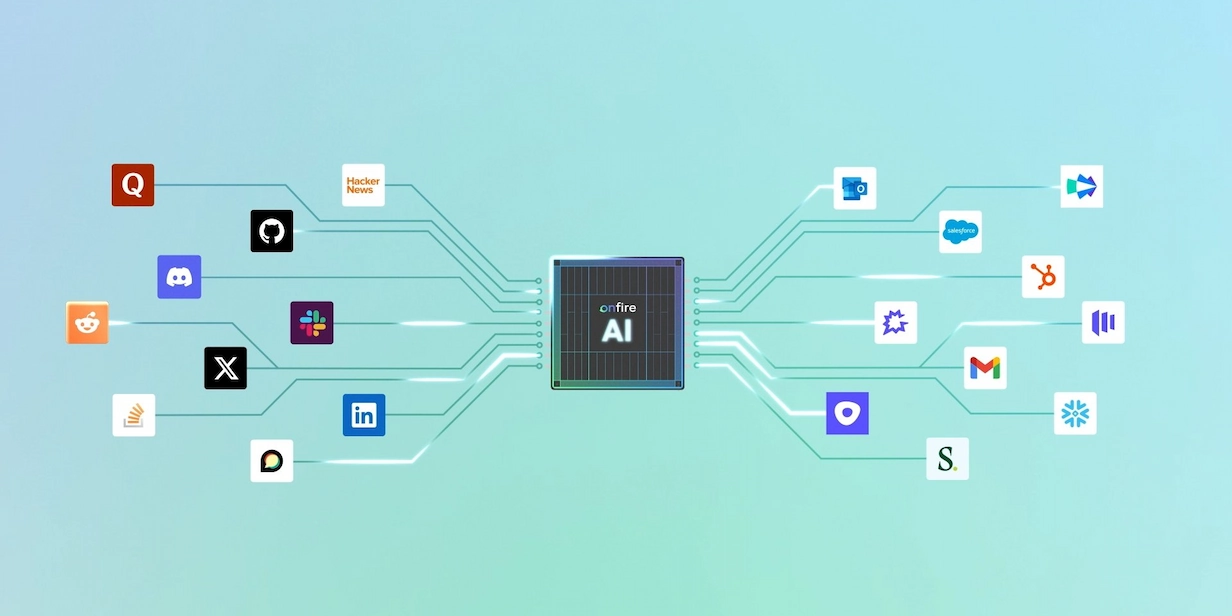
3. Community and signal-based deanonymization, which is what Onfire does, isn’t limited to your own web properties. Rather than waiting for someone to visit your site, Onfire monitors activity across developer communities, open source projects, conferences, and social platforms to identify people who are in-market for solutions like yours. Using proprietary identity resolution, Onfire connects pseudonymous community activity to real people at real companies.
How Sales Teams Use Deanonymized Website Traffic
Now that you know what the three types of lead deanonymization are, it’s time to look at what these tools let you do. Here are some of the most important things they bring to a sales organization:
Timing outbound
When a target account shows up on your site, especially on high-intent pages like pricing, competitive comparisons, or integration docs, that’s a solid sign that they’re ready for outreach. Your BDRs can then use that signal to reach out while the buyer is actively evaluating options.
Refining ABM campaigns
If you're running account-based programs, deanonymized traffic gives you real-time confirmation that your target accounts are engaged. Instead of relying solely on third-party intent signals, you can see which accounts from your TAL are actively researching you, and combine that information with your externally sourced data to build a complete picture of your accounts.
Spotting expansion opportunities
When someone from an existing customer's account visits pages about a product line they haven't purchased yet, that's a warm expansion signal. It's especially useful in enterprise accounts where different teams buy independently because a visit from a new department can surface opportunities your account manager wouldn't otherwise catch.
Qualifying inbound leads in context
A demo request from a mid-level engineer carries more weight when you can see that three other people from the same account visited your site in the past week. Deanonymized traffic adds depth to inbound leads, helping sales prioritize the ones with organizational momentum behind them.
Recovering stalled deals
If a prospect goes dark mid-funnel but their colleagues start browsing your site again, that's a signal the deal may be alive, just with a different stakeholder. Deanonymized data helps AEs re-engage accounts at the right moment rather than guessing when to follow up.
Common Mistakes with Deanonymized Leads
Deanonymization can generate a lot of data fast, so you need clear rules in place or you’ll get bogged down in meaningless noise. Here are a few issues to be wary of:
I. Focusing exclusively on your own website
If all your deanonymization efforts are focused on website traffic, you're only seeing buyers who already know you. However, the highest-value signal often comes from people who are actively evaluating solutions but haven't found you yet. If an engineer is asking people on a dev-centric Slack channel about their experience with your product, you should be reaching out, but you can’t with first-party data alone. This is why your deanonymization platform needs to be able to tackle both your web analytics and broader signal sources.
II. Treating every visit as a hot lead
A single pageview from an unknown visitor at a Fortune 500 company is not an invitation to reach out. Without additional context, such as repeat visits, time on page, or specific pages viewed, you're just adding noise to your BDRs' workflow. Set clear thresholds for what qualifies as a signal worth acting on.
III. Ignoring the compliance issues
Deanonymization, especially at the contact level, sits in a gray area of privacy regulation. GDPR, in particular, has strict requirements around processing personal data without consent. If you want to stay compliant, make sure you’re transparent with your legal team about how the data is being used.
IV. Skipping prioritization
Raw deanonymized data without scoring or filtering leaves BDRs right where they started: sorting through a long list trying to figure out who's worth calling. To preserve your team’s time (and sanity), layer in firmographic fit, technographic match, and behavioral signals before routing anything to sales.
Picking the Right Website Deanonymization Tool for Your GTM Stack
Not all deanonymization tools solve the same problem, so if you’re evaluating solutions, make sure you know what type of deanonymization they provide. If you need to capture demand that's already hitting your site, website-focused tools will be a natural fit. On the other hand, if you need to find in-market buyers before they know you exist, you're looking at signal-based platforms like Onfire.
This table lays out some of the most important factors to look for, why they matter, and what questions you should ask vendors as you evaluate:
Assembling a Complete Picture of Technical Buyers with Onfire
For teams selling software infrastructure to technical buyers, website deanonymization is a solid start, but it only covers the last mile. Onfire gives you visibility into engineers long before they would ever access your website. It then combines third-party data and your first-party signals so you don’t just get deanonymization, you get the context you need to reach out with value. See how it compares to what you're using today.
FAQs
How does lead deanonymization fit alongside intent data and firmographic data in a modern GTM strategy?
Firmographics tell you who could buy and intent data tells you who might be ready. Deanonymization tells you who is engaging, either on your site or across relevant channels. Together, they form a layered targeting model: firmographics define the TAL, intent data prioritizes it, and deanonymized signals confirm which accounts and contacts to pursue right now.
What types of website pages or behaviors are the strongest signals to act on deanonymized visitors?
Pricing pages, competitive comparison content, and integration or documentation pages consistently indicate genuine evaluation. Repeat visits within a short window are stronger than one-off pageviews. And if they’re visiting your site while asking if anyone’s had experience with your solution on a community forum, that’s a sure sign that they’re in-market.
What privacy and compliance best practices should teams follow when they start deanonymizing website traffic?
Start by auditing your tools against GDPR, CCPA, and any regulations relevant to your target markets. Maintain clear consent mechanisms and cookie policies. Avoid storing or sharing personal data beyond what your privacy policy covers. Work with legal before deploying contact-level identification, and ensure your data retention policies align with regulatory requirements.
How should BDRs personalize outreach to deanonymized accounts without referencing specific browsing details?
Never mention the visit directly. "I noticed you were on our pricing page" is a fast way to erode trust. Instead, use the context the visit gives you: if they viewed integration docs for Snowflake, lead with relevant Snowflake-related pain points. Frame outreach around problems your product solves for their role, not around the fact that you tracked their behavior.
.webp)












%20(1).webp)
















































.webp)