Best 8 AI Tools for BDRs in 2026
How AI is reshaping BDR workflows, and eight tools to consider for your team this year.


Key Takeaways
- AI unlocks (but cannot replicate) BDR productivity. The best tools automate research, prioritization, and message drafting, so BDRs can focus their keen sales instincts on the human relationships that really matter.
- Prioritization generates the fastest ROI. Active buying signals are often invisible to the naked eye – but not to AI, which can sort genuinely eager prospects from time wasters in seconds.
- Personalization at scale is clicks away. AI tools can rapidly analyze prospect data, intent signals, and conversation histories to generate outreach that feels handcrafted, saving you hours of manual research.
- Quality data is non-negotiable. Without accurate input, AI can only hallucinate. Research the data foundations of any AI tool before investing.
- No AI tool is an island. Successful teams combine the strengths of multiple softwares, often layering intelligence, outreach, coaching, and analytics for best results.
The rapid influx of AI-driven BDR tools may seem daunting. But today, creativity and drive must be matched by the ability to discern which AI software is best for the job, and to use it wisely. Finding the right combination allows teams to automate low-value tasks, improve personalization at scale, and ultimately drive more qualified meetings and pipeline – while reducing the risk of burnout.
This guide breaks down how AI is reshaping BDR workflows and highlights six tools to consider for your team this year.
How AI Transforms BDR Work
Traditional BDR tools were focused on tracking metrics like calls made, emails sent, and sequences completed. While this quantitative analysis encouraged volume, message quality, lead prioritization strategy, and personalization often fell by the wayside. Conversely, AI-driven BDR tools are primarily geared toward improving the quality of decision making in BDR tasks. Some of the most common functions include:
- Research: BDRs used to spend 45 minutes reading a LinkedIn profile and a few blog posts, before firing off an email and repeating the process. The best AI tools instantly scour complex and coded signals like open source contributions, developer community activity, and conference appearances, for detailed portraits of any prospect.
- Meaningful message generation: These signals are then analyzed for pain points and other indicators of intent, which modern AI tools transform into precision-tailored messaging for each prospect. Reps can then review, add their voice, and send – retaining authenticity, while slashing draft time.
- Dynamic prioritization: Static lead scores often obscure prospects’ changing circumstances and intentions. AI tools monitor real-time signals that can indicate buying behaviour long before your competitors realize.
- First-class coaching: Some tools augment human skills by analyzing phone conversations and emails in real-time. Moment-by-moment feedback on pacing, vocabulary, and tone can prove invaluable for training new staff, upskilling old hands, and getting sales across the line.
The most effective applications for AI in BDR share one trait – they all revolve around boosting human skills, rather than replacing them. Fully autonomous AI SDRs resemble three children in a trench coat, standing on each other's shoulders and attempting to pass as an adult – they’re unstable, inarticulate, and liable to fall apart at a crucial juncture. Rather than merely mimicking reps, high-performing tools arm them with better data and astute suggestions – let’s take a look at a few of the best.
For more on how the best platforms combine AI with proprietary data, see our article on introducing Onfire as a new breed of vertical AI for revenue teams.
6 Best AI Tools for BDRs
1. Onfire: a complete AI solution for prospecting technical buyers
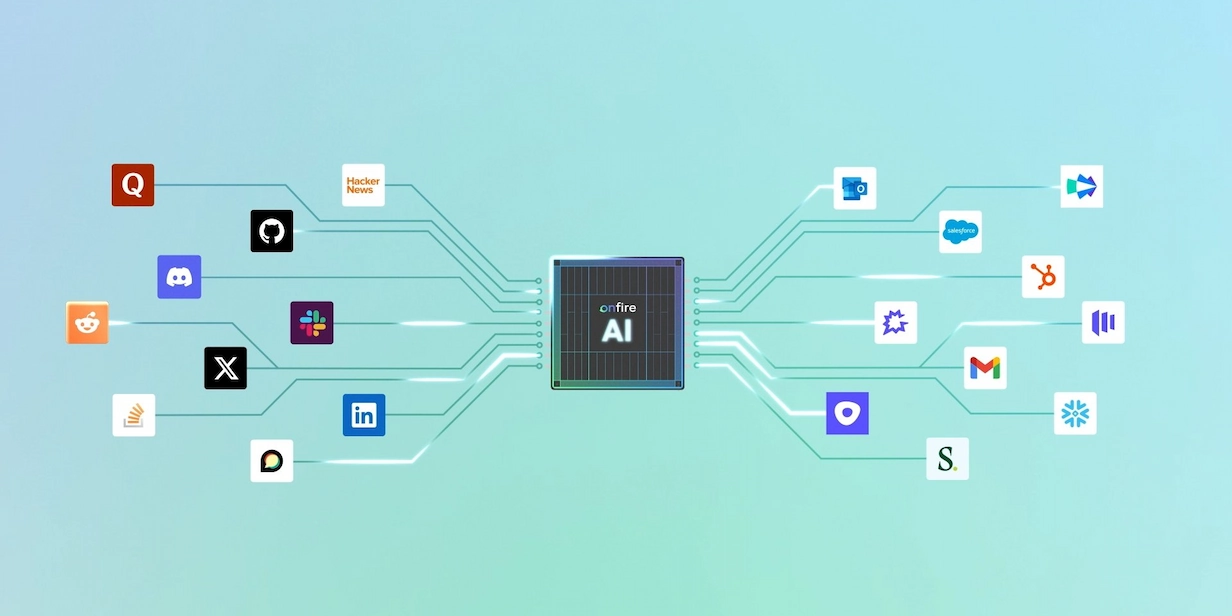
Why it’s on this list: Onfire is a revenue intelligence platform designed for teams selling to technical buyers who are hard to reach by conventional means. Unlike horizontal data providers relying on firmographics, LinkedIn profiles, and job-title matching, Onfire analyzes deep signals from developer communities, open-source contributions, professional conferences, and platforms like Reddit to build a proprietary Account Intelligence Graph– a live map of 50 million professionals, charting their public footprints, tech stacks, and buying behaviors in real time.
This rich resource grants BDRs access to granular intent signals and technographic data invisible to other tools – providing an easy route into lucrative and usually evasive techie markets. Better yet, every insight is evidence-backed with a clear trail of where the data was sourced, and when it was collected, so you can cite relevant context with confidence.
2. Claude Cowork: AI for account research and pre-call prep
Why it’s on this list: Cowork brings the agentic capabilities behind Claude Code to knowledge work beyond coding, so BDRs can hand over an entire task rather than prompting their way through it line by line. Point it at a folder of call transcripts, a CRM export, and a batch of account notes, and it works through the material to produce a finished briefing doc, a segmented list, or a first-draft sequence, pausing only when a decision genuinely needs a human.
Because sessions run in the cloud, workflows continue even after a laptop shuts down, which makes scheduled prep viable. For instance, you can set Monday's client prep for 6 am and have Claude work through the email threads, transcripts, and recent news, build you a briefing doc, and leave a follow-up email drafted but unsent.
However, Cowork brings no prospect data of its own, making it only as good as the inputs you give it. Paired with a reliable source of account intelligence, it becomes the layer that turns raw signals into outreach a technical buyer will actually read.
Alternatives to consider: ChatGPT and Gemini offer comparable agentic modes for multi-step work, though Cowork's local file access on desktop makes it the stronger option for jobs involving messy documents and exports.
3. Reply: AI for email sequences and outreach automation
Why it’s on this list: Reply.io facilitates high-volume outreach campaigns through versatile multi-channel sequences. Jason (the platform’s AI agent) automatically generates your ICP, finds suitable contacts, writes the campaigns, and handles replies in fully autonomous or human-in-the-loop modes.
While Reply.io’s approach may be broad, it is certainly industrious – the platform’s Magic Sequence Builder creates complete outreach sequences across channels from a single prompt. Built-in deliverability features include email warm-up and Google Postmaster integration.
Alternatives to consider: Salesloft offers tighter CRM integration and pipeline management alongside sequencing, making it a good fit for teams wanting outreach and deal visibility in one platform.
4. HeyReach: LinkedIn Automation
Why it’s on this list: While LinkedIn remains a high-converting B2B channel, the site’s strict activity limits make it difficult to accrue and contact leads at scale. HeyReach tackles this by connecting LinkedIn accounts and automatically rotating sends between them, distributing activity across profiles to stay within safety thresholds.
Key features include a unified inbox for all LinkedIn conversations, automated sequences for connection requests, messages, and follow-ups, and native integrations with Clay, HubSpot, and Zapier.
Alternatives to consider: Expandi offers similar automation with strong account safety and multichannel capabilities (LinkedIn and email)
5. Lavender: AI for cold emails
Why it’s on this list: Lavender coaches reps to write better emails through actionable pop-up suggestions. The Chrome extension scores every email against patterns from billions of analyzed sales messages and suggests changes accordingly. For managers, Lavender also offers team analytics that surface writing quality trends and coaching opportunities – reportedly saving 30-45 minutes per rep per day.
Alternatives to consider: Pairing a general-purpose AI assistant like Claude with your own account research and messaging templates can achieve similar results with more setup but unlimited flexibility.
6. Trellus: AI to improve sales calls
Why it’s on this list: Trellus provides real-time AI coaching during cold calls by offering objection-handling suggestions, pacing alerts, and competitor battle cards as the conversation unfolds. After each call, the platform auto-generates transcriptions, summaries, and draft follow-up emails, reducing the need for manual note-taking. It integrates as a Chrome extension on top of existing dialers and CRMs like Salesforce and HubSpot.
Alternatives to consider: Nooks offers a virtual sales floor with power dialing and AI call summaries, better suited for teams prioritizing collaborative calling environments.
7. Gong: AI call recording and analysis
Why it’s on this list: Gong captures and analyzes interactions across calls, emails, and meetings, for a consolidated view of pipeline reality. For BDR managers, it reveals which talk tracks lead to meetings, which objection responses work, and where reps lose prospects. Gong's 2026 Mission Andromeda launch added AI-powered enablement, an AI assistant for querying customer calls, and unified account views.
Alternatives to consider: Avoma covers call recording, transcription, and coaching with public per-seat pricing and no enterprise minimum, making it a more realistic option for smaller teams. Chorus, now part of ZoomInfo, is the closer functional match to Gong, but it's quote-only and typically sold as part of a wider ZoomInfo package.
8. Chili Piper: AI for routing and booking meetings
Why it’s on this list: When a prospect responds or fills in a form, Chili Piper’s AI agents check ICP fit, territory, account ownership, and enrichment data, then decide the next action instantly, whether that’s booking a meeting, routing the lead, or notifying a rep. It comes with a suite of tools for everything from instant booking, inbound lead routing, and handoffs. Reps can also book in one click from Gmail, Google Calendar, Salesforce, Salesloft, and Outreach via a Chrome extension.
Alternatives to consider: Calendly provides routing at a lower per-seat cost, which is usually enough for teams whose booking flows don't call for Salesforce-level routing rules.
How to Orchestrate Your BDR Stack
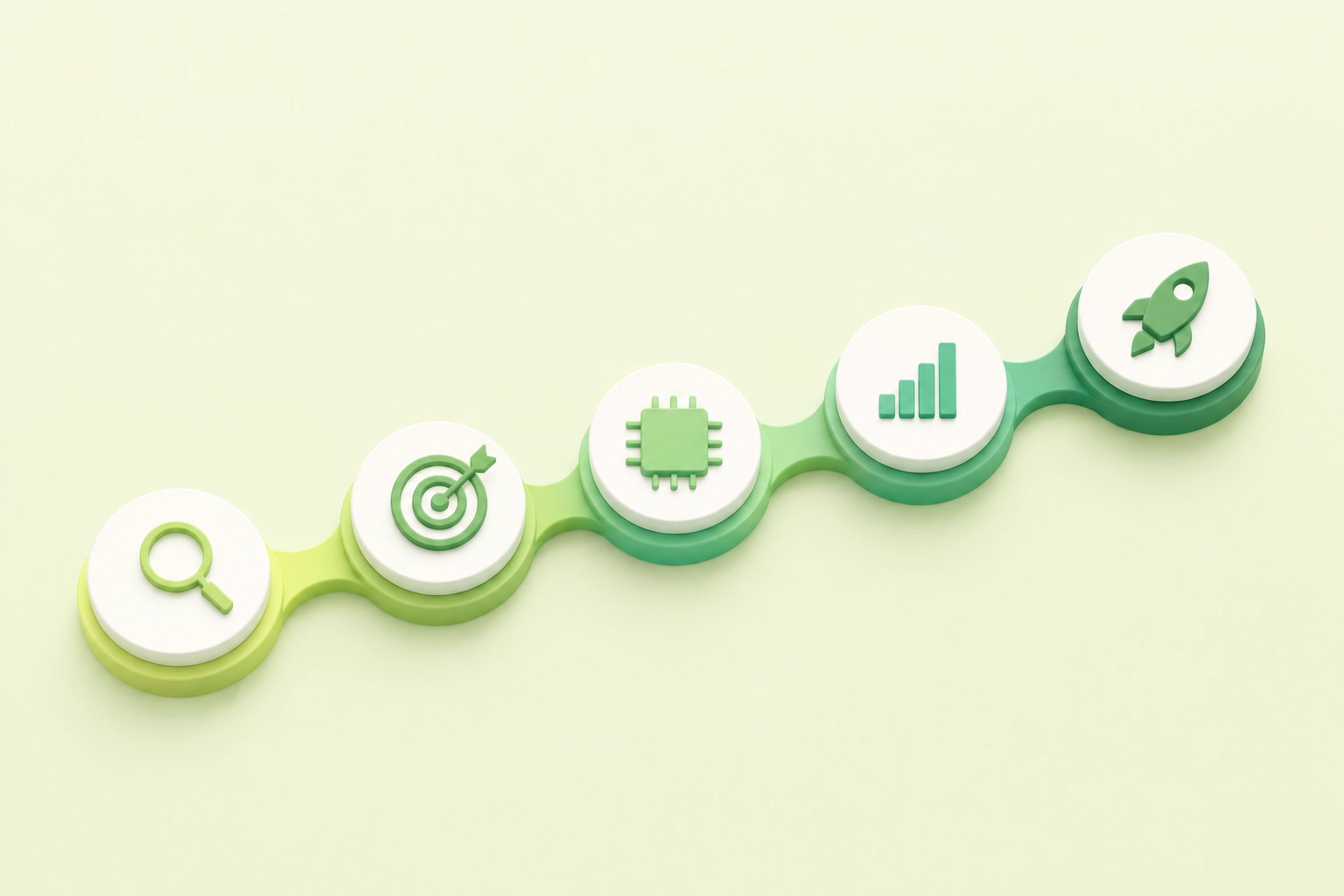
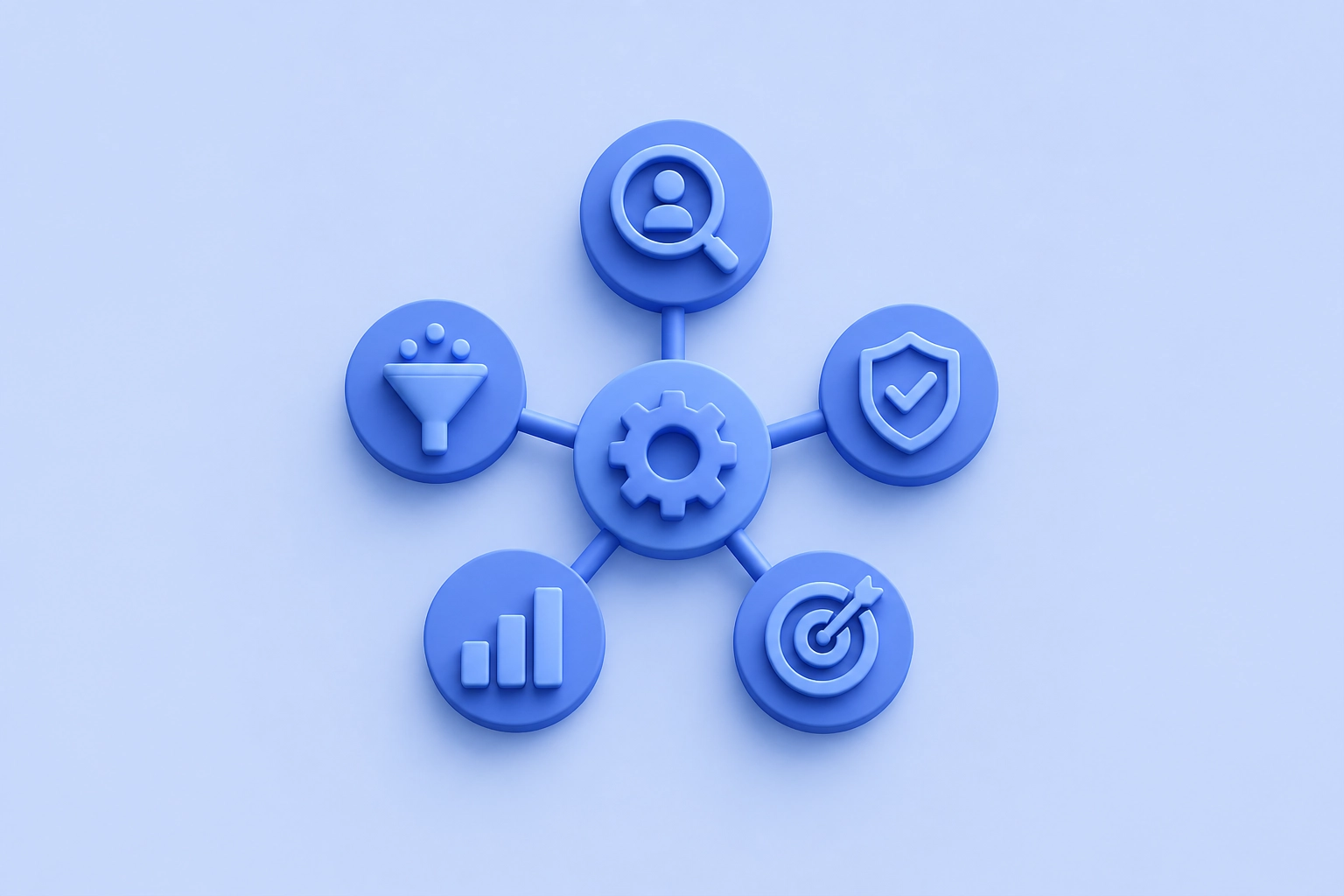
A stack works when each layer feeds the next, but it fails when reps end up copying data between eight tabs that don't talk to each other. The tools above map onto five stages of a BDR's week:
1. Intelligence– who to contact, and why now. This layer sets the foundation for everything else, and as anyone who’s ever done prospecting in technical sales knows, it’s also the hardest to get right. That’s the problem we built Onfire to solve.
2. Research and prep– turning signals into something usable. By connecting Onfire and Claude Cowork, you can have your agent work through your intel to produce briefs, segmented lists, and first-draft messaging.
3. Execution– getting messages out at volume. Reply handles multichannel sequencing, HeyReach handles LinkedIn safely at scale, and Lavender improves the quality of what goes into both.
4. Conversation and conversion– turning interest into a meeting. Trellus coaches reps live on calls while Chili Piper makes sure a positive reply becomes a calendar invite rather than a scheduling thread that’s easy to forget about.
5. Analysis– feeding results back into layer one. Gong shows which talk tracks and objection responses actually produce meetings. That evidence should then change your targeting and messaging so it reflects what works.
Build in order of your biggest leak
Don't buy all five layers at once. Diagnose first:
- Reps burning hours on accounts that were never going to buy → intelligence layer.
- High volume, low reply rates → messaging quality.
- Good replies that never become meetings → conversion and booking.
- Plenty of meetings, weak pipeline → conversation intelligence.
Watch for overlap
Several of these tools reach into neighbouring territory. Reply's AI agent does light research; Gong and Trellus both analyze calls; more than one platform claims to own the SDR-to-AE handoff. Paying twice for the same function is the most common way stacks get bloated, and duplicated data across tools creates contradictions your reps have to arbitrate mid-call. To fix this, pick one owner per layer.
For a wider view of how these layers fit into the full go-to-market picture, see our guide to the best AI GTM tools.
Choosing the Right AI BDR Solutions for Revenue Optimization
If you’re in market for BDR solutions, here’s how to find the best fit for your team:
Evaluate data quality ruthlessly. Test platforms against your actual ICP before committing – especially if you're selling to technical buyers who require granular signals beyond job titles.
Budget for integration, not just licensing. Factor in CRM integration complexity, onboarding time, and training. Tools that layer onto existing workflows see faster adoption.
Prioritize ease of adoption. Involve your BDRs in the evaluation process. If a tool adds friction, adoption stalls regardless of how impressive the demo looked.
Think holistically about your GTM motion. Your BDR tools should share data with your marketing platforms. If you're running account-based plays, alignment between sales and ABM technology is essential.
Automating Manual Account Research With Onfire
If you’re selling to technical buyers, your biggest bottleneck isn’t actual sales, it’s finding the right people to contact. Onfire was built to automate that manual research so GTM teams can start better conversations. To see what we find for you, talk to the team.
FAQ
What data quality issues can limit the impact of AI tools for BDRs, and how can teams fix them?
The most common issues are outdated contacts, inaccurate job titles, and shallow firmographic data leading to poor ICP matching. Teams can address this by auditing data regularly, layering multiple enrichment sources, and choosing tools that verify contacts in real time rather than relying on static databases.
How should BDR managers train reps to work effectively with AI suggestions without over-relying on them?
Position AI as a drafting partner, not a replacement for judgment. Encourage reps to always review and personalize AI-generated messages rather than sending them verbatim. Regular coaching sessions comparing AI-assisted and rep-crafted outreach help build the right balance.
What risks should GTM leaders watch for when rolling out AI in BDR workflows?
The biggest risks include over-automation (generic outreach at scale), data privacy violations (enrichment tools not complying with GDPR), and tool sprawl (too many point solutions fragmenting the workflow). Additionally, watch out for reps becoming passive and accepting AI suggestions without critical thinking.
How can AI tools help BDRs collaborate better with AEs and marketing on account plans?
AI BDR software for account management provides a shared, real-time view of engagement history, intent signals, and stakeholder maps. When BDRs, AEs, and marketing access the same intelligence layer, handoffs become smoother and messaging stays consistent across the buyer journey.
What are realistic timelines to see pipeline impact after introducing AI tools for BDRs?
Most teams see productivity gains – faster research, higher output, improved reply rates – within two to four weeks. Meaningful pipeline impact typically becomes visible within 60 to 90 days. Full ROI realization, including reduced ramp times, usually takes one to two quarters.
.webp)





%20(1).webp)






























.webp)