Top 10 Lead Enrichment Tools for B2D Sales Teams in 2026



According to Cirrus Insight, 75% of B2B companies consider lead enrichment vital to their marketing success,yet most sales lead enrichment stacks are built for the wrong buyer. When your ICP is a staff engineer evaluating an infrastructure tool, knowing their company's revenue band and industry vertical doesn't tell you much. Knowing they forked a competitor's repo last week does.
This guide ranks the top lead enrichment tools specifically for B2D sales teams, covering what each does well, where it falls short for technical buyer coverage, and how to build a workflow that surfaces real developer intent.
Key Takeaways
- Standard B2B lead enrichment tools are built around firmographic and publisher-network intent data,signals that reflect executive reading habits, not developer behavior.
- Developer-specific enrichment signals include GitHub activity, Stack Overflow participation, Discord community engagement, OSS contributions, and documentation deep-dives.
- Evaluate lead enrichment tools on signal source coverage (do they index developer communities?), data freshness, lead enrichment API availability, and identity resolution against a technical buyer database.
- Onfire is the only tool on this list built natively for the developer signal layer; the others are strong horizontal tools with meaningful B2D gaps.
- Small B2D teams without RevOps can start lean: one firmographic source plus one developer intent layer covers most of the signal gap.
Why Standard Lead Enrichment Tools Often Miss the Mark for B2D Teams
The dominant B2B lead enrichment tools,ZoomInfo, Apollo, Clearbit,were designed to enrich records, not signals. They answer: Who is this company, and who works there? That's useful, but it's table stakes.
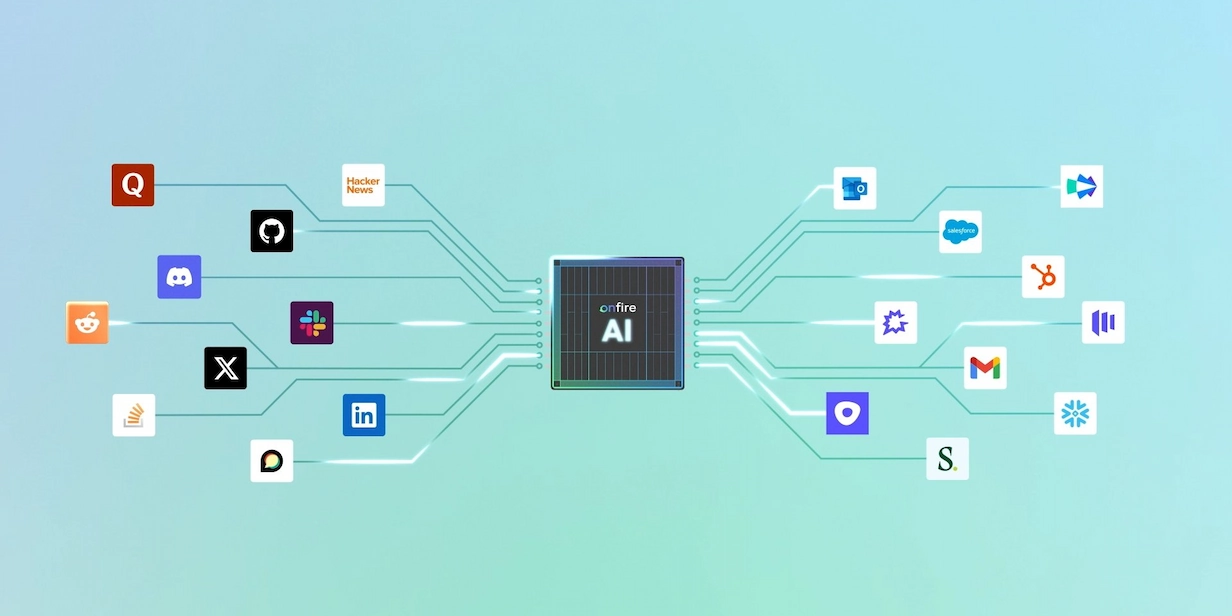
For B2D teams, the more important question is: Is this developer actively evaluating a tool in my category right now? Standard platforms can't answer that. Their intent data draws from B2B publisher networks,trade media sites and research portals where business buyers read white papers. Developers don't. They're on GitHub, Stack Overflow, Reddit, and Discord, and mainstream enrichment vendors don't monitor those communities.
According to Common Room, 65% of developers influence technology purchase decisions. If your enrichment stack can't identify which developers are in active evaluation mode, you're flying blind on the accounts that actually matter. For a deeper look at this challenge, see our analysis of lead quality for developer-tools companies.
The result is a structural signal gap, not a feature gap. No upcoming product update from ZoomInfo will start indexing Discord threads. The architecture is fundamentally different.
What to Look for in a Lead Enrichment Tool When Selling to Developers
When evaluating B2B lead enrichment tools for a technical GTM motion, four criteria separate useful from noise.
Signal source coverage. Does the tool pull from developer communities,GitHub, Stack Overflow, Reddit, technical Slack and Discord servers,or only from business publisher networks? This is the single most important filter. For a full breakdown of technographic data providers for B2D teams, see our dedicated comparison.
Behavioral vs. passive signals. Passive signals (someone read a white paper) tell you about content consumption. Behavioral signals (someone forked a repo, posted a question about migrating from a competitor, attended a technical conference) tell you about active evaluation. Prioritize tools that capture intent signals that actually reflect developer buying behavior.
Lead enrichment API quality. For B2D teams with PLG motions,where enrichment needs to happen at the moment of free-tier signup,a solid lead enrichment API is non-negotiable. Check rate limits, identity resolution accuracy, and latency.
Data freshness. Developer tool stacks change fast. A company can adopt and deprecate a tool within 90 days. Ask vendors directly: how often is their data refreshed, and what's the mechanism? Static database pulls aren't sufficient for active pipeline management.
Top 10 Lead Enrichment Tools for B2D Sales Teams in 2026
1. Onfire
Onfire is the only lead enrichment platform built natively for technical buyer GTM. Its Account Intelligence Graph™ ingests 5 million signals per day from 100,000 technical data sources,GitHub, Discord, Reddit, Stack Overflow, and technical conferences,resolved against a 50M engineer database. Unlike anything else on this list, Onfire enriches at the signal layer: every data point links to observable developer behavior with a verifiable evidence link, so reps know exactly what triggered a prospect's inclusion in a priority list. Purpose-built for B2D teams where developer intent, not executive intent, drives pipeline.
2. Clay
Clay is an enrichment orchestration layer, not an enrichment tool,a distinction that matters when building a B2D stack. It connects to 50+ third-party data providers and routes, formats, and automates enrichment workflows without engineering overhead. Clay is essential for GTM engineers and RevOps-heavy teams, but its output quality depends entirely on the sources connected to it. Connect Onfire or a developer-signal provider, and Clay becomes powerful. Run it on firmographic-only sources, and you get the same signal gaps as any other horizontal tool.
3. Apollo.io
Apollo is the most accessible entry point for sales lead enrichment: a strong contact and company database, built-in sequencing, and pricing that works for early-stage B2D teams (starting at $49/month per Gumloop's comparison). Its intent data comes from publisher networks rather than developer communities, which limits its usefulness for identifying developers in active evaluation. Best used as the firmographic foundation of a B2D stack, supplemented by a developer signal layer.
4. ZoomInfo
ZoomInfo has the most complete B2B contact database available, with enterprise-grade identity resolution, website visitor identification, and account-level intent drawn from its publisher network. For B2D teams selling into enterprises, it covers the executive buyer layer well. It does not cover the developer layer. At $15,000+/year (indicative pricing per Skrapp.io's breakdown), it's a significant investment for teams whose primary buyer never reads B2B trade content.
5. Clearbit (HubSpot)
Clearbit's core strength is real-time enrichment at the point of web visit or form submission, which makes it useful for PLG teams that need instant company and contact data appended to inbound signups. Now integrated into HubSpot's platform, it works best for HubSpot-native GTM teams. Enrichment is firmographic and technographic (inferred from job postings and web data), with no behavioral developer signal coverage.
6. Cognism
For B2D teams operating in European markets, Cognism is the strongest option for GDPR-compliant contact data with phone-verified mobile numbers. Its compliance infrastructure is genuinely differentiated,not just a checkbox claim. Developer community signals are absent, but for outbound sequences where direct-dial accuracy matters, Cognism is a reliable contact enrichment layer for the EMEA portion of a global ICP.
7. Bombora
Bombora's Company Surge® data identifies accounts showing elevated research activity on specific topics across its B2B publisher co-op network. For ABM teams building target account lists, Bombora adds a useful intent layer on top of static CRM data. The B2D limitation is structural: the publisher co-op doesn't index developer forums, GitHub activity, or community discussions. Account-level developer intent stays invisible.
8. 6sense
6sense uses AI to predict buying stage at the account level, pulling together signals from publisher networks, web activity, and CRM data to surface accounts in active buying cycles. Its AI-driven account prioritization is sophisticated for enterprise demand gen. For B2D, the same publisher-network limitation applies,plus 6sense's signal sourcing is opaque, making it hard to verify why a developer account was flagged as in-market.
9. Lusha
Lusha focuses on contact data accuracy: verified email addresses, direct dials, and LinkedIn enrichment at a price point accessible to small teams. It's a practical choice for the contact verification layer of a B2D enrichment stack, particularly for teams that need to clean and append contact records quickly. No intent signals, no developer community data,strictly a contact enrichment tool.
10. DealSignal
DealSignal specializes in real-time B2B contact enrichment and CRM append, which is useful for RevOps teams running data hygiene programs on large prospect databases. It covers firmographics and contact data with above-average refresh rates. For B2D teams, it functions as a maintenance layer rather than a signal layer: good for keeping records clean, not for identifying which accounts have developers in active evaluation.
How to Build a Lead Enrichment Workflow for B2D Sales
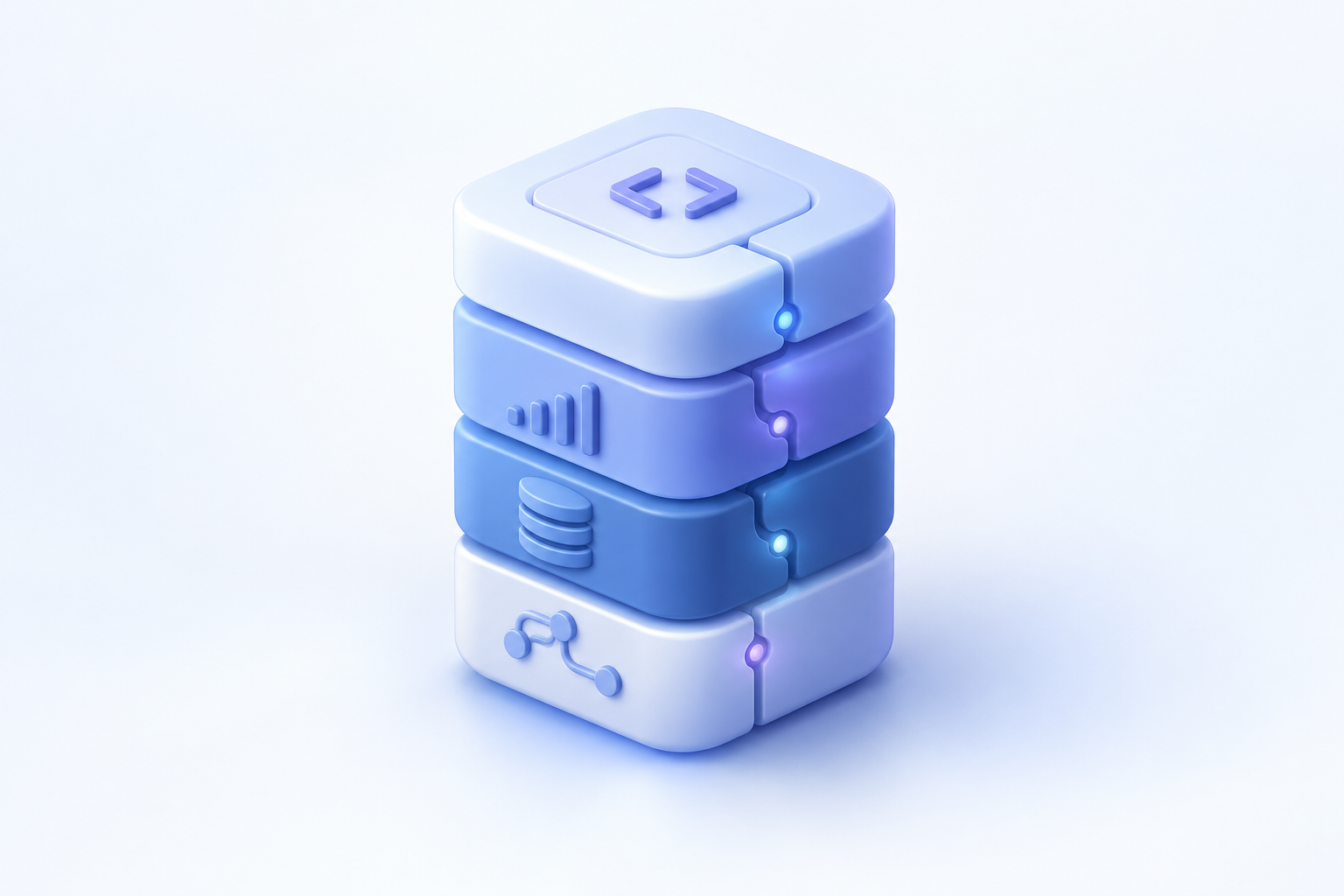
A functional B2D enrichment workflow has three layers, each serving a distinct purpose.
Layer 1: Firmographic and contact foundation. Use Apollo, Clearbit, or ZoomInfo to populate company attributes (size, funding, tech stack inferred from job postings) and append verified contact data. This layer answers who. For most B2D teams, Apollo covers this at a cost-effective price point.
Layer 2: Developer signal enrichment. This is where most B2D stacks fall short. Onfire connects to this layer, surfacing GitHub activity, community participation, and conference signals resolved to individual prospect profiles. This layer answers what they're doing right now. Without it, your ICP identification relies entirely on static attributes.
Layer 3: Workflow automation and routing. Clay sits here,pulling from both layers, formatting the output, and routing enriched records to your CRM or sequencing tool. For teams building an ABM program for developer tools, Clay's ability to build account tiers based on combined signal criteria is particularly valuable.
For teams exploring AI-layer automation in this workflow, agentic AI for technical buyer GTM covers how autonomous enrichment agents are beginning to replace manual data operations entirely.
Set enrichment refresh cycles at 30–60 days for active pipeline accounts. Developer tool stacks shift fast. Factors.ai research shows that 58% of CRM managers already cite data accuracy as a significant problem, and that figure understates the issue for B2D teams where tool adoption cycles are measured in weeks, not quarters.
MarketsandMarkets data shows enriched leads convert 20–30% better than unenriched leads. For B2D teams, the multiplier is higher when the enrichment data is actually relevant to the buyer,which means developer signals, not just firmographics.
FAQ
How does lead enrichment via API differ from enrichment through a SaaS UI, and when does each make sense?
A lead enrichment API suits high-volume workflows, CRM auto-append, and PLG pipelines where enrichment happens in real time at record creation. A SaaS UI is better for manual prospecting, list review, and teams without engineering resources. Most mature B2D stacks use both: API for scale at the point of signup, UI for spot-checking priority accounts.
What enrichment signals matter most when trying to identify developers evaluating a new infrastructure tool?
Prioritize tech stack fit (are they running adjacent tools?), GitHub and OSS activity (are they hands-on contributors?), community participation (Stack Overflow threads, Discord discussions about your category), and behavioral signals like documentation visits and repo forks. Firmographics alone tell you nothing about developer readiness or active evaluation.
How do B2D teams keep enriched data from going stale when developer tool usage changes quickly?
Developer stacks can shift within 90 days. Set enrichment refresh cycles of 30–60 days for active pipeline accounts. Use real-time community signal monitoring,Onfire's approach,to catch tool adoption and migration signals before they go stale in your CRM. Automated re-enrichment triggers on CRM stage changes also help maintain accuracy.
Is Clay a lead enrichment tool or an enrichment orchestration layer, and why does the distinction matter?
Clay is orchestration, not enrichment. It doesn't generate its own contact or intent data,it routes and formats output from 50+ third-party sources. The distinction matters because Clay's value depends entirely on the quality of the sources connected to it. Connecting weak data sources into Clay produces clean-looking records built on bad signals.
How should a small B2D team approach lead enrichment without a dedicated RevOps function?
Start with one firmographic source covering contacts and basic technographics (Apollo or Clearbit), add Onfire for developer signal coverage on ICP accounts, and use native CRM integrations to automate record updates. Prioritize signal quality over volume,five strong developer intent signals beat fifty stale job-title records every time.
.webp)










%20(1).webp)














































.webp)