Best 5 Sales Intelligence Tools for Technical B2B Sales, Evaluated
We tested the top 5 sales intelligence tools for technical B2B so you don’t have to. See what we found.


A few years ago, "sales intelligence" meant access to a big database of contacts and company records. For teams selling horizontal SaaS, it was often enough to pull a list, filter by industry and headcount, and start dialing.
But when you’re selling to technical buyers, the people you need to reach don't behave like traditional B2B buyers: they research differently, spend time in engineering-centric channels, and leave intent signals in places that most sales tools don’t pay attention to.
In this article, we’ll share a practical framework for evaluating sales intelligence tools and share the 5 best platforms we’ve actually worked with.
Key Takeaways
- The five key criteria you should use when evaluating sales intelligence tools are: technographics, intent, coverage, accuracy, and integrations.
- Technical buyers behave differently than general B2B buyers -- they spend time in engineering communities on Reddit, Slack, Discord, and OSS. Many sales tools don’t give you insight into these places.
- Some sales intelligence tools need dedicated RevOps specialists to operate, while others can be run by lean GTM teams.
- To evaluate sales intelligence offerings, identify the bottleneck in your GTM flow and find the tool(s) that solve for it.
What Sales Intelligence Needs to Deliver for Technical B2B Teams
Sales intelligence tools all offer some variety of AI-powered data collection, but as anyone who’s scoured LinkedIn for clues about a company’s tech stack will tell you, there is a lot of noise out there. In our experience, these are the capabilities really need to run efficient GTM motions in technical sales:
- Technographics: LinkedIn will tell you that a company is hiring for someone with Azure experience, but that could mean any number of things. For accurate technographics, you need information about open source software (OSS) adoption as well as developer signals.
- Intent: Technical buyers are active in dev-centric communities on platforms like Slack, Reddit, GitHub, and Discord. To gauge intent, you need insight into these places.
- Coverage: Sales intelligence needs to be comprehensive. You'll want insight into a large variety of companies as well as direct, accurate contact information for key decision makers.
- Data accuracy: Contact data accuracy is a common pain point across sales intelligence tooling. When information is gathered through front-end scripts, job postings, and third-party sources, it tends to be inaccurate.
- Integrations: You don't want your sales tooling to give you an integration headache. For that reason, integrations should be a core consideration before committing to any sales tooling.
Best Sales Intelligence Tools for Technical B2B Teams
Many sales intelligence platforms aren’t designed for software infrastructure buyers. As a result, you need to dive into the details to ensure that they deliver on the five key criteria we outlined above.
How we evaluated these tools
We're an interested party here- Onfire is on this list- so it's worth being transparent about how we picked the rest.
We've tested all of these tools hands-on as part of our waterfall enrichment approach, in which we layer multiple data sources to build the most complete picture of an account. That means we haven't just read the marketing pages; we've seen the actual data each platform returns for technical accounts and compared it against what we know to be true.
On top of that, we've had hundreds of conversations with revenue leaders at companies selling to developers, security teams, data engineers, and infrastructure buyers -- before, during, and after launching Onfire. We hear what they use, what's working, and (more often) what isn't. The tools on this list are the ones that keep coming up as genuinely useful for teams selling technical products, even if they each have blind spots when it comes to technical audiences specifically.
1. Onfire- Intent data for technical buyers
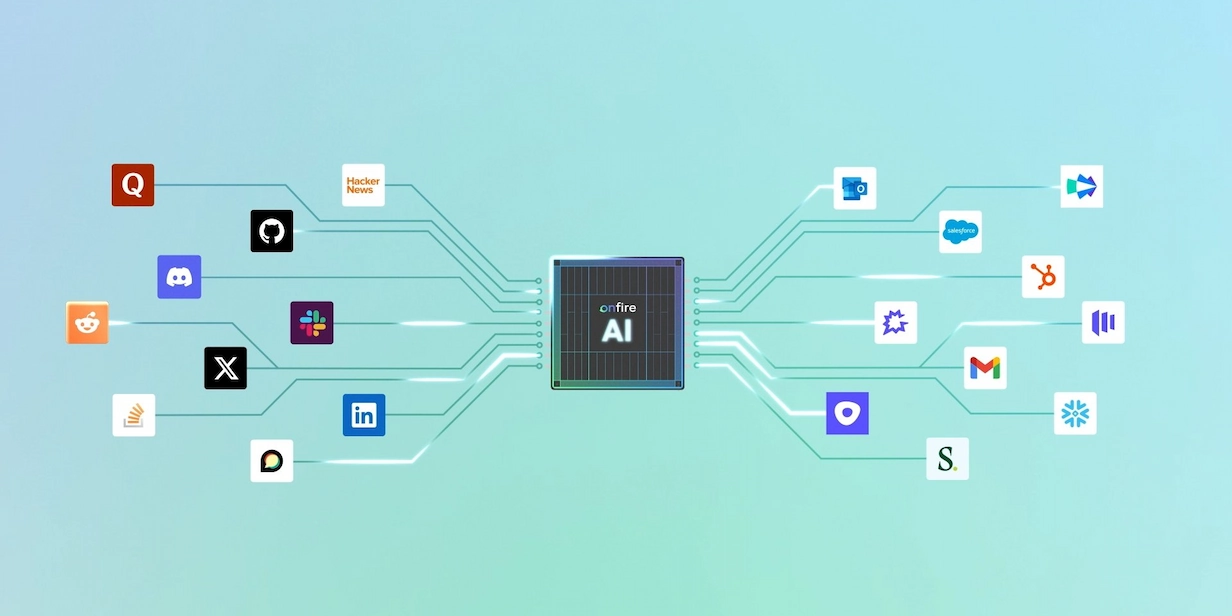
Onfire is a vertical AI provider that builds custom workflows for each customer. After drilling down into the specifics of each ICP, Onfire surfaces relevant intent data from the places technical buyers actually spend their time: Reddit, GitHub, Slack, Discord, and events. Note that Onfire also brings in data from other providers as part of our waterfall enrichment approach, resulting in prospect-level insight.
Key features:
- Technographics sourced from OSS contributions, developer community activity, and conference attendance — not job post keywords
- Intent signals from over 100,000 developer communities, including Reddit, GitHub, Slack, Discord, and Stack Overflow, with identity resolution that matches pseudonymous posts to real prospects
- Coverage across 50 million engineers and 5 million daily events, supplemented by waterfall enrichment from other providers on this list for firmographics and contact data
- Data accuracy driven by observed developer behavior rather than inferred signals — with evidence links so reps can verify what they're seeing
- Integrations with CRM, outbound sequencing tools, and Sales Navigator via a Chrome extension, plus an AI agent that combines first-party CRM data with external signals directly in your existing workflow
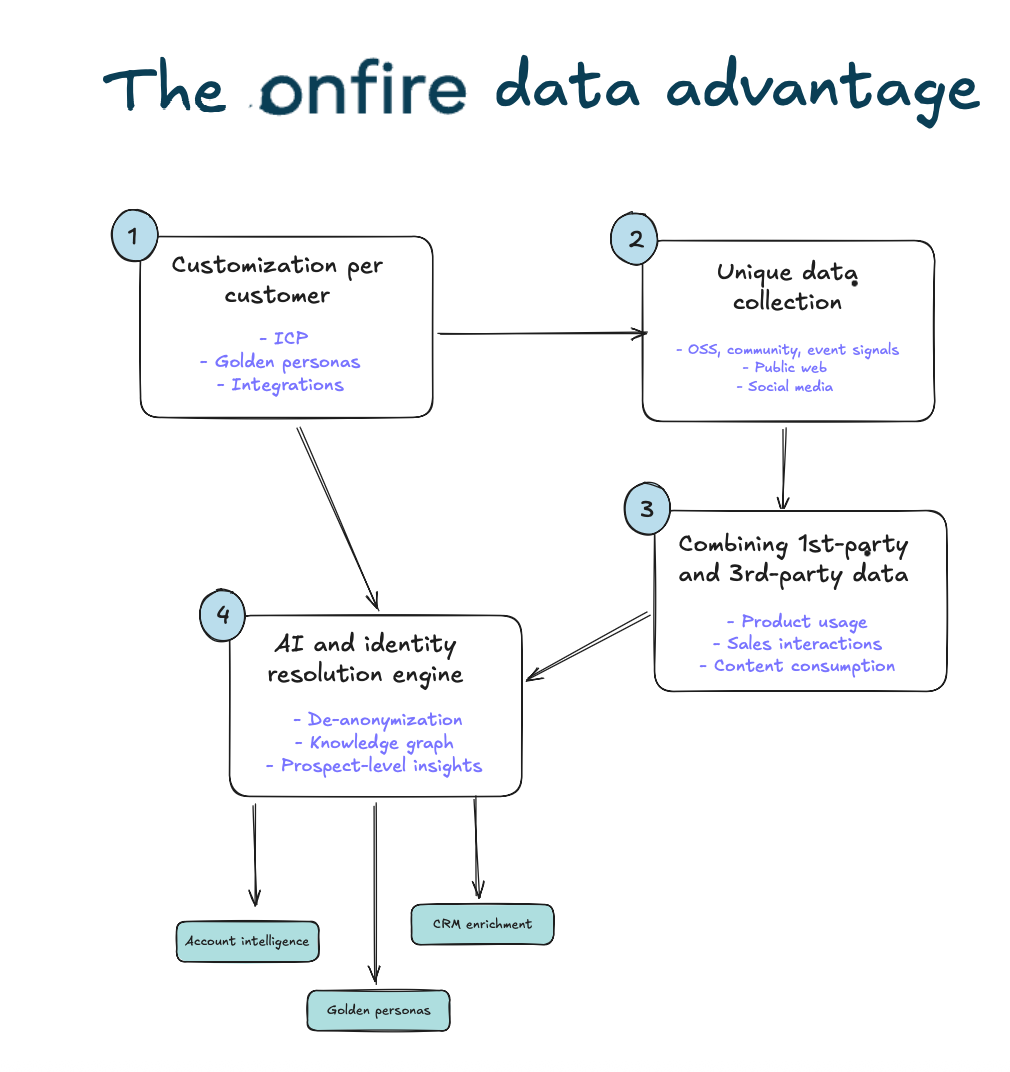
When you should choose Onfire: If you’re selling software infrastructure, Onfire is the only vertical AI solution that surfaces the intent signals you need in a workflow your BDRs can actually use. Onfire lets you catch developer signals from Reddit, Discord, and OSS in time to reach out, and the Onfire Agent combines them with your first-party data to deliver prioritized leads within the CRM you already use.
That being said, if you’re operating at very small scale or don’t primarily send to technical buyers, Onfire won’t be the right choice for you.
2. ZoomInfo- Contact and company data at scale
ZoomInfo has one of the largest databases of company and contact records available, with broad coverage across industries, geographies, and seniority levels .It's primarily a firmographic and contact data platform with some acquisitions covering intent and conversation intelligence.
Key features:
- Coverage that's among the deepest in the market, with one of the largest B2B contact and company databases available, spanning industries, geographies, and seniority levels, plus verified emails and direct dials
- Ecosystem that extends beyond contact data via Chorus (conversation intelligence) and Clickagy (intent), plus native tools like FormComplete and WebSights
- Data accuracy that's strong on firmographics and contact records, though technographic and prospect-level data for technical roles tends to rely on job titles rather than observed activity
- Integrations with a mature ecosystem spanning Salesforce, HubSpot, Outreach, Salesloft, and most major CRM and sequencing platforms, plus a browser extension for LinkedIn prospecting
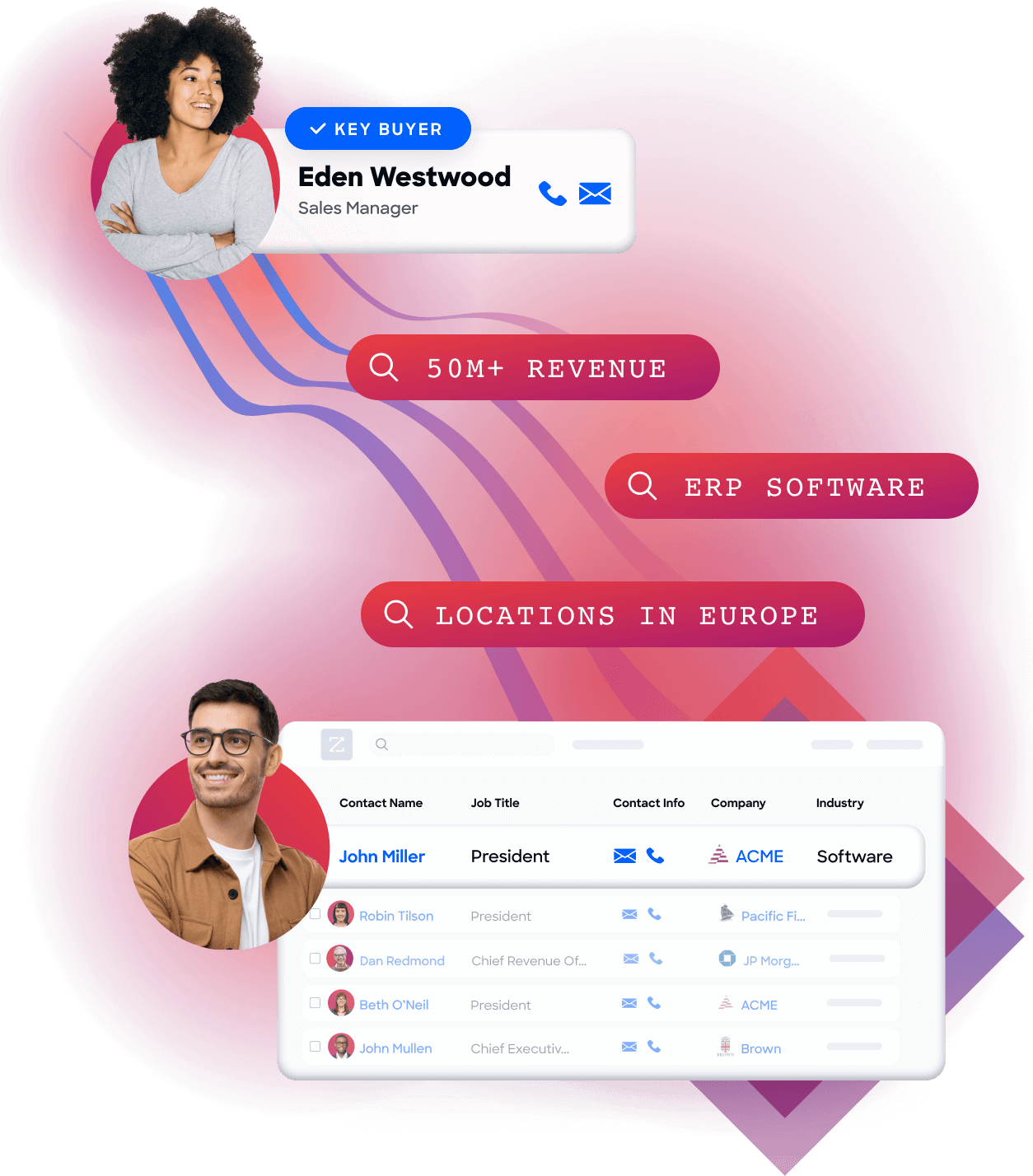
Our take on ZoomInfo: ZoomInfo is strong on breadth, but you’ll run into issues with depth. Its technographic data is largely inferred from job posts and web scrapes, and prospect-level filtering doesn't go much deeper than job titles. This makes it more helpful for general B2B than technical buyers.
3. Apollo- Contact database with built-in outbound for startups
Apollo combines a large contact database with a built-in sequencing engine, which means reps can go from identifying a prospect to sending the first email without switching tools. It's gained significant traction in the startup and mid-market segments, though teams selling to technical buyers should be aware of some limitations.
Key features:
- Coverage across 270M+ contact records with emails and phone numbers, and a free tier that makes it accessible for smaller teams
- Data accuracy that's solid on firmographics and general contact data, with community-sourced verification
- Integrations with major CRMs and a built-in sequencing engine and dialer, so prospecting and outreach live in the same workflow without needing a separate tool
- Outbound and workflow automations for multichannel campaigns with built-in email deliverability guardrails
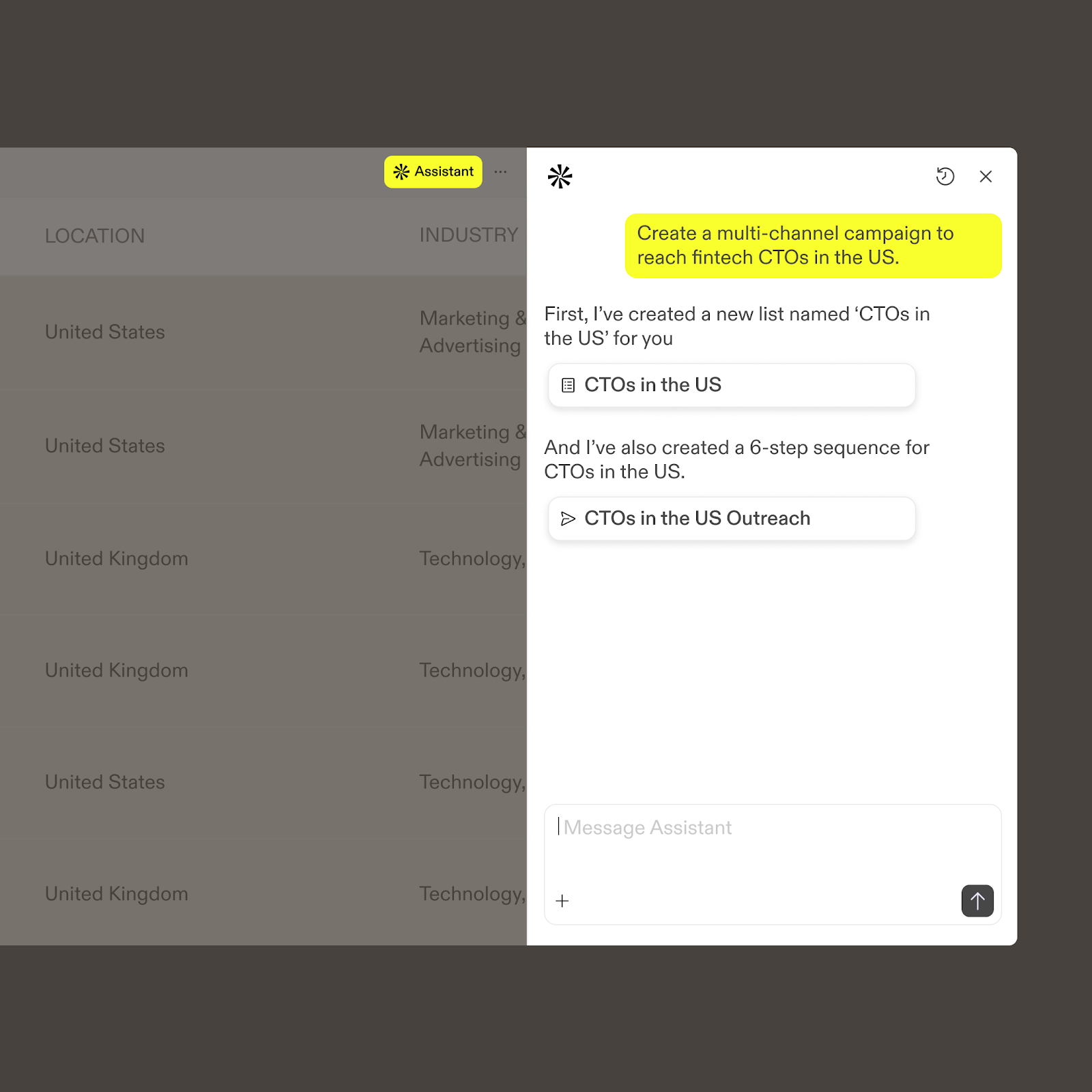
Our take on Apollo: Apollo's main draw is accessibility, but its technographic data has the same limitations as other platforms that infer stack information from job posts and website code rather than actual technical activity. To figure out whether a company is running EKS in production or just mentioned Kubernetes in a hiring req, you need deeper signal coverage for technical accounts.
4. 6sense- Account-level intent data and ABM orchestration
6sense is an ABM platform at heart, and it combines intent data, predictive analytics, and audience activation. For organizations running structured ABM programs, 6sense can serve as the orchestration layer.
Key features:
- Intent signals through an IP-based engine that tracks anonymous research activity across a B2B publisher co-op and maps it to accounts
- Coverage is strong on identifying which companies are researching relevant topics, less focused on surfacing specific prospects within those accounts
- Integrations with Salesforce, HubSpot, Marketo, and major outbound tools, plus audience activation for serving targeted ads based on intent scores
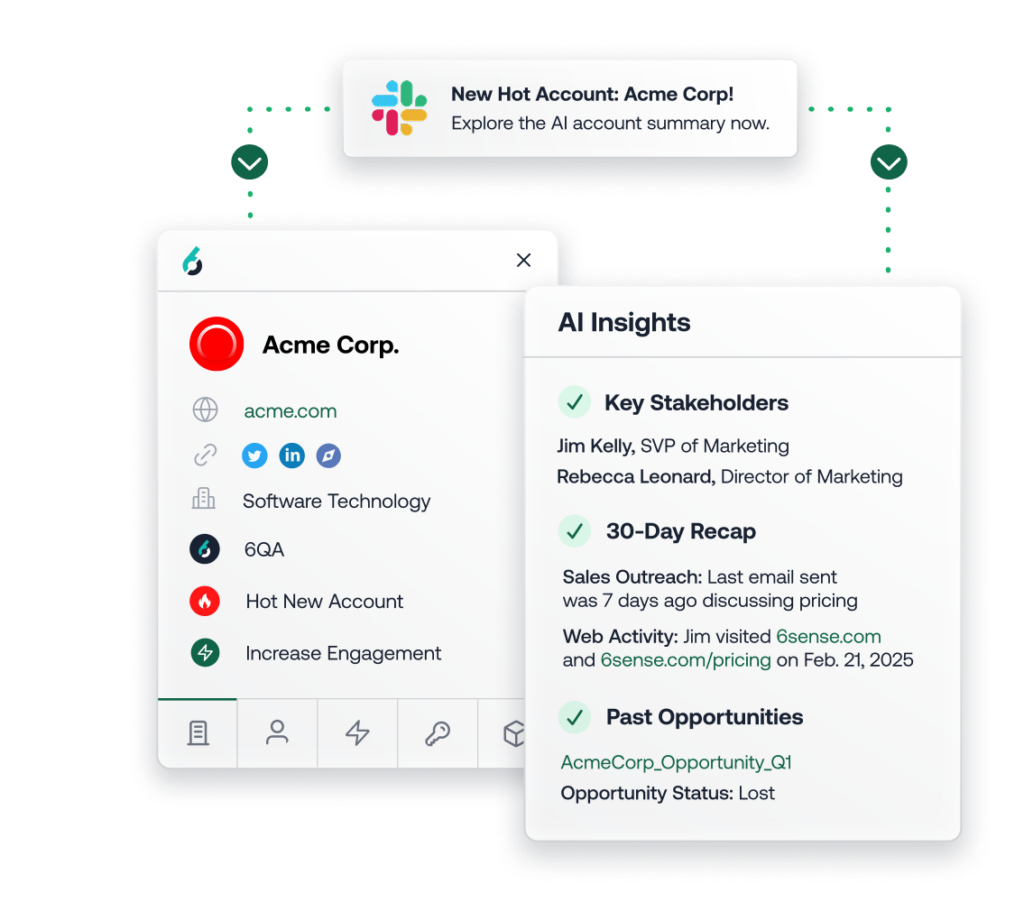
Our take on 6sense: When 6sense is properly configured and maintained, it gives you a shared view of account engagement that most point solutions can't match. However, its intent signals are derived from IP-based tracking across publisher networks, which works well for buyers who consume vendor content (whitepapers, comparison pages, webinars) but largely misses engineers and security practitioners who research on community platforms, GitHub, and Stack Overflow.
5. Cognism- Phone-verified contact data with strong European coverage
Cognism is a B2B sales intelligence platform known for its human-verified mobile numbers and deep coverage of European markets. It’s built for teams running outbound motions that rely heavily on cold calling, particularly into EMEA.
Key features:
- Intent signals through a partnership with Bombora, surfacing topic-based intent at the account level
- Coverage across 400M+ business profiles and 200M+ verified emails, with particular strength in EMEA markets where other providers tend to have gaps
- Data accuracy is a real focus, as all numbers are human-verified by an in-house team, which improves connect rates compared to community-verified databases
- Integrations with Salesforce, HubSpot, Pipedrive, Outreach, and other major CRM and sequencing tools, plus a browser extension for LinkedIn prospecting
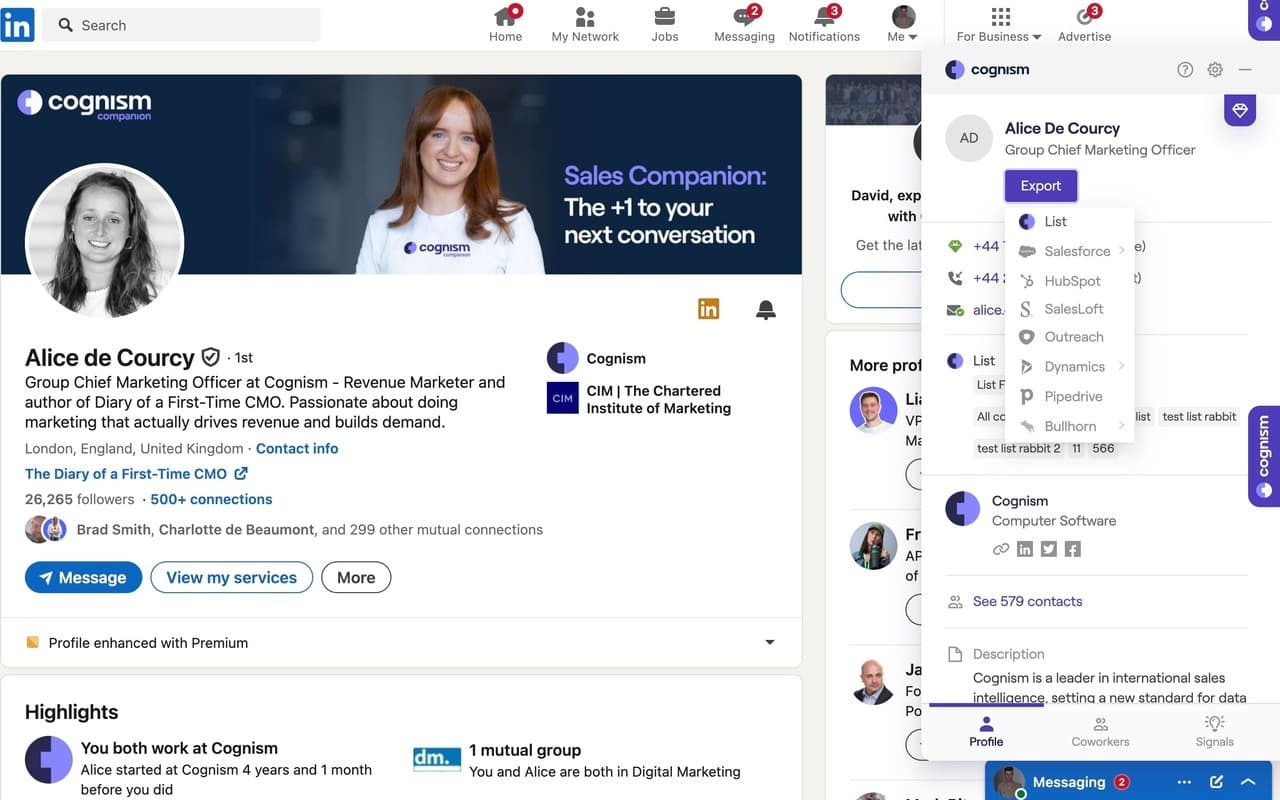
Our take on Cognism: If your outbound motion depends on getting reps on the phone with European buyers, Cognism is hard to beat on contact accuracy. But because technographics and intent rely on the same third-party sources (job posts, Bombora) as most horizontal platforms, you'll still need something that can surface developer-specific signals.
Quick Tips on Evaluating Sales Intelligence Tools
Every vendor will tell you their data is the most accurate and their AI is the most advanced. So rather than a generic buyer's checklist, here's what actually matters when you're selling technical products.
1. Audit your bottleneck before you shop
If BDRs are slogging through manual research trying to figure out who to contact, you have a prospect identification problem, and a bigger contact database won't fix it. If they know who to reach but can't tell whether the account is in-market, you need better intent signals, not more records. Buy for the specific bottleneck slowing your pipeline, not the longest feature list.
2. Test with accounts you already know
Once you’ve narrowed down your list, pick 20–30 accounts where your reps know the tech stack and the right buyer. Run those through any tool you're evaluating and assess the results. Does it surface the right people, or just a pile of "senior engineers?"
3. Ask where the data comes from
By now, "AI-powered" is a meaningless phrase. What really matters is what data the AI works with. If technographics come from job posts, that's a fundamentally different signal than tracking actual developer activity across GitHub and technical communities.
Find the Right Buyers, Not Just More Contacts
Most sales intelligence tooling isn't built to help you reach technical audiences. If your team is selling to developers, security practitioners, or infrastructure buyers, you need a solution that matches your ICP.
Want to see how Onfire's data compares to what you're using today? Challenge us. Pick your hardest accounts and let us show you what we find.
.webp)


%20(1).webp)



















































.webp)