B2D Sales Personas and Targeting: Everything You Need to Know



Key Takeaways
- Developers self-evaluate tools through documentation, repos, and peer communities, not vendor content or cold outreach. Sales needs to show up where that behavior happens, not intercept it.
- The real B2D buying committee spans at least three distinct personas: the developer evaluating the tool, the engineering manager approving adoption, and the technical leader setting direction. Each requires a different message.
- Effective B2D targeting relies on technical signals, — GitHub activity, community engagement, job postings, tech stack data, — not form fills or firmographic lists.
- Standard B2B sales messaging actively damages trust with developer audiences. Value-first, technically specific communication is the entry price.
In a product-led B2D motion, sales should engage only after a meaningful evaluation has already started, not to trigger it.
62% of developers report having direct influence over technology purchasing decisions at their organizations. Yet most GTM teams selling to them are still running the same playbook they use for finance or operations buyers, and wondering why their pipeline stalls. B2D sales isn't a smaller version of B2B. It's a fundamentally different motion, driven by a buyer who evaluates tools on their own terms, in their own communities, long before any sales conversation happens.
If your team is selling developer tools, infrastructure, or APIs, this guide covers who your real buyers are, where to find them, and how to engage them without burning the relationship before it starts
What Makes B2D Sales Different from Traditional B2B
In traditional B2B, a sales rep identifies a need, reaches a decision-maker, and walks them through a solution. The buyer relies on the seller to understand the category.
In B2D sales, that dynamic is inverted. Developers don't wait to be educated by a vendor. They search for tools, fork repos, read changelogs, and ask peers in Discord or Reddit before a sales conversation ever enters the picture. 67% of B2B tech buying journeys are completed independently online before any sales engagement, and for developer buyers, that number almost certainly skews higher.
The consequences for GTM teams are significant. By the time a developer raises their hand, they've already formed a strong opinion. Show up too early with a generic pitch and you've lost them. Show up too late, or not at all, and they've chosen a competitor. The window for influence is real, but it lives in the pre-funnel, not in a discovery call.
This is also why 61% of B2B buyers prefer a rep-free buying experience and 73% actively avoid suppliers that send irrelevant outreach. For developers, those numbers translate directly into deleted emails and blocked domains.
The Main B2D Buyer Personas
Selling to developers doesn't mean selling to one type of person. B2D buying committees typically include several roles, each with different priorities and preferred modes of engagement.
The Individual Contributor Developer
This is the person who first finds your tool, evaluates it, and decides whether to advocate for it internally. They care about implementation quality, documentation, API design, and whether the tool will make their day-to-day easier. They're reached through technical content, GitHub presence, community discussions, and peer recommendations, not outbound sequences.
The Engineering Manager
Engineering managers translate their team's technical preferences into organizational decisions. They care about reliability, integration compatibility, and the operational cost of adoption. 77% of buyers prioritize integrations as a key evaluation criterion, this is where the EM's influence shows up clearly. They're reachable through content that addresses team-level tradeoffs, not individual developer productivity.
The DevOps Lead or Platform Engineer
This persona owns infrastructure, tooling standards, and developer experience at the platform level. For infrastructure and observability tools especially, DevOps leads often drive or veto adoption. They care about operational overhead, deployment complexity, and long-term maintainability. They pay close attention to architecture decisions and tend to evaluate tools by reading technical case studies and documentation rather than attending demos.
The CTO or VP of Engineering
At smaller companies, the CTO may be deeply involved in tool selection. At larger organizations, their role is usually to ratify a direction the technical team has already arrived at. They care about vendor reliability, security posture, and strategic alignment. Trying to reach this persona before the IC and EM have already formed a view is a common mistake in developer sales, it signals that you don't understand how technical organizations actually work.
How to Build Targeting Lists for Developer-Focused Buyers
Targeting built on firmographic data alone misses most of the actual signal. A company's headcount, industry, and revenue tell you whether they could theoretically buy, not whether someone on their team is actively evaluating your product category right now.
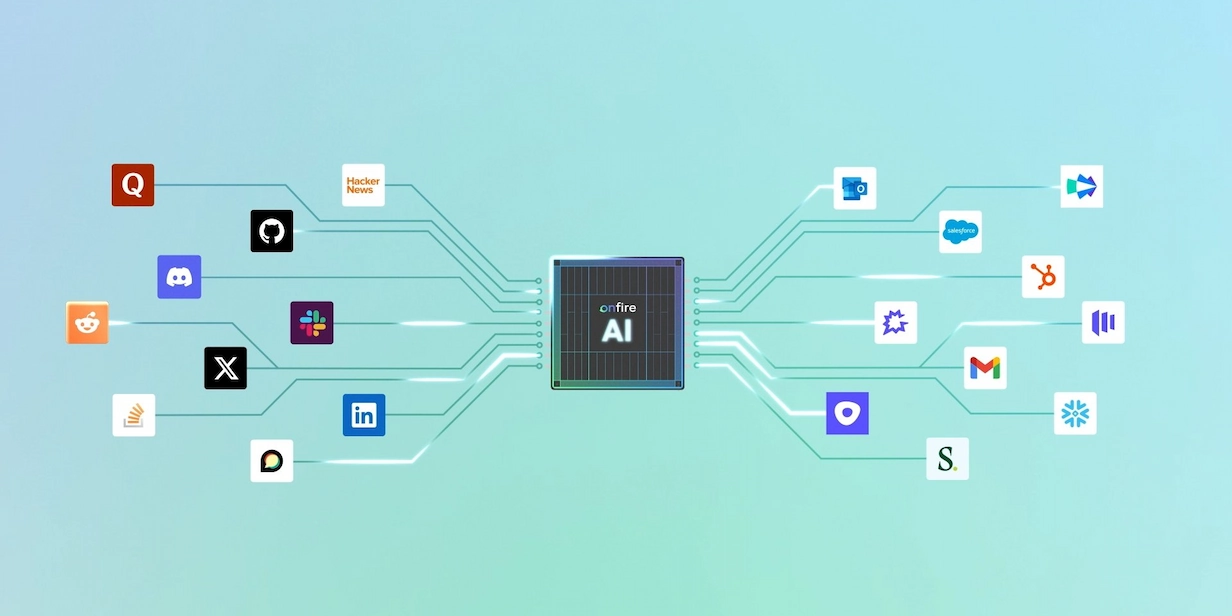
Effective B2D targeting relies on developer intent signals that reflect what technical buyers actually do before purchasing:
- GitHub activity: Repo forks, stars, and issue threads signal active evaluation at the individual level. A cluster of engineers from the same company engaging with your repo, or a competitor's, is a buying signal worth prioritizing.
- Community engagement: Questions in Discord servers, Reddit threads (r/devops, r/kubernetes, r/programming), and Stack Overflow show where developers are actively problem-solving in your category.
- Job postings: A company hiring for a role that lists your product category or technology signals budget and intent. A posting for a "Kafka engineer" or "Terraform specialist" tells you something real about their technical direction.
- Tech stack data: Companies using complementary tools are more likely to need yours. Stack fingerprinting, identifying what technologies a company runs based on public signals, narrows your ICP considerably.
- Event attendance: Engineers who attended KubeCon, re:Invent, or category-specific conferences are flagging active interest in those ecosystems.
The challenge is that most of these signals are scattered across dozens of platforms and don't surface cleanly in traditional intent tools, which are built for B2B publisher networks that developers rarely use.
Outreach and Messaging That Works for Developer Audiences
Most standard B2B sales messaging fails with developer audiences for a simple reason: it leads with outcomes the developer doesn't care about. "Accelerate your time-to-value" and "drive business results" are abstractions that a developer evaluating an API or SDK will immediately discount, or worse, read as a sign that you don't understand their problem.
Understanding how intent signals change outbound messaging is the foundation here. When you know a prospect has been actively evaluating your category, not just visiting your homepage, you can lead with something specific and technically credible instead of a cold premise.
What works for selling to developers:
- Lead with a specific technical problem, not a business outcome. "We saw you're using X, teams running X alongside Y often hit [specific issue]. Here's how we handle it." is infinitely more credible than "I'd love to show you our platform."
- Respect their research process. Reference documentation, link to technical resources, and don't ask for a discovery call before you've provided any value.
- Be concrete about how the product works. Vague claims about capabilities don't move developers. Specifics do. Code examples, architecture diagrams, and honest constraint documentation earn far more trust than polished sales decks.
- Avoid the 10-email sequence. Developers talk to each other. A reputation for aggressive outreach spreads quickly in technical communities.
How to Structure a B2D Sales Motion
A B2D sales motion runs roughly in four stages, and sales should only enter the picture at stage three.
1. Awareness through community and content. Developers discover tools through peers, technical content, and community activity. Your presence in GitHub, relevant Discord servers, developer-focused conferences, and high-quality technical content determines whether you're findable when they start looking.
2. Self-serve evaluation. Once a developer is interested, they need to evaluate your product without involving sales. A free tier, sandbox environment, or well-documented trial experience is non-negotiable. Friction here kills deals before they start.
3. Signal-triggered sales engagement. When a meaningful evaluation is already underway, multiple users from the same account, pricing page visits, upgrade-tier questions, that's the right moment to introduce a sales conversation. Not before. Improving lead quality for developer-tool sales depends almost entirely on getting this timing right.
4. Expansion and enterprise conversion. Individual adoption that spreads to a team is the core B2D growth loop. Sales enters to support that expansion, address procurement and security requirements, and structure an enterprise agreement around usage that already exists.
For teams thinking about account-level targeting around this motion, structuring an ABM program for developer tools adds a layer of precision, focusing expansion effort on accounts where adoption is already showing the right signals.
General B2B tech sales cycles now run an average of 6.5 months with roughly 25 stakeholders involved. In B2D, a well-executed PLG motion can compress the early stages significantly, because the product has already proven value before sales is involved. Enterprise conversion still takes time, particularly when security reviews and procurement processes enter the picture.
The B2D motion rewards patience and precision. The teams that win invest in showing up early and credibly, and resist the urge to shortcut a process their buyers are running on their own terms.
FAQ
What is B2D sales and how is it different from B2B?
B2D (business-to-developer) sales targets developers and technical teams as the primary buyers. Unlike traditional B2B, where sales initiates contact with a decision-maker, B2D buyers self-evaluate tools through documentation, repos, and peer communities before engaging with sales. The buying motion is bottom-up rather than top-down.
How do you identify developer-led buying signals?
Developer-led buying signals include GitHub activity (repo forks, stars, issue engagement), community discussions on Discord and Reddit, job postings indicating relevant technology investment, and tech stack data showing complementary tool adoption. These signals surface real evaluation behavior, unlike form fills or content downloads, which often reflect curiosity rather than intent.
What channels work best for reaching developer buyers?
Developer buyers are most active in technical communities: GitHub, Discord servers, Reddit, Stack Overflow, and conference ecosystems like KubeCon and re:Invent. High-quality technical content, documentation, architecture deep-dives, open-source contributions, outperforms cold outreach by building credibility before any direct engagement occurs.
How long is a typical B2D sales cycle?
General B2B tech sales cycles average 6.5 months, but B2D cycles vary significantly based on whether a product-led motion is in place. When self-serve evaluation is available and signals are used to time sales engagement, the early stages compress. Enterprise conversion with security and procurement involvement still typically takes several months.
When should sales engage in a product-led B2D motion?
Sales should engage after meaningful evaluation signals appear, multiple users from the same account, pricing page visits, or direct questions about enterprise tiers. Engaging before the product has demonstrated value to a developer is the most common mistake in B2D. Signal-triggered outreach converts significantly better than outreach based on firmographic fit alone.
.webp)















.webp)











.webp)