B2B Sales Prospecting Techniques That Work for Technical and Developer-Focused Buyers



Key Takeaways
- Standard cold outreach fails with technical buyers because they self-educate independently, can immediately identify templated sequences, and have already filtered their shortlist before engaging sales.
- The signals that matter most aren't keyword searches on content networks, — they're community activity, tech stack changes, job postings, and product usage patterns.
- Personalization that references technical context (the tools they use, the problems they're publicly solving) outperforms generic ROI messaging by a significant margin.
- A repeatable prospecting motion for technical buyers is built around signal timing: reaching a prospect when their problem is active, not when your quota is due.
- Account intelligence that resolves to the individual engineer, — not just the account, — is what separates high-conversion outreach from noise.
Forrester research found that 92% of B2B buyers already have a preferred vendor in mind before formal evaluation begins, and 41% have a single favorite before any sales rep ever contacts them.
For teams doing b2b sales prospecting into developer and engineering audiences, that number isn't discouraging. It's a strategic signal: your job isn't to pitch a cold prospect, it's to reach a technical buyer at the moment they start forming an opinion. Miss that window, and you're competing against a shortlist that was built without you.
Why Technical Buyers Require a Different Prospecting Approach
Technical buyers don't evaluate vendors the way procurement or finance does. Where an economic buyer asks why now, ROI, budget cycle, business case, a technical buyer asks why you: Does this integrate with our stack? Will it create more problems than it solves? Can I trust the company behind it?
That distinction changes everything about how you approach sales prospecting. A business buyer might respond to a well-timed case study about cost savings. A senior DevOps engineer who receives the same message will archive it in under three seconds. Technical buyers spend their days inside GitHub, Stack Overflow, and community Slack channels, not reading vendor content. They form opinions through peer discussion, hands-on evaluation, and technical documentation long before they engage with any sales motion.
According to The Insight Collective, 75% of technical buyers formally recommend providers and evaluate technical requirements, and 58% approve purchases outright. This isn't a gatekeeper audience, it's a decision-making audience. Treating them like one means your outreach needs to demonstrate technical credibility from the first word.
The Signals That Actually Matter for Technical Buyer Prospecting
Understanding intent signals for technical buyers starts with recognizing where that intent is expressed. It's not on content syndication networks. It's in behavior.
- Community activity is one of the highest-value signals available. When an engineer asks in a DevOps forum whether anyone has migrated off a specific tool, or posts a question comparing two infrastructure platforms, they're not casually browsing. They're actively evaluating. That's a buying conversation happening in public.
- Job postings are a lagging but reliable signal. A company posting for a Platform Engineer with experience in a specific tool category is signaling a capability gap. A cluster of DevOps and SRE job listings often precedes an infrastructure purchase by 60 to 90 days.
- Tech stack changes indicate active evaluation. A company adding or removing tools from their public stack, visible through job postings, GitHub repositories, or engineering blog posts, means someone internally championed that change. That champion is your buyer.
- Product usage and free-tier activity is the most direct signal of all. When a developer spins up a free account, explores documentation, or starts a trial, the evaluation has already started. Reaching out within that window, with the right message, is categorically different from cold outreach.
Sales Prospecting Techniques That Work for Technical and Developer-Focused Buyers
Effective technical buyer prospecting requires a different playbook than standard B2B outreach. These six techniques consistently work for this audience.
1. Signal-triggered outreach. Rather than prospecting on a schedule, send outreach when a trigger fires, a job posting, a community question, a tech stack update. Timing your message to an active problem makes it relevant by default.
2. Technical first-touch personalization. Reference something specific: the tool they use, the stack they've built, the problem they posted about publicly. Generic personalization ("I noticed you're in DevOps...") gets ignored. Specific technical context ("I saw your team recently added Kubernetes to your stack...") earns a reply.
3. LinkedIn for warm multi-touch, not cold pitch. LinkedIn works for this audience when used to build presence before pitching, commenting on technical posts, sharing relevant content, then connecting with context. The connection request that references a shared technical discussion converts far better than a blind InMail.
4. Email sequences capped at high value, low volume. Gradient Works research shows generic cold email converts at 1–5% reply rate, rising to 8.5–10% with personalization, and cohorts of 50 or fewer contacts produce 2.76x higher response rates. Technical audiences reward precision over scale.
5. Technical content as a trust asset. Sharing a relevant blog post, documentation comparison, or architecture guide specific to the problem they're solving does more credibility work than a pitch deck. It positions you as someone worth talking to, not just another rep.
6. Community listening and selective engagement. Participating genuinely in the forums, Slack groups, and Discords where technical buyers spend time, before you ever reach out, gives you context and credibility. Jumping in with a pitch the moment someone mentions a pain point is the fastest way to get blocked.
How to Build a Repeatable Prospecting Motion for Technical Buyers
Turning these sales prospecting techniques into a weekly workflow requires discipline around signal inputs, not just outreach volume.
Start each week by reviewing your signal queue: which accounts had new job postings go live, which prospects showed community activity, which free-trial users are approaching day 7 or 14. This is your prioritized outreach list, built on timing and not territory assignment.
For accounts already in your pipeline, layer in building your target account list by tech stack and company growth signals. A company that just closed a Series B and is actively hiring DevOps engineers is a different-priority prospect than an established enterprise with a frozen headcount plan.
Run sequences at lower volume with higher specificity. Closed-won deals require an average of 26 touchpoints across 7.4 unique channels, with outbound requiring roughly 18 activities per qualified meeting, but for technical audiences, those touches need to be spread across time and channels without feeling like a cadence. Space your follow-ups around new information or triggers, not arbitrary day intervals.
If your team is exploring agentic AI approaches to technical GTM, this signal-first workflow is where automation compounds fastest, routing the right signal to the right rep at the right time, rather than blasting sequences at static lists.
How Account Intelligence Changes the Prospecting Game
Most b2b prospecting tools give you account-level signals: a company is researching your category, based on their employees' activity on third-party content networks. That's useful context, but it doesn't tell you who at that company is driving the evaluation, what specific problem they're trying to solve, or how far along they are.
Prospect-level intelligence changes the calculus entirely. Knowing that a specific senior engineer at a target account asked a question in a DevOps community about migrating off a tool you replace, with a timestamp from yesterday, means your outreach isn't cold. It's a direct response to a problem they've publicly stated.
The B2B buyer intent data market reached $3.30B in 2024 and is growing at 16.65% CAGR, reflecting how fast GTM teams are moving toward signal-based approaches. The question now isn't whether you use intent data, it's whether your intent data resolves to the person or stays at the account.
For buyer-level intent data platforms evaluated against horizontal tools, the gap in outreach precision is measurable: Onfire customers report 3x higher reply rates by reaching the right engineer at the moment their evaluation is active.
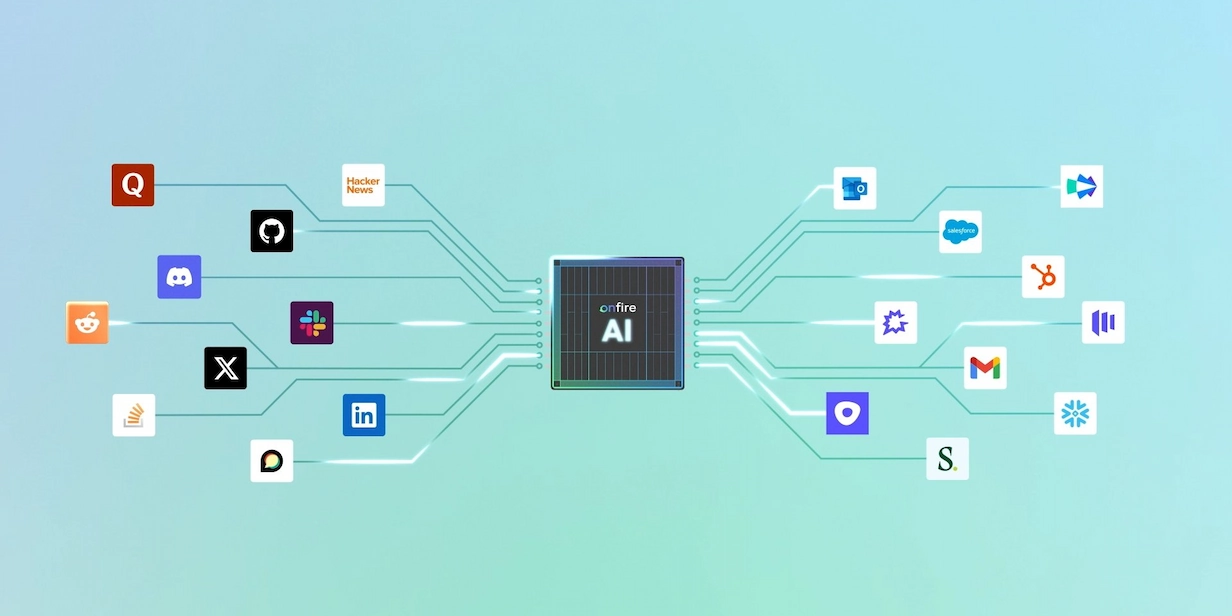
Onfire's Account Intelligence Graph™ processes 5 million signals per day across 100,000 technical data sources, GitHub, Stack Overflow, Reddit, Discord, and technical conferences, connecting that activity to a database of 50 million engineers. When a developer's community behavior signals active evaluation, you know before they fill out a form.
See which technical buyers are evaluating your category right now, book a demo.
FAQ
What is the most effective first touch for a technical buyer?
A technically specific email or LinkedIn message that references something real, the tools they use, a problem they've posted about, or a recent change in their stack. Generic value propositions get deleted immediately. A first touch that demonstrates you've done actual research earns engagement because it's rare. Keep it short: two to three sentences maximum.
How do you personalize outreach without seeming intrusive to a developer audience?
Reference publicly available signals, not private behavior. Mentioning a job posting, a GitHub repo, or a question they asked in a public forum is fair game and reads as diligent research. Referencing specific web session data or internal tool usage crosses a line. The rule: if they posted it publicly, you can reference it professionally.
What job titles should BDRs prioritize when prospecting for technical buyers?
Start with Platform Engineers, DevOps Engineers, and SREs, they're closest to the technical pain and often initiate evaluations. Engineering Managers and VP of Engineering hold budget influence and escalate recommendations. CTOs matter at earlier-stage companies where they're still hands-on. Prioritize by who owns the problem, not just who holds the title.
How many touchpoints does it take to reach a technical buyer?
Closed-won B2B deals average 26 touchpoints across 7.4 channels, with outbound requiring roughly 18 activities per qualified meeting. For technical buyers, volume matters less than timing and relevance. A sequence timed to active signals, a job posting, a community question, a trial start, will outperform a longer generic cadence every time.
What data sources are most useful for technical buyer prospecting?
Community platforms (Stack Overflow, Reddit, Discord, Slack groups), GitHub repository activity, job postings filtered by technical role and stack, and free-trial or product usage data. These sources surface where technical buyers are actively evaluating. Generic content-network intent data misses this audience almost entirely because technical buyers self-educate in communities, not on syndicated content sites.
.webp)









%20(1).webp)














































.webp)