Firmographic vs. Technographic vs. Intent Data: What's the Difference?



Key Takeaways
- Firmographic data defines whether a company fits your ICP, — but tells you nothing about timing or buying readiness.
- Technographic data reveals how a company operates and what tools it runs, exposing displacement opportunities and integration fit.
- Intent data signals when an account is actively researching a problem you solve, — first-party signals are more accurate than third-party co-op networks.
- Layering all three B2B data types creates a complete targeting picture: fit, context, and timing in a single view.
- Which data type to prioritize depends on your GTM motion, — firmographics for ICP definition, technographics for account selection, intent for timing.
Most B2B sales and marketing teams have access to data. Few use the right kind of data at the right moment. The gap is usually a categorization problem. Firmographic data, technographic data, and intent data each answer a fundamentally different question. Conflating them, or over-relying on just one, turns expensive subscriptions into noise.
Here's what each type tells you, where it falls short, and how combining all three separates precision targeting from expensive guesswork.
What Is Firmographic Data?
Firmographic data describes the structural characteristics of a company, the B2B equivalent of demographic data for individuals. Key attributes include industry vertical, employee count, annual revenue, funding stage, headquarters location, and growth rate.
For sales and marketing teams, firmographic data answers one question: does this company fit? It's the foundation of ICP definition and the first filter in any account scoring model.
Phoenix Strategy Group found that companies using firmographics to define their ICP see 50–70% higher win rates, and using at least 10 firmographic attributes reduces prospecting time by 40%.
In practice, a demand gen team might use firmographic data to:
- Build a target list of Series B–D SaaS companies with 100–500 employees in North America
- Suppress outbound to companies below a revenue threshold that historically churns
- Segment paid campaigns by company size to differentiate SMB vs. enterprise messaging
The limitation is significant: firmographic data tells you a company could buy. It says nothing about whether they will buy, or when.
What Is Technographic Data?
Technographic data maps the technology stack a company runs, the tools, platforms, and infrastructure it has deployed. It goes beyond firmographic data by revealing operational context: what a company has invested in, what it's likely to need next, and where your product can fill gaps.
The firmographic vs. technographic distinction matters most in competitive selling. Knowing a prospect runs Salesforce, Segment, and Snowflake tells an SDR far more than knowing the company has 300 employees. It reveals integration requirements, budget signals, and displacement opportunities.
For developer-focused GTM teams, technographic data is especially valuable, and harder to source accurately. Knowing a company uses Kubernetes is useful; knowing which engineers are actively working with it, and what adjacent tooling they're evaluating, drives relevant outbound. Teams building this motion should look at top B2D technographic data providers that surface individual-level stack signals, not just company-level profiles.
Three practical technographic use cases:
- Identifying companies running a competing tool as a high-priority displacement list
- Filtering accounts by infrastructure stack to confirm integration compatibility
- Triggering sequences when a target company adds a tool that signals a workflow your product fits
What Is Intent Data?
Intent data captures behavioral signals indicating a company, or a specific person within it, is actively researching a problem your product solves. It's the timing layer firmographic and technographic data can't provide.
The distinction between first-party and third-party intent matters for accuracy. First-party intent comes from your own properties: website visits, product trials, pricing page views, documentation reads. These signals achieve 90–95% precision because you control the collection. Third-party intent is aggregated from external content networks, whitepapers, review sites, syndication platforms, and typically ranges from 65–85% accuracy, with freshness degrading over time, according to FL0's analysis of intent data accuracy.
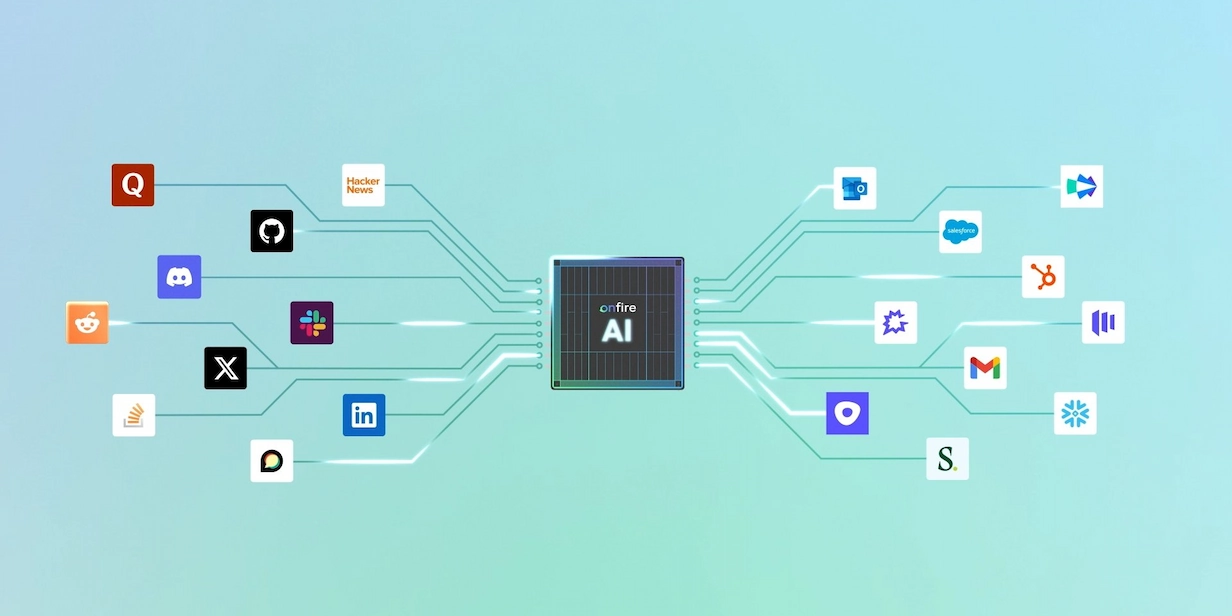
For technical buyers, standard third-party intent networks have a structural blind spot: developers and engineers don't research tools by downloading whitepapers. They open GitHub repositories, ask questions on Stack Overflow, and discuss tooling in Discord. Horizontal intent providers miss this activity entirely. For teams building intent signals for developer-focused marketing, the signal source matters as much as the signal itself.
Practical intent data applications:
- Prioritizing outbound to accounts showing active in-market research behavior
- Triggering sales alerts when a high-fit account spikes activity on a competitor's review page
- Suppressing nurture programs for accounts showing no recent intent signals
SalesIntel research found intent data generates 38% higher sales win rates and 36% higher customer retention, figures that reflect what happens when timing is right, not just fit.
How the Three Work Together
Each data type answers a different question. Used alone, each has a critical gap. Combined, they produce account targeting that's precise, contextual, and timely.
Consider a concrete example. A software infrastructure company sells a developer observability tool. Their ICP is Series B–D companies with 50–200 engineers running cloud-native stacks.
- Firmographic data surfaces 400 companies matching on headcount, funding stage, and vertical.
- Technographic data narrows that list to 140 companies confirmed to run Kubernetes and Prometheus.
- Intent data identifies 18 of those 140 where engineers have discussed observability tooling on Stack Overflow and GitHub in the past 30 days.
Those 18 accounts aren't just a fit, they're in-market, running the right stack, and actively researching the exact problem. That's the difference between working a 400-account list with low signal and an 18-account list with high conviction.
Data freshness is a real constraint. SalesIntel reports B2B data decays at 70.3% annually, so static enrichment snapshots degrade quickly. Real-time data pipelines keep the layered model functional.
Which Data Type Should You Prioritize?
The right prioritization depends on where your GTM motion is and what problem you're solving.
If you're defining or refining your ICP, start with firmographic data. You need structural clarity on what a good-fit company looks like before layering in behavioral signals. It's also the most accessible, most CRMs have firmographic fields, and enrichment providers are widely available.
If you're running competitive displacement or partner-led motions, technographic data is the lever. Knowing what a company runs, and what they're likely to replace, creates targeting logic that firmographics alone can't generate. It's also the most underused data type relative to its practical value.
If you're managing an ABM program or optimizing outbound sequencing, intent data should drive prioritization. 91% of B2B technology marketers already use intent data to prioritize accounts. Pair intent with fit data from firmographics and technographics to avoid chasing high-intent accounts that are a poor fit.
If you're selling to technical buyers, developers, engineers, platform teams, standard horizontal tools don't give you a complete picture. Your firmographic and technographic data needs individual-level precision, and your intent data must come from where technical research actually happens. Purpose-built B2B intent data providers that cover technical communities are worth evaluating carefully.
The practical takeaway: most teams should invest in all three B2B data types, but sequence the buildout. Start with firmographics to define fit, add technographics to sharpen account selection, and layer in intent to drive timing.
FAQ
Can you use firmographic data alone to qualify accounts?
Firmographic data is a necessary starting point but not sufficient on its own. It tells you whether a company matches your ICP profile, size, industry, funding stage, but provides no signal about buying readiness. Without technographic or intent data, firmographic-only qualification leads to large target lists with low conversion rates.
What is the best source of technographic data for B2D teams?
For B2D teams, company-level stack data from tools like BuiltWith or Datanyze is a starting point, but individual-level signals matter more. The best sources surface which engineers within a target company are actively using specific tools. See our comparison of top B2D technographic data providers.
How accurate is third-party intent data?
Accuracy varies by vendor methodology. First-party intent data achieves 90–95% precision. Third-party intent data, aggregated from content syndication networks, typically ranges from 65–85% accuracy, with quality degrading as data ages. For technical buyers, accuracy is further limited because standard co-op networks miss developer research on GitHub, Stack Overflow, and Discord.
Which data type matters most for ABM programs?
ABM requires all three, but intent data is the prioritization engine. Firmographic data builds your target account list; technographic data confirms account fit and informs messaging; intent data tells you which accounts to activate now. Layering intent signals for developer-focused marketing is especially critical for technical-buyer ABM.
How do these three data types fit into a typical sales workflow?
Firmographic data supports ICP definition and territory planning, typically a RevOps or marketing function. Technographic data informs account selection and SDR prioritization. Intent data triggers outbound sequences and sales alerts in real time. The three flow from list-building to qualification to activation, with each layer reducing wasted effort at the next stage.
.webp)












%20(1).webp)

















































.webp)