5 Best B2B Data Enrichment Tools for BDRs in 2026



Key Takeaways
- BDRs use enrichment to fill gaps in contact records, prioritize outreach, and reduce manual research.
- The best data enrichment tools offer high accuracy on records that matter to your ICP, not the largest raw database.
- All five tools below solve the who problem. The gap they leave open is the why now, — particularly for technical buyers.
- API availability and CRM sync quality matter more than feature count; a tool that doesn't fit your workflow creates friction.
- Even small BDR teams see measurable ROI from enrichment, — bad data costs scale with headcount, not company size.
The average BDR team is flying blind on roughly a quarter of its pipeline. According to Landbase, sales reps waste 27% of their working hours on bad data, verifying emails, hunting for job titles, deduplicating contacts, instead of selling.
That's not a productivity problem. It's a revenue problem that compounds every quarter you ignore it. The right b2b data enrichment tools don't just clean your CRM; they determine how much pipeline your team generates and how efficiently each rep hits quota.
This guide covers what separates useful data enrichment software from expensive noise, which five tools BDR teams are running in 2026, and how to match the right tool to your team.
Why BDRs Need Data Enrichment Tools
Bad data doesn't announce itself. A BDR dials a disconnected number, sends a sequence to a director who left in January, or personalizes a pitch around a tech stack the prospect replaced two years ago. Each one is a small waste that compounds into a serious pipeline problem, and most teams never trace the root cause back to data quality. Reps blame messaging, managers blame reps, leadership blames the market, when the real culprit is the data layer underneath.
Apollo.io's research puts a number on it: bad contact data costs SDR teams approximately $32,000 per rep annually in lost productivity. For a 10-person team, that's $320,000 before missed quota is factored in. Cleanlist estimates the average company absorbs $12.9M per year in waste, missed pipeline, and damaged sender reputation.
The root cause is decay. B2B contact data degrades at 22–30% per year, job changes, reorgs, new email formats, shifted responsibilities. Firmographic data decays at 15–20% annually. A CRM that was clean 18 months ago is now materially unreliable.
B2B data enrichment automatically supplements records with fresh information, verified emails, direct dials, current job titles, firmographics, and technographics. For BDRs, it closes the gap between a CRM lead and one workable today.
What to Look for in a B2B Data Enrichment Tool
Most tools lead with impressive database size numbers. Ignore them. What matters is accuracy on the records your BDR team actually needs to work. Here's the framework before you sign anything:
- Accuracy and match rate. How often does the tool return a verified result, and how often is it correct? Look for tools that distinguish between high-confidence and low-confidence matches, since false positives are often more damaging than missing data.
- Coverage for your ICP. A tool with 500M contacts is useless if it has weak coverage of Series B SaaS or mid-market manufacturing firms. Test against a sample of your ICP accounts before committing.
- Technographic depth. If your ICP is defined partly by the tools they run, cloud infrastructure, dev platforms, or security stacks, you need enrichment that surfaces tech stack data reliably. Check our breakdown of leading technographic data providers to understand how these sources differ.
- API availability and CRM sync. The best data enrichment software runs in the background without manual intervention. Prioritize tools with native integrations for Salesforce, HubSpot, or Pipedrive, plus webhook or API support. A tool that requires CSV exports is one your team will stop using within a month.
- Workflow fit. Does it enrich on record creation, on a schedule, or on demand? Real-time enrichment on lead creation is the right default for active BDR teams running high outbound volume.
5 Best B2B Data Enrichment Tools for BDRs in 2026
These five tools represent the range of approaches in 2026, from broad horizontal databases to orchestration layers to specialized intelligence platforms.
1. ZoomInfo
ZoomInfo a massive database of B2B contacts and accounts with strong Salesforce integration, covering firmographics, direct dials, and org chart data across most industries. Best suited for teams with large TAMs and high outbound volume who need reliable baseline coverage at scale.
2. Apollo.io
Apollo combines a 275M+ contact database with built-in sequencing and prospecting tools, making it a practical all-in-one choice for smaller BDR teams that need enrichment and outreach in one platform. It's one of the more accessible entry points into best data enrichment tools by price, with strong match rates for North American contacts.
3. Clay
Clay is an enrichment orchestration layer, not a database. It routes requests through 100+ data providers and returns the best available result through a waterfall process. This maximizes hit rates across diverse ICPs and suits technically capable RevOps teams building custom workflows. Less plug-and-play than Apollo or ZoomInfo, but more flexible for non-standard ICPs.
4. Cognism
Cognism is the compliance-first choice for BDR teams with European pipeline, offering GDPR-compliant contact data for the UK, DACH, and Nordic markets where other tools have weaker coverage. Its Diamond Data tier provides phone-verified mobile numbers, a meaningful differentiator for high-volume calling motions in regulated regions.
5. Onfire
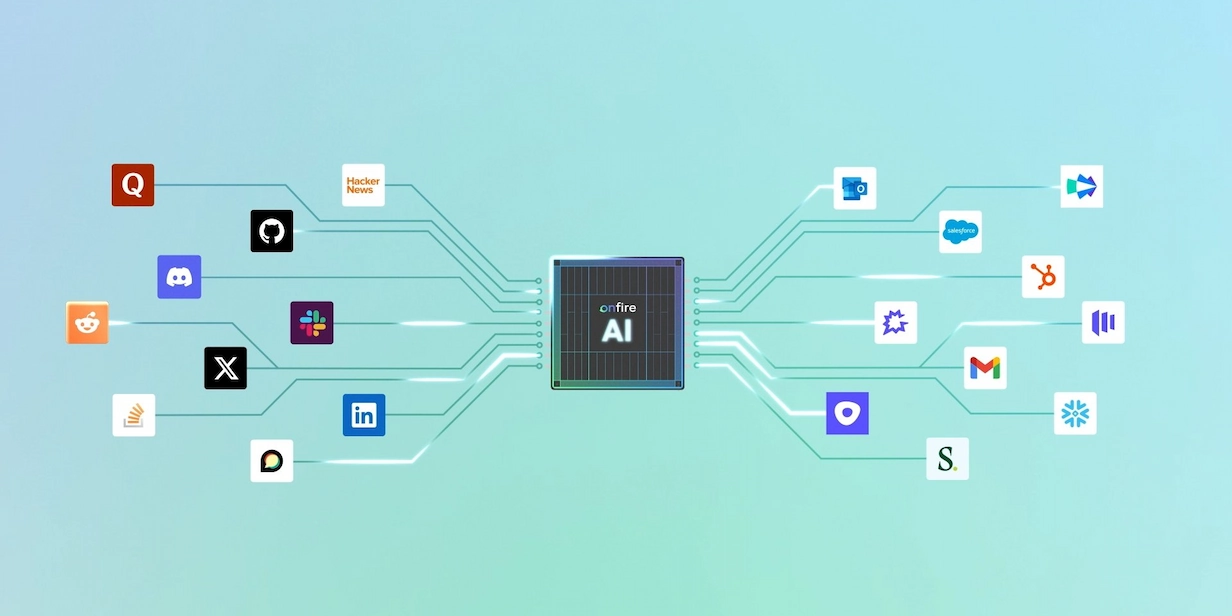
Onfire operates one layer above traditional enrichment. While the tools above fill in contact fields, Onfire ingests 5M signals per day from 100K technical sources, GitHub, Discord, Stack Overflow, Reddit, engineering conferences, and surfaces real-time evidence that a prospect is actively engaged with your product category.
For BDR teams selling developer tools or infrastructure, this is the gap standard b2b data enrichment tools leave open: a verified email doesn't tell you an engineer just asked about your category in a Discord server last night. Onfire does.
How to Choose the Right Tool for Your Team
The right pick depends on three things: team size, your ICP, and how technical your buyers are. Miss any one of them and you end up with mismatched tooling and wasted spend.
- Small teams (1–5 BDRs) should prioritize simplicity and cost efficiency. Apollo.io handles enrichment and sequencing in one platform, reducing tool sprawl. The learning curve is low and ROI shows up within weeks.
- Mid-market teams (5–20 BDRs) with a dedicated RevOps function can afford to be more deliberate. Clay is worth the setup investment if your ICP is diverse or you're running enrichment across multiple providers. ZoomInfo makes sense if enterprise coverage and org chart data are central to your motion.
- Teams selling to technical buyers, engineers, DevOps leads, infrastructure architects, are under-served by every tool here except Onfire. Standard enrichment solves a real problem (incomplete records), but it doesn't answer the question that matters most for developer GTM: why is this prospect worth contacting today? Understanding lead quality when selling to developers requires signal types no traditional database carries.
Evaluation should include a live test against your actual ICP accounts, not a vendor demo set. Match rate degrades significantly outside a tool's core coverage area, and that only becomes visible during a hands-on trial.
If your pipeline depends on technical buyers, the tools above are necessary but not sufficient. Book an Onfire demo to see the signals your enrichment tool isn't showing you.
FAQ
What is B2B data enrichment and why does it matter for BDRs?
B2B data enrichment automatically adds accurate, up-to-date information to contact and account records, job titles, verified emails, firmographics, and tech stack data. For BDRs, it cuts time wasted on bad records and ensures outreach reaches real, reachable people who fit the ICP.
How often should enrichment data be refreshed?
Best practice is real-time enrichment on record creation, with quarterly refreshes for active accounts and an annual full-database pass. B2B contact data decays at 22–30% per year, so static enrichment quickly becomes a liability. High-velocity teams should lean toward continuous refresh.
Can enrichment tools work with any CRM?
Most leading data enrichment tools offer native integrations with Salesforce, HubSpot, and Pipedrive. API access enables custom integrations with less common CRMs. Integration depth varies: some sync bidirectionally in real time; others require manual export-import. Verify your CRM is supported.
What is the difference between enrichment and intent data?
Enrichment tells you who a prospect is, title, company, contact details, firmographics. Intent data tells you what they're researching now. The two are complementary: enrichment builds the record, intent signals determine when to act. See our guide on enrichment versus intent data.
Is data enrichment worth it for smaller sales teams?
Yes. Bad data costs scale with rep count, not company size. At $32,000 per rep annually in lost productivity, even a two-person BDR team absorbs $64,000 in waste each year. Tools like Apollo.io offer accessible entry pricing that pays back quickly.
.webp)







%20(1).webp)







































.webp)