Sales Prospecting Strategies That We’ve Seen Work When Selling to Technical Buyers
How to succeed with outbound when you’re selling to engineering, security, or data teams



Unlike typical B2B prospects, engineers aren’t interested in self-promoting on LinkedIn, but they’re still critical for closing deals. Let’s look at the prospecting playbook that we’ve worked with Onfire customers who target technical buyers specifically - that’s we’ve personally seen delivering results and holding up against audiences that have seen every trick.
Key Takeaways:
- The B2B prospecting strategies that work for technical buyers start from real activity, not job titles and form fills.
- AI earns its place by automating research and prioritization, so reps reach the right person with a message that proves you understand their problem.
- A repeatable prospecting engine requires that you codify your personas and signals, then track which signals actually convert and feed that back into the model.
Why Standard B2B Prospecting Strategies Fall Apart for Technical Buyers
Three pieces of the standard B2B motion don’t work for engineers, at least not without some adjustments: high-volume cold outreach, MQL scoring based website activity, and bought lists filtered on inferred technographics.
Once the cost of sending a "personalized" email fell to roughly zero, everyone started sending more of them. That’s had a tangible effect on prospecting for technical buyers. Now that their inboxes are a wall of LLM-generated openers, most have simply stopped reading. Hitting the phone harder may have worked in earlier days, but Apple now routes unknown callers straight to voicemail.
Also, lead scoring assumes buyers download whitepapers, attend webinars, and fill out forms. That doesn’t hold true of engineers. Instead, they evaluate tools, ask their network, read the docs, and show up to a sales conversation already most of the way decided. The problem is that none of this activity trips a single scoring rule on legacy tools. An MQL model tuned to form fills will either ignore your best accounts or light up for a marketing intern who grabbed a PDF.
The usual approach to technographics is to pull a list from a provider like ZoomInfo or Apollo, filter by firmographics, layer on technographic filters, and target a handful of job titles. The trouble is that technographic data is mostly inferred from job posts and stale scraping. And filtering by title leaves you with hundreds of "senior software engineers" at a large account and no idea which one owns the decision. You end up with a very long list and very little to act on.
For technical buyers, you need a different approach.
The AI-Led Playbook That Works
The teams getting results aren't grinding harder at the old motion. They've moved to what we call AI-led growth: using AI to automate the research and prioritization that used to eat 80% of a rep's day, so the rep can spend their time on the parts a machine can't do. Translated into prospecting, the motion runs in five steps:
1. Define golden personas, not job titles. "Senior software engineer" describes a few hundred people at a large enterprise and tells you nothing. Start instead from the role someone actually plays: the engineer who owns the CI/CD pipeline, the person leading a DevSecOps initiative, the one running the Postgres migration. Your target is a function, not a line on LinkedIn.
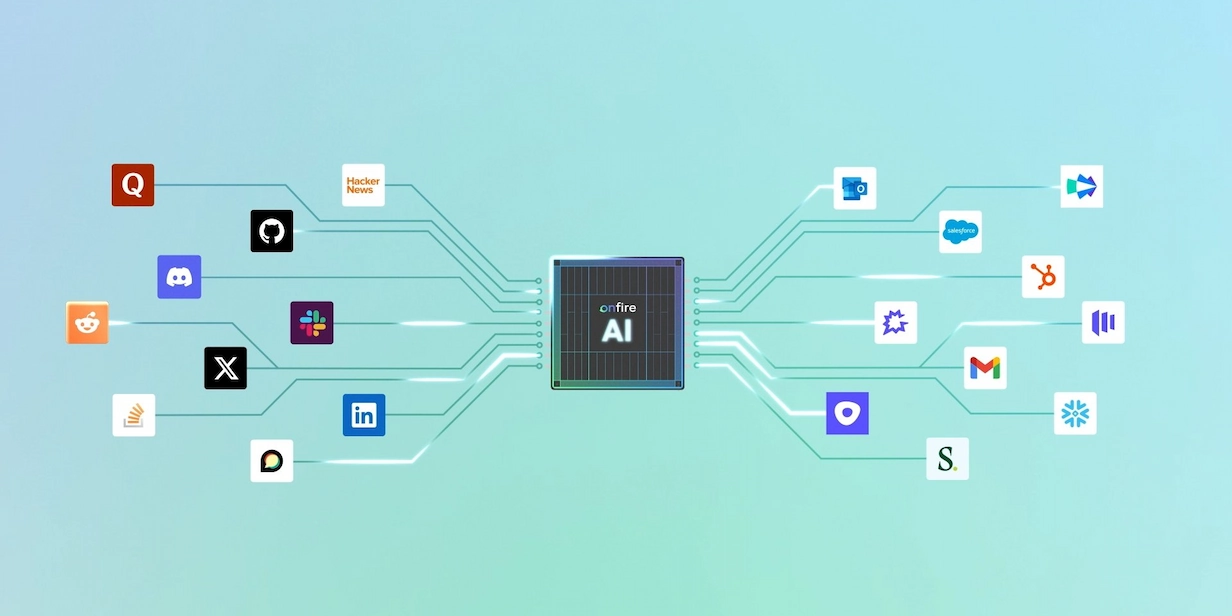
2. Watch the channels your buyers use. Once you know who you're after, point your data collection at where they show up, like OSS contributions, community discussions, conference sessions, and social activity, and fuse it with the first-party signals already sitting in your CRM and product analytics.
3. Resolve the signal to a real person. A pseudonymous Stack Overflow question is worthless until you know who asked it and where they work. Identity resolution connects that anonymous activity back to a contactable person at a named account, turning a forum post into a prospect.
4. Prioritize by genuine buying intent. Instead of a list of thousands of accounts that loosely match your firmographics, you want a short, ranked list of accounts where a specific person is working on the problem you solve right now. Your prospecting workflow needs to identify the right person at the right time.
5. Hand the rep the bottom line, in the tools they already use. A BDR shouldn't open six tabs to figure out who to call. The output of all this work should land in the CRM or sequencer as a prioritized list: who to contact today, why, and the evidence behind it.
With those five steps, the manual toil that used to define B2B sales prospecting drops to a fraction of the time, and your reps can get back to selling.
Outreach B2B Sales Techniques That Get Responses From Technical Buyers
Good targeting gets you to the right inbox, but that’s just the first step. Now your message still has to get technical buyers to reply, which is no small feat.
Beyond cutting out buzzwords like “transformation,” you need to proactively get ahead of suspicions that you’re using shallow personalization. Scraping one line off someone's LinkedIn - "saw you ran a marathon!" - is the opposite of what works. You’ll end up fooling nobody, and loudly signalling to the prospect that you are using automation.
What lands instead is evidence that you understand the specific technical problem the person is facing. Compare two openers:


The second only works if you actually know the account, the person, and their stack, along with where your product fits into it. That used to take an hour of research per prospect, which is exactly why most reps skipped it and fell back on volume. AI changes that calculus by surfacing the evidence, such as the relevant repo, the competitor named on a call, or the pointed community question. That way, your reps can write something real in two minutes instead of sixty.
For instance, Port's sales development team used this workflow with Onfire and saw a 3x response rate alongside 20% quarter-over-quarter pipeline growth. As Kevin Tarbell, Head of Sales Development, put it: "Onfire delivers the right data at the right time, and that's made them more than a vendor; they're a true partner."
Deploy a Repeatable Prospecting Engine with Onfire
If you're selling to developers, data engineers, or security teams, prospecting is probably the toughest part of your job. We'd be happy to show you what changes when you use a solution made specifically for teams selling to technical buyers. Book a demo, bring an account you're stuck on, and see what we find.
FAQ
What's the best first touchpoint when you've identified a signal but have no contact at the account yet?
Resolve the signal to a specific person before you reach out. If you can't pin down the individual, engaging in the community or thread where the signal appeared often beats a cold email to the wrong inbox. In terms of specific channels, there is no one size fits all. Many reps will swear by phone, but it had undoubtedly become harder to get people to pick up; LinkedIn and email, while flooded, might be your best bet - the right message can still stand out in a crowded inbox.
How do you balance personalization with volume when prospecting at scale?
Modern AI tools enable you to let agents absorb the research that used to make personalization expensive, such as the account picture, the stack, and the relevant pain, so reps spend their hours on judgment and writing. Relevance is the target, and volume follows once research is cheap. However, and even with AI, ‘scale’ should not mean ‘spam’ - especially for your higher value accounts, you want to keep a human hand firmly on the wheel.
Which B2B sales techniques work best for enterprise technical buyers vs. startup engineering teams?
Enterprise buying is a committee sport, so org-level intelligence, champion identification, and multi-threading matter most. Startups are flatter and faster, so often the person with the problem also holds the budget. That means a sharp, specific message and quick follow-up tend to win. With larger enterprises you’re always playing the long game: a five minute conversation at a conference can become a $500K opportunity months later, when budget is allocated to the project.
How do you know when a signal is strong enough to trigger outreach vs. just add the account to a watch list?
Outreach-worthy signals combine fit and timing: an ICP account where a specific person is actively engaging with the problem you solve in OSS or a forum is likely ready for outreach. However, a single weak signal, like one content download or a bare IP hit, belongs on the watch list until something corroborates it. At Onfire, we work with clients to build robust lead scoring models built on both internal and external data.
.webp)











%20(1).webp)














































.webp)