12 Best B2B Prospecting Software for Technical Sales Teams in 2026
Good prospecting tools automate the parts of the job reps don’t want to be doing. See the best AI-powered solutions



Key Takeaways
- Generic B2B prospecting software underperforms when you're selling to technical buyers because the standard data sources (job posts, LinkedIn keywords) don't capture what engineers and developers do.
- AI is reshaping prospecting, but the wins are coming from using AI to automate research and prioritization, not from sending more "personalized" emails.
- B2B prospecting solutions should automatically identify the right accounts and individuals, surface why each is warm, and give reps something specific to reference in outreach.
- Onfire is the only platform built specifically to automate prospecting for software infrastructure companies, with custom AI workflows tuned to each customer's ICP.
Prospecting may be the hardest part of B2B sales, and if you’re selling technical products, it’s even harder. Engineering and infrastructure buyers are notoriously difficult to identify, but the influence they have over six- and seven-figure purchasing decisions is undeniable.
Instead of personalizing irrelevant emails, good prospecting tools automate the parts of the job reps don’t want to be doing anyway, such as pulling lists, researching accounts, hunting for contact info, and scraping LinkedIn, so humans can focus on building relationships. Here’s the top 12 prospecting solutions for 2026.
What Makes B2B Prospecting Software Right for Technical Sales Teams?
Traditional B2B prospecting tools are evaluated on the basis of database size, Salesforce integrations, or 1-100 intent scores. But in technical sales, those criteria aren’t nearly as relevant as niche-specific factors like technographics, data sources, and explainable prioritization.
These three factors are key:
- AI that automates the research, not just emails. A lot of "AI prospecting" today is a thin LLM wrapper that drafts an email. That's the wrong part of the job to automate. The time-consuming (and soul-crushing) thing about prospecting is figuring out which 50 accounts to target this week and which person inside each account is worth contacting. A good AI prospecting tool answers both questions before your reps open their CRM.
- Accurate technographics, not inferred guesses. When you sell a Postgres tool, knowing someone "mentioned PostgreSQL in a job post" isn't enough. You need to know whether the team actually runs Postgres in production, and at what scale. Most tools can't do this, because they source technographics from public job listings and HTML scraping.
- A workflow that fits how reps work. Prospecting tools that require reps to live inside yet another dashboard usually don't get used. The best ones push data into the CRM, the sequencer, and Sales Navigator, or wherever reps already spend their days.
B2B Prospecting Software for Technical Sales Teams in 2026
We've grouped the 12 tools below into rough categories. Some overlap, but the distinctions are useful when you're trying to figure out what to buy and what to skip.
1. Onfire
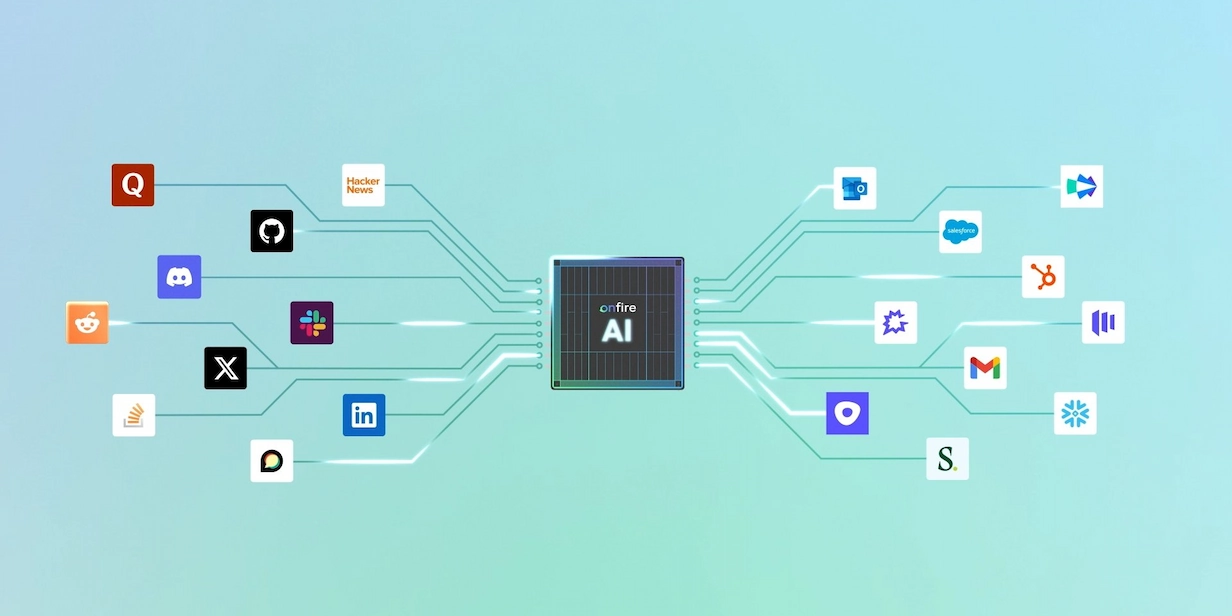
Onfire is a vertical AI prospecting platform for companies selling software infrastructure. It automates manual work like pulling the right account list, identifying the specific engineer or platform lead inside each account, enriching with verified contact data, and surfacing the technical context a rep needs before reaching out. Instead of getting a list of every senior engineer at a target account, BDRs see the actual person responsible for, say, CI/CD or cloud cost optimization, with the evidence behind that identification.
2. ZoomInfo
ZoomInfo offers broad coverage of firmographics, org charts, and verified contact information across millions of companies. It’s best suited for general B2B prospecting where firmographics and seniority are the main qualifiers and technical details don’t matter much. However, because its technographic data is inferred from job posts and similar surface sources, its deep tech insights are limited.
3. Apollo
Apollo bundles a contact database with sequencing, dialing, and basic AI personalization. The product is simple to roll out and has a wide variety of features. However, like ZoomInfo, it has shallow prospect-level information on technical roles.
4. Cognism
Cognism focuses on phone-verified contact data with strong coverage in EMEA and compliance-friendly data sourcing. Reply and connect rates from Cognism's mobile numbers tend to outperform the broader market. However, it has less depth on technical-buyer signals and personas.
5. Lightfield
Lightfield is an AI-native CRM that builds itself from a team's actual conversations, including emails, meeting transcripts, and calls, instead of waiting for reps to log activity manually. Its agents keep accounts up to date, prep for follow-up calls, and revive stalled deals with drafted outreach based on prior context. However, it can’t generate net-new accounts or contacts, so it’s of limited use for prospecting.
6. 6sense
6sense tracks anonymous web behavior and third-party signals to score in-market accounts. Marketing and ABM teams use it to coordinate paid, content, and SDR motions around high-intent accounts. Yet like other legacy providers, 6sense relies on IP-based tracking and ad network engagement, so it tends to miss technical buyers.
7. Demandbase
Demandbase covers similar account intelligence and ABM ground to 6sense, with extensive workflow integration into marketing and ad platforms. It’s used by enterprise revenue teams that need to coordinate spend across channels, but like 6Sense, its coverage of technical buyer behavior is thin.
8. Common Room
Common Room aggregates community activity from Slack, Discord, GitHub, Reddit, and similar platforms into a single dashboard, with attribution back to known individuals where possible. Popular with dev-tool companies tracking their own communities. However, coverage outside a company's owned communities is limited, and turning community activity into structured prospecting workflows still requires meaningful manual work.
9. Clay
Clay is a “GTM engineering" platform, and it works as a workbench where ops teams stitch together data sources, LLM calls, and enrichment APIs to build custom prospecting workflows. Since Clay doesn't generate its own data, the quality depends entirely on the sources you connect, which still leaves the underlying technical-buyer data problem unsolved.
10. LinkedIn Sales Navigator
Sales Navigator is the LinkedIn-native filtering and saved-search tool most reps use as their starting point. It’s useful for manual research, list-building, and warm intros via shared connections. Yet because its filters work on stated job titles and skills, it only catches the few technical buyers who keep their LinkedIn current and detailed.
11. UserGems
UserGems tracks job changes among prior champions and buyers, alerting reps when a known contact moves to a new company. It’s a focused product, so value is tied to how many champions you already have. Early-stage teams will see thinner results.
12. Champify
Champify covers similar ground to UserGems with a focus on tracking buying-committee movements and surfacing them in the SDR workflow. Like UserGems, it’s a single-purpose tool inside a broader stack, not a full prospecting solution.
How to Match B2B Prospecting Software to Your GTM Motion
For technical sales teams, picking the right software comes down to a simpler question than most procurement frameworks suggest: which tool will actually automate the research work that your reps are doing manually today?
If your motion is selling software infrastructure like dev tools, security, data, platforms, or FinOps, that research load is heavier than in most other categories. Your BDRs have to figure out which company actually uses the technology you integrate with, who inside that company is responsible for the relevant initiative, what they've publicly said about their stack, and whether anything is happening right now that makes a conversation timely. Without automation, this work takes hours per account.
The right B2B sales prospecting software handles all of that before the rep gets involved. Specifically, it should:
- Tell the rep who to contact, and in what order. No one wants a thousand-row list to sort manually. Instead, they need a prioritized set of accounts and named individuals, ready to act when the rep opens their CRM.
- Explain why each prospect is warm. A black-box score on its own isn't enough. The platform should surface the actual evidence: what the buyer is using, what they've engaged with, or what's changed at the account. Then, your reps can verify the prioritization and trust the queue.
- Give the rep something specific to reference in outreach. This can be a relevant technology choice, a known initiative, or a problem the buyer has discussed publicly. This is what makes a first message land, and it's not something an AI personalization layer can fabricate from a job title.
A tool that does these three things well replaces hours of manual research per rep, per week to produce outreach that gets answered. That's where the real GTM efficiency gain comes from in technical sales.
How to Build a Prospecting Workflow Around Your Sales Prospecting Software
Here’s the sort of workflow that AI-led B2B sales prospecting can enable:
- You define the ICP and personas explicitly. Not just "engineers at Series B+ companies;" you want to pinpoint the actual roles that drive adoption (e.g., "the platform engineer responsible for CI/CD"). This is the input your AI prospecting platform tunes against.
- Let the platform surface your daily list. Each morning, your BDRs open their CRM (or Sales Navigator, or the sequencer) and find a fresh list of high-priority accounts and contacts, already enriched, with the relevant technical context attached.
- Run sequences with context, not just personalization tokens. The opener should reference something real about the account, like a specific technology choice, a known initiative, or a relevant problem the persona has actually expressed. AI helps draft, but the input data is what makes the message land.
- Feed responses back into your tooling. Replies, meetings booked, and disqualifications all become training signals for the next cycle. A B2B sales prospecting software stack that doesn't learn from outcomes stops getting better.
Common Mistakes When Choosing B2B Prospecting Software for Technical Teams
For too many teams, prospecting software is both costly and unproductive. These are the most common culprits:
- Buying a horizontal data provider and expecting it to work for technical buyers. Data quality on technical roles is consistently the weakest part of horizontal platforms that rely on general B2B sources.
- Confusing AI personalization with AI prospecting. Drafting an email is not the hard part: finding the right person is.
- Stacking five overlapping tools because each one had a good demo. Audit overlap before signing the next contract.
- Ignoring data accuracy in the evaluation. Run a side-by-side test against a sample of your real accounts before committing. The gap between vendor claims and actual performance is often substantial.
- Letting the tool define your sales process. The product should fit how your team works, not the other way around.
- Skipping integration depth. A prospecting tool that doesn't push data cleanly into your CRM and sequencer ends up unused, regardless of how strong the underlying intelligence is.
Automating Technical Prospecting With Onfire
If B2B prospecting software isn’t eliminating the research burden, it’s not really doing prospecting work. Onfire was built specifically to hand SDRs and BDRs a prioritized list of technical buyers, along with the reasoning behind each prioritization decision and the specific context sales teams need to make outreach land.
If you want to see how it would handle your ICP, book a demo and we'll run it against the accounts you actually care about.
FAQ
What's the difference between B2B prospecting software and a sales intelligence platform?
Prospecting software focuses on finding and reaching new potential customers, and it handles list-building, contact enrichment, and outreach. Sales intelligence platforms are broader, often including call analytics, deal intelligence, and forecasting on top of prospecting workflows. The line has blurred as vendors expand, but if your primary need is generating new pipeline, prospecting software is the right category.
How many prospecting tools does a lean technical sales team actually need?
Fewer than most teams have. A prospecting platform should automate the research work by identifying the right accounts, the right individuals inside them, and the context behind each one. When it does that job well, you don’t need a bunch of tools.
Can one tool handle both data enrichment and outreach sequencing, or is it better to separate them?
Yes, Onfire handles data enrichment by deploying agents in the places where technical buyers congregate online. It then can create the sequencing directly via integration with sales engagement platforms like Outreach or Salesloft.
How do you evaluate prospecting software coverage for engineering and DevOps personas specifically?
Run a test against accounts you already know well. Ask the vendor to identify the actual person responsible for a specific technical function, like the platform engineer who owns CI/CD or the security engineer leading AppSec, and check whether the result matches reality.
What signals should trigger outreach when using signal-based prospecting software?
Signals worth acting on tend to combine multiple data points: a relevant technology being adopted at the account, a known persona showing recent engagement (product usage, community activity, conference attendance), and / or a champion or buying-committee change.
.webp)









%20(1).webp)











































.webp)