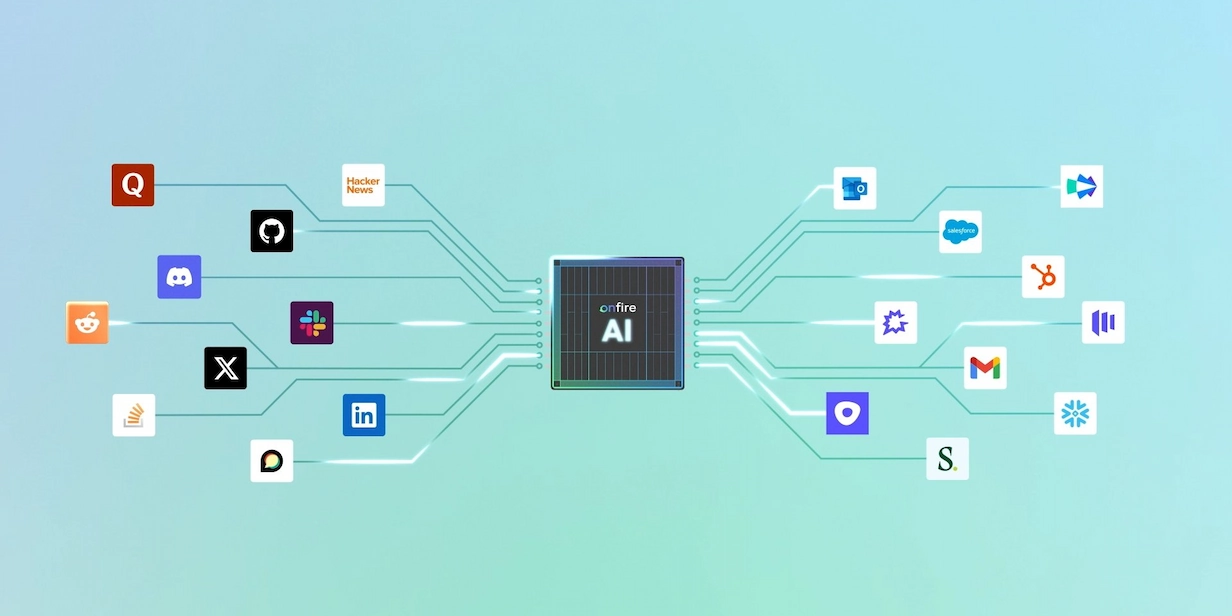
7 Unconventional Sales Prospecting Techniques for AI-Fluent BDRs



Prospecting is hard, particularly when you’re competing for mindshare in a crowded market. But with the rise of AI, a number of unconventional techniques are now within reach. Here are seven proven ways to make your outreach stand out in 2026.
Why Unconventional Techniques Are a Must in 2026
Everyone’s inbox has been flooded by the exact same prospecting techniques. Each of your contacts is seeing the same sequences, down to the same “I noticed you’re hiring for X” opening lines.
The results? Cold email response rates are about three times lower than they were in 2019 for generic outbound, and the trend line is only pointing to worse outcomes. Clearly, AI personalization is not delivering on its promises.
When everyone has a tool that scrapes prospect LinkedIn profiles to generate a “personalized” first line, people start tuning out. Buyers aren’t dumb, and they’ve picked up on the tells. The result is a higher bar than ever before.
To stand out in a crowded market, you can’t do the standard thing a little bit better than your competitors. Instead, you have to do things the competition isn’t even trying to do.
7 Unconventional Sales Prospecting Techniques Unlocked by AI
Here are the seven unconventional techniques that we’ve had success with at Onfire.
1. Pre-event bookings
Most companies "do" a conference by renting a booth, ordering swag, and posting "Come find us at Booth 57" on LinkedIn. Then they spend the week hoping the right people wander over. At a show like re:Invent or Black Hat, with tens of thousands of attendees spread across a venue the size of a small city, that's essentially a spray-and-pray motion with a lanyard.
The reps who pull real pipeline out of events do the opposite. They land with meetings already on the calendar, and the booth becomes a place to meet people they've lined up in advance.
This used to take too much manual digging to be worth it. A BDR could easily spend a whole month working out who's attending, filtering for ICP fit, and warming each one up. But now you can hand that legwork to an AI agent.
Connect the Onfire MCP server to Claude (or ChatGPT, or whatever you run) and work through the sequence in plain language:
- Build the attendee list from signals, not follower counts: ask the agent to find accounts heading to the event that fit your ICP. With Onfire connected, it reasons over technographics, firmographics, and community activity.
- Rank by intent and name the right person: in the same thread, have it prioritize those accounts by buying signals and surface the specific people responsible for your category, whether that's observability, secrets management, or cloud cost.
- Find a warm way in: ask the agent to check your CRM and Onfire for shared contacts or prior conversations, then suggest an intro path or an opener tied to a problem the prospect has actually raised.
- Draft and queue the outreach in one place: since the connector runs alongside your other tools, the same agent can write each personalized message, push the sequence to Outreach or HeyReach, and tee up the day-of confirmation text.
We broke the full motion into seven steps in our conference playbook.
2. Reddit prospecting
Your technical buyers spend real time on Reddit. r/sysadmin has over a million members, r/devops has hundreds of thousands, and the threads are full of people comparing tools, venting about vendors, and asking peers what to buy next. The catch is that Reddit punishes anything that looks like selling. Drop a pitch in a thread and you'll get downvoted into the ground, and probably banned.
But that doesn’t mean you should give up. When someone posts "evaluating WAF options, looking at X and Y, what do people recommend?" or "we're done with our current CI/CD platform," that's a buyer mid-decision telling you exactly what they need. Here’s how AI lets you act on that signal.
With the Onfire MCP server connected to your agent, you can:
- Surface the posts worth acting on: ask the agent to pull recent Reddit threads where someone in your category is asking for recommendations or complaining about a competitor, filtered to your ICP.
- Put a name to the username: have it de-anonymize the poster, matching their Reddit activity to a real identity through cross-platform pattern matching and identity resolution, then pull current email and phone.
- Qualify before you spend the time: ask whether the person actually fits your ICP so you don't burn an hour chasing a student or a three-person startup.
- Draft outreach with the original context attached: the same agent can write a first message that references what they posted, then push the lead and its full context into Salesforce or your sequence tool.
Reddit works best as a dark-funnel signal source that runs alongside LinkedIn and intent data, not a replacement for either. Our Reddit prospecting guide goes deeper on the etiquette and the three ways to actually use the channel.
3. Direct gifting
Sending a prospect something physical to get their attention isn't unconventional. What's new is that AI makes it cheap to send a gift specific enough to actually register.
A gift that nods to something the person cares about, like the open source project they maintain, is a way to convey that you’re paying attention to their specific needs. And reciprocity is real: someone who opens a thoughtful, relevant package feels a little more obliged to give you the time of day. The trick is reserving it for the handful of accounts where that investment pays off.
With the Onfire MCP server connected to your agent, you can:
- Pick the few worth the spend: ask the agent to rank your target accounts by deal potential and intent, so gifts go to the warmest prospects.
- Personalize the gift and the note: have it pull what the person actually cares about, like the repo they maintain or the migration they're clearly mid-way through, and suggest a gift plus a note that references it.
- Time it to a real moment: send when Onfire surfaces a trigger (a new role, a public gripe about an incumbent, fresh activity around your category) so the package arrives while you're top of mind.
- Hand off to your gifting tool: the agent can draft the note, prep the recipient details for Sendoso or a similar tool, then log the touch and queue the follow-up in your CRM.
Gifting won't fill a pipeline on its own. But for the accounts that matter most, a relevant, well-timed gift is a cheap way to stand out from a hundred other connection requests.
4. Multi-threading
Most reps run a deal through one contact, but in technical sales, the decision rarely sits with one person anyway. Instead, a buying committee will include (at minimum) the engineer who'll use the tool, the manager who owns the budget, and the security or platform lead.
Mapping all of the stakeholders, working out what each one cares about, and reaching them without sounding like a copy-paste job is a slog, but once again, AI can take most of that off your plate.
With the Onfire MCP server connected to your agent, you can:
- Map the buying committee: ask the agent who in the account touches your category, from the likely champion to the budget owner to the platform lead who can block or bless the deal.
- Give each person a reason to care: have it pull the angle that fits each role, so the engineer hears about the tedium you automate and the VP hears about cost and risk.
- Find the warm path in: ask for shared contacts or a colleague already in a thread, so a second stakeholder enters by intro instead of cold.
- Keep the threads in sync: draft a tailored message per stakeholder and log them against the account in your CRM, so the threads reinforce each other instead of colliding.
A single champion is a single point of failure. Spreading the deal across the people who actually decide is the best way to keep things moving if one prospect goes quiet.
5. Prospect from open source software
Open-source software is one of the best sources of insight into account intent. The engineer maintaining an OpenTelemetry collector or contributing to a competitor's scanner isn't a guess at a "senior software engineer," they're the one making the tooling call. Yet tracing commits back to a real company, working out which repos matter, and reading the activity for intent across thousands of accounts is not something a BDR can do by hand.
With the Onfire MCP server connected to your agent, you can:
- See who runs your kind of stack: ask the agent for accounts with real OSS activity around your category, drawn from contributions and adoption rather than job-post keywords.
- Name the person driving it: have it surface the specific contributor or maintainer behind that activity, then pull current contact details.
- Read the activity for intent: ask whether they're filing issues on a competitor's repo, mid-migration, or wrestling with a problem your product solves.
- Reach out with the receipts: draft a message that references their actual work, then log the lead and its context in your CRM.
OSS activity is the rare signal that's both public and hard to fake. It tells you which accounts have a real problem and exactly who owns it. Our guide on technographic data covers how this fits the wider targeting picture.
6. Watch deprecation and EOL clocks
The strongest buying signal isn't always something a prospect does. Sometimes it's a date on a vendor's roadmap. When CentOS reaches end of life, a TLS version gets deprecated for compliance, or a vendor sunsets a product line, every team running that thing has to move, whether they planned to or not.
In each case, the clock is published months ahead. The hard part is knowing which accounts are actually running the thing that's about to die, and reaching the person who owns the migration before anyone else does.
With the Onfire MCP server connected to your agent, you can:
- Build the list before the cutoff: ask the agent for accounts running the affected version, based on real usage from technographics rather than a job-post guess.
- Name who owns the migration: surface the engineer or lead responsible for that system, then pull current contact details.
- Time it to the clock: reach out as the EOL date approaches, or the moment the deprecation is announced, while the problem is fresh and unsolved.
- Frame yourself as the safe landing: draft outreach that positions your product as the migration target and references the specific deadline they're up against.
A team facing the end of security patches has already decided to act. Get there first with a relevant message and you've made it onto their shortlist.
7. Warm intros
A warm intro converts better than any cold sequence. What makes it unconventional in 2026 is your ability to ttreat your whole network as a searchable asset and put a small incentive behind the intros you want most.
Start with the people who already know and trust you: past colleagues, happy customers, investors, or founders you've helped along the way. Any one of them might be a single hop away from a buyer you've been chasing for months. The reason this stays underused is that nobody can hold the full graph of who-knows-whom in their head, and combing through LinkedIn connections by hand rarely feels worth the time.
With the Onfire MCP server connected to your agent, you can:
- Find who can open the door: ask which of your existing contacts are connected to people at your target accounts, drawing on shared-contact paths and your CRM history.
- Pick the intro most likely to land: rank those paths by how strong the relationship looks, so you ask the person who'll actually vouch for you, not just anyone with a mutual connection.
- Draft the ask for them: have the agent write a short, forwardable note your contact can pass along in one click, context already filled in.
- Track and reward the referral: log each intro against the account and queue the follow-up, so you make good on whatever incentive you offered.
A small, explicit referral incentive (a gift card, a donation in their name, a reciprocal intro) turns a vague "happy to connect you sometime" into an intro that happens this week. Keep it tasteful, and save the real budget for paths into accounts you genuinely want.
Enabling Unconventional Prospecting Techniques with Onfire
Each of the approaches in this blog have been possible for a long time, but they’ve been too time-intensive to act on. The Onfire MCP server changes that by putting your unique business context in the hands of the agentic workflow of your choice. To see what that looks like for your business, talk to us.
.webp)









%20(1).webp)
















































.webp)