The Steps of AI Adoption in GTM Teams




Inspired by Boris Cherny's "Steps of AI Adoption" framework for engineering teams, adapted for revenue organizations.
Every GTM org we talk to is somewhere on the same staircase. One AE is quietly 10x'ing their pipeline with AI while the rest of the team still types "write me a cold email" into a chatbot. The gap isn't talent. It's which step of AI adoption the team is standing on.
Engineering teams have a well-mapped version of this journey: from a single supervised coding assistant to fleets of autonomous agents. GTM teams are climbing the same staircase, just a few quarters behind. Here's what each step looks like, what bottlenecks you'll hit, and how to climb to the next one.
The Framework
Step 0: Gated
Agents: 0
What it looks like: AI access is blocked or shadow-IT. Reps paste prospect data into personal ChatGPT accounts. Legal hasn't approved anything, security reviews stall, and there's no connection between AI tools and the CRM, enrichment data, or sales engagement stack. Outputs live in copy-paste land.
What's the bottleneck: Legacy security and procurement processes. Fear of data leakage and hallucinated outreach. Decisions made on cost-per-seat instead of pipeline outcomes. No technical GTM voice in the room.
What helps: A sanctioned AI chat tool with SSO. An executive sponsor who owns the business case.
Guardrails: SSO/SCIM and role-based access. Data-processing agreements. Clear policy on what customer data can enter which tool.
Step 1: Assisted · You + an assistant (a pair)
Agents: ~1
What it looks like: One rep, one AI assistant, fully supervised. Draft an email, prep for a call, summarize an account: one task at a time, and you review every word before it ships. Unlock: account research that used to take an afternoon happens between meetings.
What's the bottleneck: Your attention. The AI doesn't know your accounts, your ICP, or what changed at the prospect this week, so it hallucinates personalization and you're forced to fact-check everything. Work is synchronous: you watch it work instead of moving to the next account.
What helps: AI chat connected to real GTM data via MCP: CRM, calendar, email, signal and intent data. Grounding kills the fact-checking tax: when the AI cites a real hiring surge or a real community post, you stop re-verifying every line.
Guardrails: Human review of all external-facing output. Per-seat spend caps. Approved-data-source list. Brand voice guidelines in every prompt.
Step 2: Parallel · Orchestrator
Agents: ~10
What it looks like: One rep orchestrates several agents at once: one researches accounts, one builds and enriches lists, one drafts sequences, one preps the QBR deck. Each agent verifies its own work against live data before you see it. You review finished briefs and drafts, not keystrokes. Unlock: the account-research backlog that used to take the team weeks becomes one rep's afternoon of orchestration.
What's the bottleneck: Reviewing output. You're producing less by hand and instead checking six streams of it. Data quality becomes the ceiling: agents running on a stale CRM multiply garbage as fast as they multiply signal.
What helps: Agent platforms with skills/workflows for repeatable GTM plays (account research, expansion plans, meeting prep). Enrichment and identity resolution so agents work from verified contacts. Signal feeds (hiring, intent, community chatter, tech footprint) as agent inputs.
Guardrails: Approval gates before anything is sent or synced to CRM. Send-volume caps per rep per day. Enrichment credit budgets. Automatic CRM hygiene checks. Same quality bar for human- and agent-produced outreach.
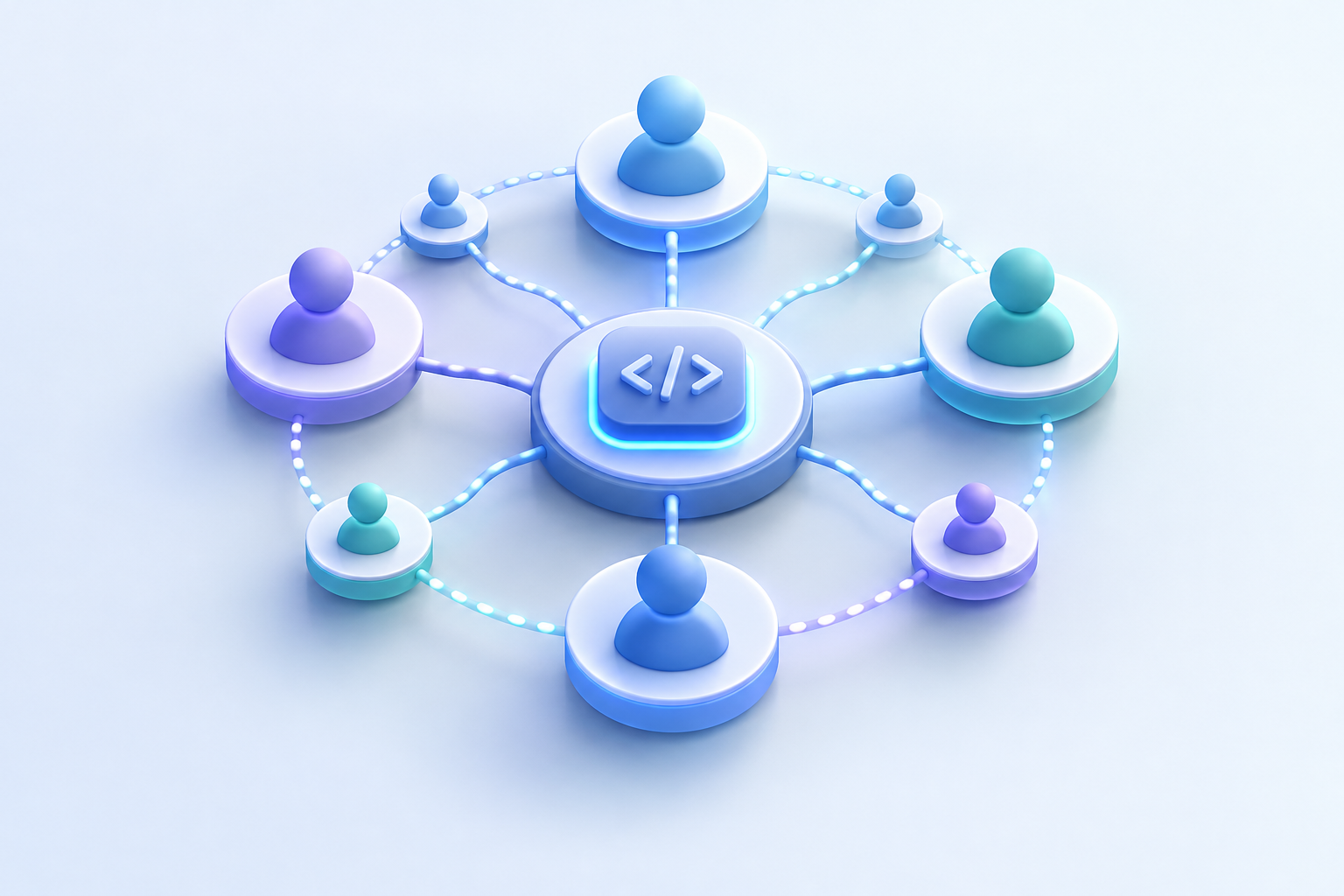
Step 3: Supervised autonomy · Manager of plays (an org tree)
Agents: ~100
What it looks like: Agents run continuously in the background: monitoring accounts for buying signals, drafting plays when a champion changes jobs, flagging renewal risk, keeping the CRM enriched, all without being asked. "Did you read that email?" becomes "what context was the agent missing, and how do we fix it for next time?" Unlock: coverage work nobody had time for (dormant accounts, long-tail territories, competitor monitoring) now runs 24/7.
What's the bottleneck: Trust in the loop and your team's decision throughput. The temptation is to scale agent count before the loop has earned trust. Token and credit efficiency starts to matter: you need monitoring and a culture that experiments freely but controls cost once plays find PMF.
What helps: Scheduled and triggered agent runs. Playbooks encoded as skills so agents follow your motion, not a generic one. Signal-triggered workflows: new funding round, then research brief, then draft sequence waiting for approval. Dashboards for agent activity and outcomes.
Guardrails: Automatic compliance checks (GDPR/CAN-SPAM, opt-outs, regional rules). CRM write permissions scoped per agent. Escalation rules: agents hand off to humans on pricing, legal, or upset customers. Audit logs of every agent action.
Step 4: AI-native · Revenue leader steering by intent
Agents: ~1,000+
What it looks like: The loop is closed and most agents are kicked off by other agents. The GTM engine runs plays across the entire market continuously; humans set ICP strategy, positioning, and quality bars, and monitor by exception. Unlock: the quarter-long territory build becomes a workflow you kick off and check on.
What's the bottleneck: Identifying and automating plays at scale, and enforcing the right guardrails for each type of work. Differentiation shifts to your data, your playbooks, and your judgment: everyone has agents.
What helps: Agent SDKs to build and schedule custom GTM agents programmatically. A unified data layer agents can query (accounts, people, signals, CRM) as one source of truth.
Guardrails: Cost controls per automation. Model selection per play type. Exception-based human review. Continuous QA agents that grade other agents' output.
How to climb
0 → 1: Executive alignment and escalation of blockers. Pick one sanctioned tool, get the DPA signed, and give the whole team access; shadow AI is worse than governed AI.
1 → 2: Connect agents to your real data. The step-change isn't a better model. It's grounding. An agent that can read your CRM, your signals, and your call transcripts produces work you don't have to fact-check, and that's what lets you run more than one at a time.
2 → 3: Encode your plays. Turn your best rep's account-research routine, expansion motion, and meeting prep into skills and workflows agents can run on a schedule or a trigger. Build the verification loop (data checks, compliance checks, approval gates) until you trust output you didn't watch being made.
3 → 4: Automate play discovery itself. Let agents identify which accounts deserve which motion, kick off the work, and route only exceptions to humans. Invest in the data layer: at this step, your proprietary signal is the moat.
Where most teams actually are
Most GTM orgs today sit between steps 0 and 1. The best sit at 2, and they didn't get there by buying more seats of a chatbot; they got there by connecting agents to live, verified go-to-market data so the output stopped needing a fact-check.
That's the pattern worth internalizing: every transition on this staircase is a trust transition, and trust comes from grounding. Agents earn autonomy the same way new hires do: by being right, repeatedly, with sources.
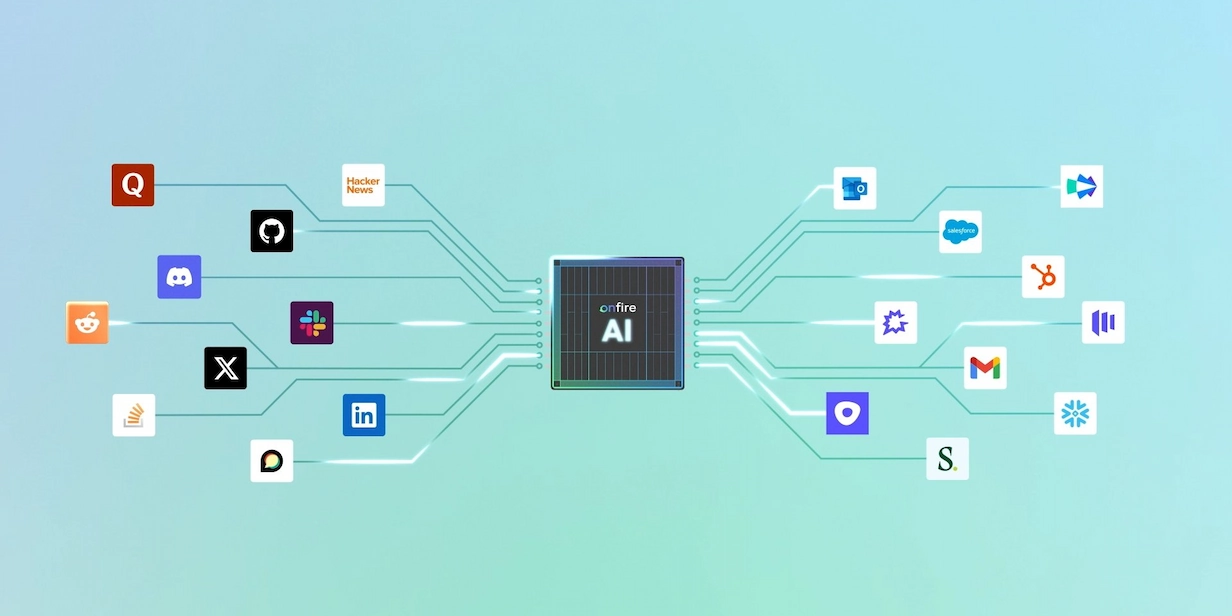
Onfire connects AI agents to live buyer signals, verified contact data, and your CRM: the grounding layer that moves GTM teams up this staircase. If you're somewhere between steps 1 and 2 and want to see what step 3 looks like on your own pipeline, talk to us.
.webp)









%20(1).webp)















































.webp)