The 9 Best AI SDR Tools to Prospect Technical Buyers: An Unbiased Analysis



Every "best AI SDR tools" list you'll read this year is written by a company that sells an AI SDR. We don’t. Our platform provides the data that human and AI SDRs need to do good work. That means we have no horse in this race.
Here’s our honest take on the AI SDR software market as it stands in August 2026.
The 9 Best Tools: Summary
- Artisan (Ava) - the most complete end-to-end autonomous outbound agent, with sourcing, enrichment, sending, and reply handling in one product.
- 11x (Alice) - the loudest brand in the category and its most public cautionary tale, now rebuilding on visibly better evidence.
- AiSDR (Ami) - the clearest published pricing in the market and the fastest path from signup to live campaign.
- Regie.ai - per-seat AI sales engagement with the deepest independent review base of the outbound tools.
- Qualified (Piper) - the best inbound AI SDR by some distance, now part of Salesforce and firmly Salesforce-native.
- Salesforge (Agent Frank) - genuinely autonomous email outbound at the most approachable price, if you bring your own targeting.
- Reply.io (Jason AI) - an AI agent bolted onto a mature sequencer with real deliverability tooling behind it.
- Amplemarket (Duo) - a copilot rather than a replacement, built around signals and rep workflow.
- Unify - signal-triggered warm outbound, with a reference list that skews unusually technical.
What is an AI SDR (or AI BDR)?
An AI SDR is software that performs the top-of-funnel work a junior sales development rep would normally do, such as building a target list, researching accounts, writing and sending outreach, handling replies, and booking meetings. The terms “AI SDR” and “AI BDR” are used interchangeably by vendors, so just about every tool we looked at for this article does all of these things.
However, there are differences in functionality in the category. For instance, some AI SDRs are inbound, while others are outbound. Qualified's Piper works visitors who are already on your site, while Artisan, AiSDR, and Agent Frank run cold sequences against lists they build. Most tools do one side well, but don’t excel at both.
Another difference is that of autonomy versus augmentation. Autonomous tools take an ICP definition and run the whole motion for you. Augmentation tools, on the other hand, do the research and drafting and hand your reps something prepared. The autonomous pitch is still being made by many vendors, but sales professionals report mixed results. Instead of leaning into full autonomy, most teams now run a hybrid model where AI handles the mechanical work and a human owns the judgment.
How to Use AI SDR Tools For Technical Buyers
As a rule, your AI SDR will only work as well as the data you give them. Which, in a way, shouldn’t be surprising: human SDRs only deliver results when they have access to genuine intelligence.
And when you sell to technical buyers, intel becomes even more important than it usually is. While no one enjoys being sold to, engineers are notoriously skeptical, and they’ll ignore any message that doesn’t relay clear value. So if you want to use AI to reach a developer, data scientist, or other technical professional, you need to ensure that your tool can lead with value.
Here’s our recommendation for how to use an AI SDR if you sell to technical buyers:
- Define the buyer behaviourally, not demographically. Who is running the tool you replace? What are their needs?
- Feed the agent intel that reflects buyer behavior. Just like a human BDR, an AI SDR needs insight into the people on the buying committee, the open-source software they’re running, and any issues they’re discussing on forums.
- Personalize substance, not style. The agent should personalize from something the prospect actually did, not just their names.
A final point: AI SDRs exist so you can scale your outreach, but you should still be thoughtful about how you do that. The cost of a burned bridge can be very high, so you should only be using your AI to contact people who really might benefit from your product.
9 AI SDR Tools Side By Side
The AI SDR category is crowded with tools that have a similar claim to fame: autonomous, personalized, pipeline at a fraction of the cost of a human rep. This makes a feature-by-feature comparison difficult without using each product for a prolonged period of time. So alongside the pitch and the price, we've added two things that are harder to spin:
- Funding tells you how long a vendor can survive without your renewal, and what kind of pressure they're under while they wait for it. It can also indicate that investors have done some due diligence around the product and team (although this is of course not foolproof.) A better-funding company is not inherently the safer bet, but in a category with reported churn of 50–70% annually, it's worth knowing which one you're buying from.
- Named customers are the closest thing to proof that a tool works in production. We counted only companies each vendor names in a written case study on its own site, with a quoted individual attached. We’ve given less “credit” to logo walls. Of course, worth remembering that enterprise and regulated buyers frequently often refuse to be named, so it could be that some vendors have wins they can't publish.
Finally, a note on pricing: these are more like estimates than firm numbers. Several vendors publish nothing, others publish figures that conflict with what buyers report paying, and 11x's own properties have displayed inconsistent numbers.
AI SDR Tools Compared
| Tool | USP | Price | Funding | Named Customers |
|---|---|---|---|---|
| Artisan (Ava) | Most complete end-to-end autonomous outbound agent - sourcing, enrichment, sending and reply handling in one product, with adjustable autonomy | ~$1,500–$3,000/mo (not published; buyer-reported) | ~$36.5M total. Latest: $25M Series A, April 2025, led by Glade Brook Capital, with HubSpot Ventures and Y Combinator | SumUp, CookUnity, SaaStr, Zirtual, Chain of Events |
| 11x (Alice) | Multichannel outbound with a genuine voice component; the category's loudest brand, rebuilt as Alice 2.0 after the 2025 credibility crisis | Quote-only; enterprise deployments reported at $40,000–$68,000/yr | ~$75M total. Latest: $50M Series B, November 2024, led by a16z, with Benchmark, Lux Capital and SV Angel. Nothing raised since the March 2025 controversy | Checkr, Leica Biosystems, Gupshup, Workera, Questex, Canibuild — Xerox and UST appear as logos only |
| AiSDR (Ami) | Clearest published pricing in the market and the fastest path from signup to a live campaign; handles outbound sequences and inbound reply qualification | $250, $900 and $2,500/mo across three tiers; 20% off annually | ~$3M total. Single seed round, November 2023, anchored by Y Combinator (S23) with Rebel Fund, Pioneer Fund and Flyer One Ventures | Medisafe, Classter, Satchel Pulse, AstroLabs, Archangel Group, Harmix |
| Regie.ai | Hybrid by design - routes low-priority and aged leads to AI agents while higher-ranked accounts go to human reps; deepest independent review base (350+ G2 Funding figures, pricing and customer lists verified August 2026. Named customers are taken from written case studies on each vendor's own site unless otherwise noted; logo-wall-only claims are flagged. All performance figures are vendor-published or buyer-reported, not independently audited. 1. Artisan (Ava) Ava is an AI SDR tool that also attempts to consolidate your prospecting stack by connecting to a 270M+ B2B contact database. You can set the autonomy level you want so your team either approves messages before send, or lets Ava run unsupervised. By potentially replacing a data provider, sequencer, and enrichment layer, Artisan is making an attempt to fulfill the infamous billboard campaign, “Stop Hiring Humans.” However, if you’re selling to technical buyers, you’ll likely find the contact database to be too shallow to help you identify your potential champion. Pricing is also difficult to pin down, with teams citing costs in the $1,500-$3,000/month range. 2. 11x (Alice) 11x is another recognizable name in this relatively new category. Its AI SDR, Alice, runs multichannel outbound with a solid voice component, and the company raised money from a16z and Benchmark. In March 2025, a TechCrunch investigation reported that companies listed as customers had run brief trials or none at all, and that a claimed $14M ARR figure reflected roughly $3M in contracts surviving the trial period. The founder stepped down in May 2025, and the product has since been re-platformed as Alice 2.0 under new leadership. To 11x's credit, the customer evidence has since been rebuilt on firmer ground. ZoomInfo and Airtable - the two names TechCrunch specifically disputed - no longer appear anywhere on the site. In their place are fourteen written case studies published across 2026, each naming an individual, their job title and specific results, at companies including Checkr, Leica Biosystems, Gupshup and Workera. That format is considerably harder to inflate than a logo wall.
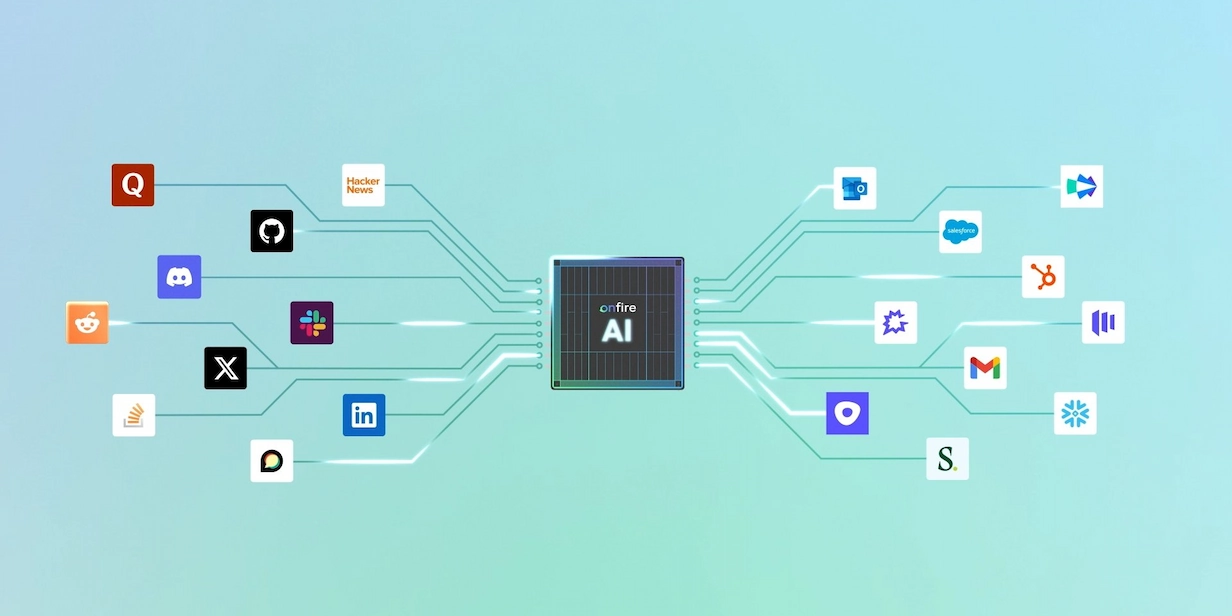
3. AiSDR (Ami) AiSDR’s tool, Ami, is made to handle both outbound sequences and inbound reply qualification, with contact data as part of the bundle. Unlike many other tools, Ami has transparent pricing, with monthly fees of $250, $900, and $2,500 for its three tiers, and about 20% off if you opt for annual billing. With fast setup, that makes it relatively easy to evaluate Ami on your own data without making a substantial upfront investment. 4. Regie.ai While many AI SDRs are still sold as fully autonomous agents, Regie.ai is designed with a hybrid model in mind. When the system identifies low-priority or aged leads, it routes them to agents, while higher-ranked accounts get sent to human reps. With over 350 reviews on G2, it has more independent evaluations online than most competitors, which is an important benefit in this relatively new category. That review base is worth weighing against Regie's own marketing, which is unusually reticent. The company publishes eight customer stories and names the company in just two of them - Crunchbase and Reputation - with the rest anonymized to descriptors like "a global work management SaaS company." Recognizable logos including BILL, Commvault, Wrike and Bitdefender sit on the customers page with no story attached. Enterprise buyers often insist on anonymity, so this isn't a red flag on its own, but it does mean the G2 reviews are carrying most of the evidentiary weight here. Regie.ai’s pricing is per-seat, with about $180/user/month for AI sales engagement tier (10-seat minimum) and $499/user/seat for the higher tier (5-seat minimum). The seat minimums likely box out very small teams. 5. Qualified (Piper) Piper is an inbound tool that engages visitors on your website, qualifies them, and books meetings. It has a 4.9/5 average on G2, with over 1,500 reviews so far. Perhaps on the strength of that record, Qualified was acquired by Salesforce in 2026, and it’s now Salesforce-native. Pricing is quote-only but the third-party estimates we reviewed put it in the $6,000/month range. 6. Salesforge (Agent Frank) Agent Frank is an email agent that can run in either auto-pilot or co-pilot mode. Multilingual, it draws on a database of 500M+ contacts, and pricing starts about $499/month billed annually for about 1,000 contacts. However, email infrastructure is priced separately and starts around $33 a month. 7. Reply.io (Jason AI) Reply.io started as a multichannel sequencer, and Jason AI is its agent for prospect sourcing, sequence generation, and reply handling. Jason isn’t made to be autonomous, but rather to assist human SDRs within a sending platform that has a track record of preserving domain reputation. The reported entry pricing we found is around $500 a month for 1,000 active contacts, with teams reporting costs of about $2,300 a month in production. 8. Amplemarket (Duo) Like Reply.io, Amplemarket decided to build a copilot rather than an autonomous agent. Its tool, Duo, surfaces buying signals, handles account research, and hands reps a starting point for outreach. The signals it looks at are broader than most, with an orientation towards corporate events. As with many of these tools, pricing is quote-only, and third-party estimates range from $1k-$3k/user/month. 9. Unify Unify is a tool made to run account research for warm outbound. It autonomously detects buying signals, researches accounts, and drafts outreach, but waits for human approval before sending. Pricing was restructured in mid-2026 and is now the most accessible in the category by a wide margin: a free tier, $20/seat/month for Base, $60/seat/month for Pro, and custom pricing for Business - which is the tier where signal-triggered automations and website intent data actually live. Older comparisons still quote a ~$1,750/month Growth plan; that plan no longer exists. Use Onfire with your AI SDR No matter which AI SDR you choose, it’ll work best with fine-grained insights into your buyers. That’s exactly what we built Onfire to provide for teams selling software infrastructure. Onfire’s Account Intelligence Graph™ maps the public footprint of 50 million engineers, including open-source contributions, community discussions on Reddit, Discord and Slack, conference participation, hiring patterns, and tech-stack changes, and resolves it to accounts and named individuals. It joins that to your first-party data, like trial signups, CRM notes, and closed-won patterns, to give you a complete picture of each buyer. And perhaps most importantly, Onfire is fine-tuned to your specific GTM motion, so the intel it tracks isn’t one-size-fits-all. Instead, it picks up on the things that actually matter to your specific buyers. For an AI SDR, that changes three things:
Onfire connects natively to the CRMs and outbound tools you already run, so this is an upstream addition rather than a migration. To see what sort of difference Onfire’s data can make for your human and AI SDRs, talk to the team. FAQs How does an AI SDR differ from a standard sales engagement platform? A sales engagement platform makes human reps more efficient, but it’s still a person who decides who to contact and what to say. An AI SDR makes those decisions itself: it builds the list, researches the account, writes each message, and handles replies. Can AI SDR tools work for developer-focused, technical-buyer GTM motions? Yes, but not out of the box. The default configuration targets firmographics and personalizes from public company information, which technical buyers dismiss instantly. These motions work when the agent is fed fine-grained intel and runs at deliberately lower volume. The tools handle execution well enough, but the targeting and context have to come from elsewhere. How much do AI SDR tools typically cost? "Published prices span three orders of magnitude. Self-serve tiers now start as low as $20 per seat monthly (Unify), entry agents run $250–$900 per month (AiSDR, Salesforge), mid-tier products sit at $1,500–$3,000, and enterprise deployments reach $40,000–$68,000 a year or more (11x, Qualified)." Do AI SDR tools integrate with a GTM intelligence platform like Onfire? Yes. Onfire connects natively to major CRMs and outbound tools, so enriched accounts, scored contacts, and live signals flow into whichever agent you run. In practice most teams route Onfire data through their CRM or directly into the sequencer, which means the AI SDR keeps its existing workflow and simply operates on a better-qualified list with more specific context to personalise from. Can an AI SDR fully replace a human SDR team? Not today. The evidence from 2025 and 2026 is consistent: AI wins decisively on speed, cost per lead, and coverage, and loses on discovery nuance, multi-threading, and the judgment calls that turn a reply into a qualified opportunity. Reported category churn of 50–70% annually reflects teams discovering this after purchase. Continue readingLife’s too short |
.webp)





%20(1).webp)














































.webp)