Buying Groups for Technical Products: The Engineers Your Map Is Missing



Buying groups are bigger than ever. Forrester’s report on The State of Business Buying in 2026 reveals that most decisions to buy now involve 13 internal stakeholders and 9 external influencers, with this figure rising for more expensive, complex, or important purchases. For B2B marketing teams that sell to engineers, this change represents either a hurdle or an opportunity, depending on how they are equipped.
Teams working to standard buying group playbooks – where a job title is assumed to indicate purchasing influence – now find themselves stumped, as buying power is spread across more, and unexpected roles (especially in engineering). Meanwhile, teams who use more granular data in their outreach are gaining an advantage by tracking the spread of influence to target key nodes in the buying process.
What Is a Buying Group?
Despite their huge influence on sales, buying groups remain a poorly understood concept in B2B marketing. They are often confused with buying committees – a closely interrelated but distinct concept. In fact, this confusion can prove disastrous to your outreach strategy, which depends on identifying real, rather than simply formal buying power. Let’s take a closer look at each of these terms, to reveal how they actually operate:
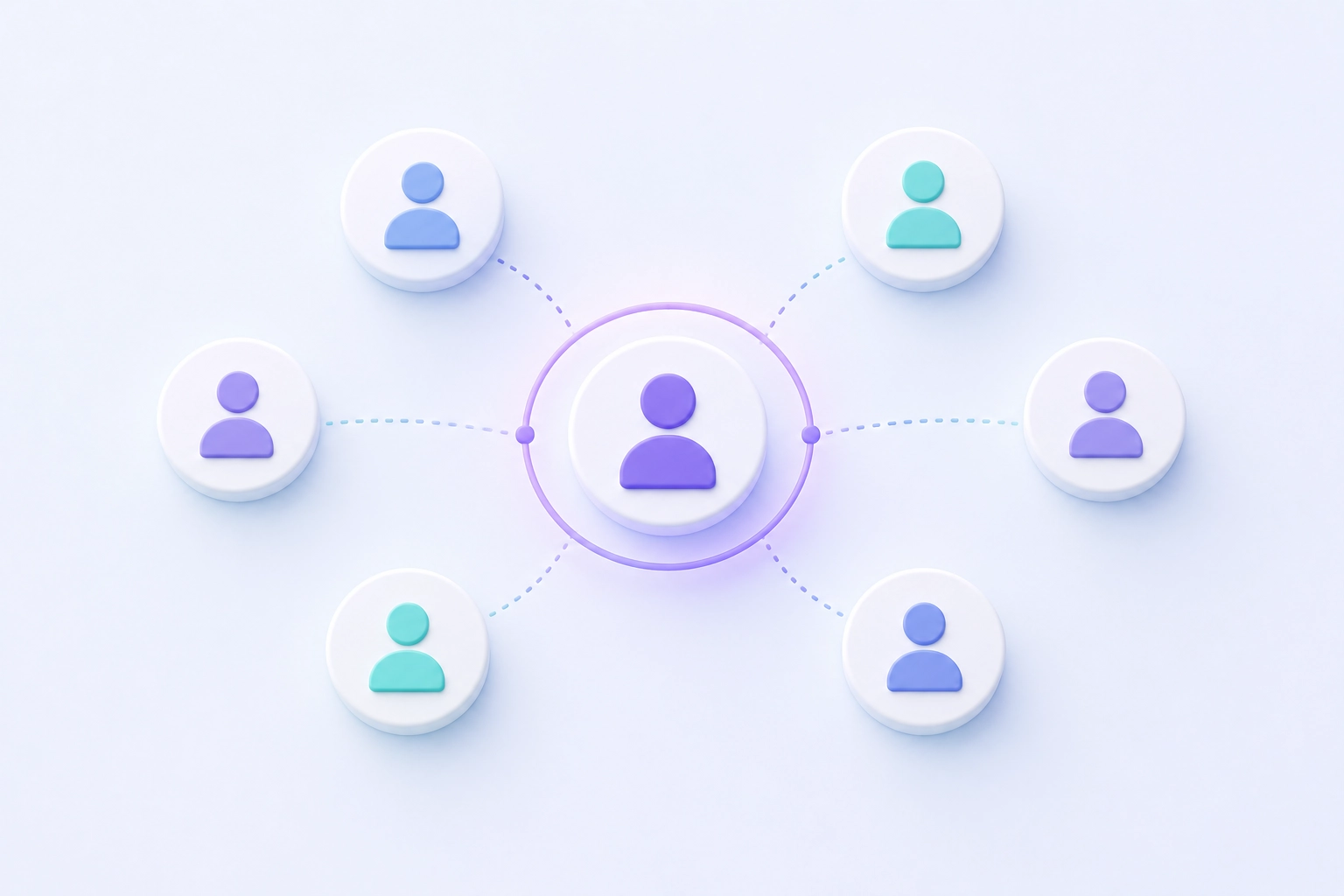
- Buying groups are the stakeholders in an organization who significantly influence purchasing decisions. Importantly, this influence is often not formalized or indicated by their job title. Buying group members operate across different departments, at varying levels of seniority, and may adopt differing roles in the buying process from purchase to purchase; for instance, a CISO may initiate one purchasing decision, but equally might veto another just as the sale is about to close.
- Buying committees are decision-makers in an organization with formal responsibility for approving and securing purchases. Importantly, while these individuals might hold veto power, budget control, or monitor usage requirements, they are not always the most important levers of buying power. Often, they simply act on the informal consensus reached by members of the buying group.
- Account maps are diagrams charting an account’s key decision-making chains around purchasing. They range from simple org charts to data-driven analyses of a company’s formal and informal power relationships, and the roles individuals are likely to play in buying decisions. At worst, they just outline the account’s buying committee; at best, they locate the actual buying group, highlighting prospective champions and vetoers.
Who Is in the Buying Group for an Infrastructure Purchase?
Buying groups intersect with buying committees to varying degrees – but rarely are they more disparate than when it comes to engineering teams. This is largely due to the vertical, highly interdependent nature of engineering orgs, where evaluating each product requires both deep knowledge of the subsystems into which it must integrate, and awareness of potential impacts on interconnected products and systems. For related purchasing decisions, knowledge is power – fail to locate it, and you miss the target entirely.
These roles might stay roughly constant, but the person initiating the process can change depending on product function. For instance:
- Observability: a mid-size fintech wants to replace its self-managed Prometheus and Grafana stack because metric costs keep spiking. The SRE lead starts the search, and a staff platform engineer evaluates. The VP of Infrastructure owns the budget, and FinOps is involved from day one because the last bill triggered the purchasing process. The payments team is the adjacent stakeholder, since their dashboards could break if the migration goes badly.
- Data infrastructure: a retailer is moving from batch ETL to streaming. The data engineer who owns the Kafka cluster pushes for it, and the data platform architect evaluates. The Head of Data approves, and whoever is responsible for customer PII reviews it. The analytics and ML teams, who consume the data downstream, have a stake in how it changes.
- Security: a SaaS company evaluates secrets management after a problematic audit finding. Here the security team initiates, but platform engineers have to wire the tool into CI/CD. Application developers can effectively veto the purchase by working around the problem.
Why Titles and Web Intent Miss These People
While the above table is theoretically easy to fill, relying only on LinkedIn profiles and whitepaper downloads to do so will likely result in misfiring outreach. This is because – like most things engineering – the underlying structure is far more complicated than surface signals suggest. Let’s look at a few of the challenges your outbound strategy needs to address:
Job Titles Don't Reveal Ownership
A title like "Senior Software Engineer" could describe the person who owns your prospect's Kafka cluster, or the person who maintains their iOS app. This means that filtering by title returns everyone, leaving your team to either contact the entire list or research it by hand – either way, it’s time and labor-intensive.
The 2026 Stack Overflow Developer Survey shows how far influence and title diverge: 48% of respondents claim to evaluate, recommend, or shortlist tools, but only 18% make the final purchase decision. In other words, the people shaping the shortlist rarely hold the budget – while title-based filters favor those who do.
Buying Groups Form Before Vendors Notice
Gartner reports that 99% of B2B purchases are triggered by organizational change. In engineering, these changes are typically internal (bottleneck identification, systems degradation, bypassing processing limits, etc) and therefore invisible to intent providers. This means the buying group often forms and drafts requirements before a prospect reaches your site. It takes more than intent signals to preempt this process.
Engineers Leave a Harder-to-Read Footprint
Engineers are a savvy bunch. Rather than complete gated forms, they like to research in documentation, GitHub, Reddit, and Slack communities – largely under anonymized handles. Intent data resolved from IP addresses might indicate that something is happening at a company, but not which individual or team is behind it.
How to Map an Account from Evidence
A more effective model is to build your account map from evidence of what each team actually runs. Take Larkspur Logistics, a fictional freight company with 350 engineers, which you decide to target with a managed streaming platform. A handful of publicly available sources reveal a great deal:
- Job posts: a listing seeking Kafka Connect and Debezium experience points to a change-data-capture pipeline – and the team that owns it
- Open-source activity: a Larkspur engineer has filed GitHub issues against a Kubernetes operator for Kafka.
- Talks and engineering blogs: a data engineer has written a blog post on cutting delivery-estimate latency, while an SRE has given a meetup talk on on-call load.
- Community participation: there are questions about consumer lag in a streaming Slack community, from handles that trace back to Larkspur.
- Job moves: the organization has hired a new Director of Data Platform, who joined four months ago from one of your customers.
Action based on any one of these signals alone is purely speculative. Together, they produce a map:
Importantly, the gaps in the map are as useful as the names. They show who you still need to find, which objections to prepare for, and who might voice them.
Finding Your Champion
While organizational buying decisions are never made by just one person, one person often does the bulk of the lifting – effectively selling the product on your behalf. This “champion” is usually the person who cares most about the problem, is most receptive to your solution, and has the credibility to make the case to whoever controls the purse strings.
Back at Larkspur, that person is Priya. She wrote the latency post; she is filing issues against the operator her team depends on; and her peers already read what she writes about streaming. Marcus, by contrast, is better placed as a sponsor; his history with one of your customers makes him a warm contact, but four months into a new role, he is likely to defer to his staff engineers.
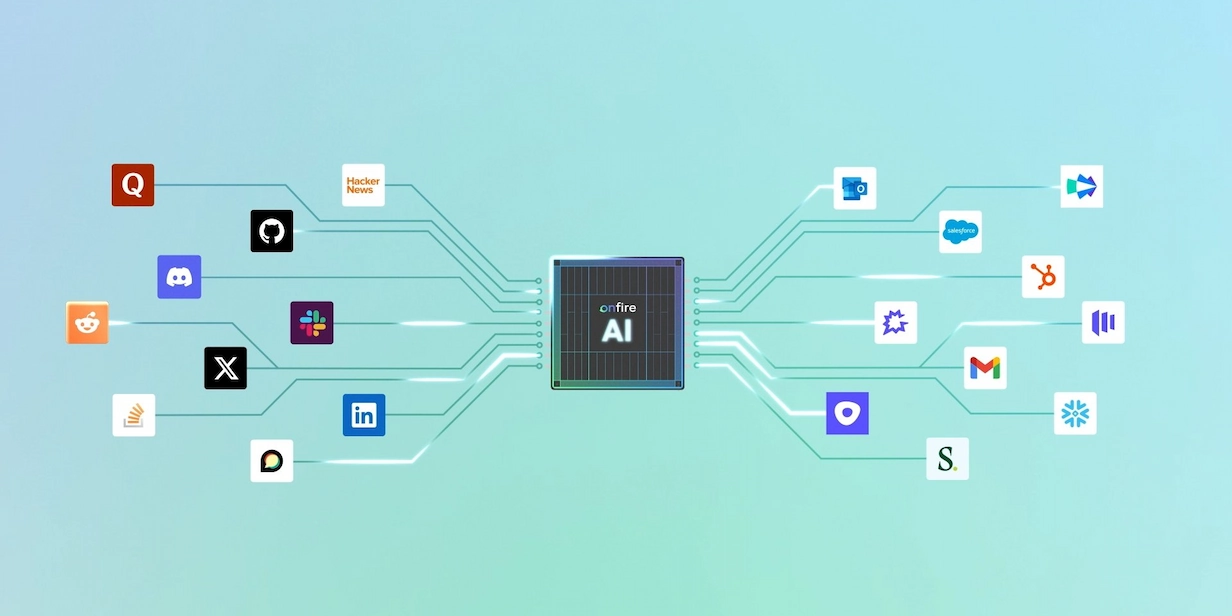
While far more accurate than relying on titles and intent signals, this system is painstakingly difficult if attempted by hand. Fortunately, Onfire ties code contributions, conference talks, community activity, and career histories to named people, with links to the evidence behind each. Onfire's AI agent then ranks your most likely champions against the personas you define by role, rather than by title.
Multi-Threading the Rest of the Group
Once you locate your champion, you will want to contact them with a personalized message that opens with your ability to solve the specific problem they are faced with. From there, widen the conversation to other members of the buying group:
- Technical evaluator: bring them in early, ideally through your champion, with clear success criteria for the proof of concept.
- Budget owner: frame the case around cost against headcount and roadmap risk.
- Security and FinOps: share documentation and a usage-based pricing model before they ask – late objections from either team often stall technical deals.
- Adjacent teams: explain exactly what changes for them, when it is likely to happen, and how they will benefit.
Mapping Buying Groups with Claude and the Onfire Connector
Claude can run much of the research behind an account map, but on its own, it is limited to the open web, missing vital community and open-source signals. The Onfire connector for Claude, built on the Onfire MCP server, closes that gap by giving Claude evidence-backed technographics, deanonymized community signals, champion profiles, and your own CRM context. With these elements in place, a single prompt can cover days of manual research in seconds flat.
Want to see the buying groups in your own target accounts? Book a demo today.
FAQs
What's the difference between a buying group and a buying committee?
A buying group includes everyone who influences a purchase, while a buying committee is the formal subset who approve it. The best way to reach the committee is usually through the wider group that shapes what it decides.
How many people are in a buying group?
Forrester's 2026 research puts the typical B2B purchase at 13 internal stakeholders and 9 external influencers, with the number rising for complex or strategic purchases.
Who is the economic buyer in a software purchase?
The economic buyer is whoever owns the relevant budget – usually an engineering director or VP, or the CTO for larger deals.
Can intent data identify a buying group?
Not on its own. Intent data can show that a company is researching a category, but not which team or people are involved. It works best as a supporting input.
.webp)










%20(1).webp)
















































.webp)